

Volkswagen’s €3bn Gamble: Can It Win Back Market Share in China?

Quote from Alex Bobby on December 16, 2025, 1:55 AMVolkswagen is betting €3bn on a China-first strategy to stay competitive against BYD and Geely. Can localised design and faster innovation help VW regain market share?
Volkswagen’s €3bn Gamble: Can It Win Back Market Share in China?
For decades, Volkswagen was the undisputed foreign champion of China’s car market. Its sedans became status symbols for a rising middle class, and its joint ventures once commanded more than half of all passenger car sales. Today, that dominance has faded. Chinese automakers are moving faster, building smarter and selling cheaper — especially in electric vehicles. In response, Volkswagen is placing a €3bn bet on a radical reset of its China strategy. Whether that gamble pays off remains one of the biggest unanswered questions in the global auto industry.
At the heart of Volkswagen’s strategy is a vast new research and development hub in Hefei, a central Chinese city of 10 million people. The facility is the company’s largest R&D centre outside Germany and signals a decisive shift away from the old model that defined foreign automakers’ success in China for decades. Instead of importing European-designed cars and sharing technology with local partners, Volkswagen now wants to design, develop and adapt vehicles inside China — for Chinese consumers.
“This business model is now gone,” said Thomas Ulbrich, Volkswagen Group China’s chief technology officer. His words underline just how profoundly the market has changed.
A market transformed by local champions
China is now the world’s largest and most competitive car market, and its domestic brands have rewritten the rules. Companies like BYD and Geely have surged ahead by mastering electric powertrains, software integration and rapid product development cycles. They release new models faster than global rivals, tailor features to local tastes and aggressively price their vehicles.
Foreign brands, by contrast, have been slowed by legacy systems, global approval processes and designs aimed at multiple markets. What once worked — selling reliable European cars with strong brand recognition — no longer guarantees success in a market where digital dashboards, voice assistants and battery range matter as much as badge prestige.
Volkswagen’s sales have suffered as a result. While it remains a major player, its market share has steadily eroded, particularly in the fast-growing electric vehicle segment. The Hefei investment is designed to stop that slide.
The Chinese consumer is king
Volkswagen’s overhaul began in 2022, when executives acknowledged that China could no longer be treated as just another regional market. Instead, it would require its own products, development timelines and decision-making power.
In what Ulbrich calls a “paradigm shift”, Volkswagen is developing vehicles specifically for Chinese drivers. These cars are unlikely to appear on European roads, where regulations, consumer preferences and driving habits differ significantly. Some models may eventually be exported to markets such as Southeast Asia or the Middle East, but China is the primary focus.
This localisation goes beyond design tweaks. Chinese consumers expect seamless digital experiences, frequent software updates and advanced driver-assistance systems. Features such as large infotainment screens, in-car apps and voice controls are no longer luxuries but essentials. Volkswagen’s new R&D centre is tasked with embedding these expectations from the ground up, rather than retrofitting them later.
Catching up in the electric race
The urgency of Volkswagen’s gamble is heightened by the electric transition. China is the global epicentre of EV adoption, and domestic brands dominate the space. BYD, in particular, has combined vertical integration with scale to undercut rivals on price while maintaining healthy margins.
Volkswagen has acknowledged it is playing catch-up. Its China-specific EV platforms are designed to shorten development times and lower costs, allowing it to respond more quickly to market trends. The hope is that faster innovation and deeper localisation will narrow the gap with Chinese competitors.
As new models roll out over the coming years, the company will learn whether its €3bn investment can translate into renewed momentum — or whether it simply stabilises a business under pressure.
Can market share really be regained?
Analysts are cautious. Rella Suskin, an equity analyst at Morningstar who covers European automakers, sees Volkswagen’s strategy as necessary but limited in its upside.
“Such a strategy is key to regaining competitiveness within China,” she said. But she does not expect a dramatic reversal of fortunes. Instead, Suskin predicts the new approach will help Volkswagen “maintain market share levels in line with current levels, rather than allow them to regain the market share that has been lost over the last few years.”
That assessment reflects the harsh reality of today’s Chinese auto market. Competition is intense, margins are under pressure and brand loyalty is increasingly fluid. Even with better products, foreign automakers face an uphill battle against homegrown companies that understand local consumers instinctively and move at breakneck speed.
A defining test for Volkswagen
Volkswagen’s €3bn gamble is about more than China. It is a test of whether a century-old global carmaker can reinvent itself in a market that no longer waits for anyone. Success would demonstrate that localisation and speed can coexist with scale and heritage. Failure would underscore how difficult it has become for foreign brands to reclaim lost ground in China’s automotive revolution.
For now, Volkswagen is all in. The Hefei hub stands as a concrete symbol of its determination to adapt. The payoff, however, is far from guaranteed. In a market where the Chinese consumer is king and domestic champions rule the road, Volkswagen’s future will depend not on past glory, but on how convincingly it can prove it still belongs.
Conclusion / Final Thought
Volkswagen’s €3bn investment in China is a bold acknowledgement that its old playbook no longer works in the world’s most competitive car market. By putting Chinese consumers at the centre of design, development and decision-making, the German automaker is giving itself a fighting chance to remain relevant. However, this strategy is less about reclaiming past dominance and more about survival in a market now led by fast-moving domestic champions. If Volkswagen succeeds, it will be because it learned to act like a local player in a global brand’s body. If it falls short, China will stand as a stark reminder that legacy alone is no longer enough to win the future of mobility.
Volkswagen is betting €3bn on a China-first strategy to stay competitive against BYD and Geely. Can localised design and faster innovation help VW regain market share?
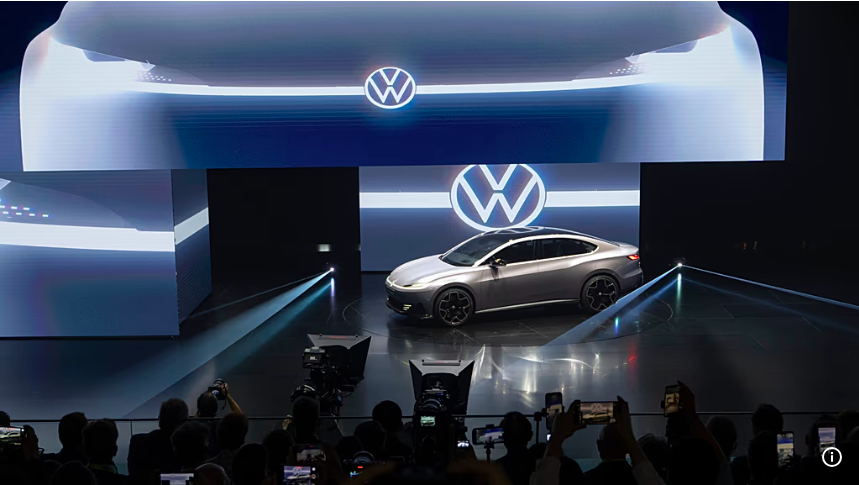
Volkswagen’s €3bn Gamble: Can It Win Back Market Share in China?
For decades, Volkswagen was the undisputed foreign champion of China’s car market. Its sedans became status symbols for a rising middle class, and its joint ventures once commanded more than half of all passenger car sales. Today, that dominance has faded. Chinese automakers are moving faster, building smarter and selling cheaper — especially in electric vehicles. In response, Volkswagen is placing a €3bn bet on a radical reset of its China strategy. Whether that gamble pays off remains one of the biggest unanswered questions in the global auto industry.
At the heart of Volkswagen’s strategy is a vast new research and development hub in Hefei, a central Chinese city of 10 million people. The facility is the company’s largest R&D centre outside Germany and signals a decisive shift away from the old model that defined foreign automakers’ success in China for decades. Instead of importing European-designed cars and sharing technology with local partners, Volkswagen now wants to design, develop and adapt vehicles inside China — for Chinese consumers.
Register for Tekedia Mini-MBA edition 20 (June 8 – Sept 5, 2026).
Register for Tekedia AI in Business Masterclass.
Join Tekedia Capital Syndicate and co-invest in great global startups.
Register for Tekedia AI Lab.
“This business model is now gone,” said Thomas Ulbrich, Volkswagen Group China’s chief technology officer. His words underline just how profoundly the market has changed.
A market transformed by local champions
China is now the world’s largest and most competitive car market, and its domestic brands have rewritten the rules. Companies like BYD and Geely have surged ahead by mastering electric powertrains, software integration and rapid product development cycles. They release new models faster than global rivals, tailor features to local tastes and aggressively price their vehicles.

Foreign brands, by contrast, have been slowed by legacy systems, global approval processes and designs aimed at multiple markets. What once worked — selling reliable European cars with strong brand recognition — no longer guarantees success in a market where digital dashboards, voice assistants and battery range matter as much as badge prestige.
Volkswagen’s sales have suffered as a result. While it remains a major player, its market share has steadily eroded, particularly in the fast-growing electric vehicle segment. The Hefei investment is designed to stop that slide.
The Chinese consumer is king

Volkswagen’s overhaul began in 2022, when executives acknowledged that China could no longer be treated as just another regional market. Instead, it would require its own products, development timelines and decision-making power.
In what Ulbrich calls a “paradigm shift”, Volkswagen is developing vehicles specifically for Chinese drivers. These cars are unlikely to appear on European roads, where regulations, consumer preferences and driving habits differ significantly. Some models may eventually be exported to markets such as Southeast Asia or the Middle East, but China is the primary focus.
This localisation goes beyond design tweaks. Chinese consumers expect seamless digital experiences, frequent software updates and advanced driver-assistance systems. Features such as large infotainment screens, in-car apps and voice controls are no longer luxuries but essentials. Volkswagen’s new R&D centre is tasked with embedding these expectations from the ground up, rather than retrofitting them later.
Catching up in the electric race
The urgency of Volkswagen’s gamble is heightened by the electric transition. China is the global epicentre of EV adoption, and domestic brands dominate the space. BYD, in particular, has combined vertical integration with scale to undercut rivals on price while maintaining healthy margins.
Volkswagen has acknowledged it is playing catch-up. Its China-specific EV platforms are designed to shorten development times and lower costs, allowing it to respond more quickly to market trends. The hope is that faster innovation and deeper localisation will narrow the gap with Chinese competitors.
As new models roll out over the coming years, the company will learn whether its €3bn investment can translate into renewed momentum — or whether it simply stabilises a business under pressure.
Can market share really be regained?
Analysts are cautious. Rella Suskin, an equity analyst at Morningstar who covers European automakers, sees Volkswagen’s strategy as necessary but limited in its upside.
“Such a strategy is key to regaining competitiveness within China,” she said. But she does not expect a dramatic reversal of fortunes. Instead, Suskin predicts the new approach will help Volkswagen “maintain market share levels in line with current levels, rather than allow them to regain the market share that has been lost over the last few years.”
That assessment reflects the harsh reality of today’s Chinese auto market. Competition is intense, margins are under pressure and brand loyalty is increasingly fluid. Even with better products, foreign automakers face an uphill battle against homegrown companies that understand local consumers instinctively and move at breakneck speed.
A defining test for Volkswagen
Volkswagen’s €3bn gamble is about more than China. It is a test of whether a century-old global carmaker can reinvent itself in a market that no longer waits for anyone. Success would demonstrate that localisation and speed can coexist with scale and heritage. Failure would underscore how difficult it has become for foreign brands to reclaim lost ground in China’s automotive revolution.
For now, Volkswagen is all in. The Hefei hub stands as a concrete symbol of its determination to adapt. The payoff, however, is far from guaranteed. In a market where the Chinese consumer is king and domestic champions rule the road, Volkswagen’s future will depend not on past glory, but on how convincingly it can prove it still belongs.
Conclusion / Final Thought
Volkswagen’s €3bn investment in China is a bold acknowledgement that its old playbook no longer works in the world’s most competitive car market. By putting Chinese consumers at the centre of design, development and decision-making, the German automaker is giving itself a fighting chance to remain relevant. However, this strategy is less about reclaiming past dominance and more about survival in a market now led by fast-moving domestic champions. If Volkswagen succeeds, it will be because it learned to act like a local player in a global brand’s body. If it falls short, China will stand as a stark reminder that legacy alone is no longer enough to win the future of mobility.
Uploaded files:Share this:
- Click to share on Facebook (Opens in new window) Facebook
- Click to share on X (Opens in new window) X
- Click to share on WhatsApp (Opens in new window) WhatsApp
- Click to share on LinkedIn (Opens in new window) LinkedIn
- Click to email a link to a friend (Opens in new window) Email
- Click to print (Opens in new window) Print