

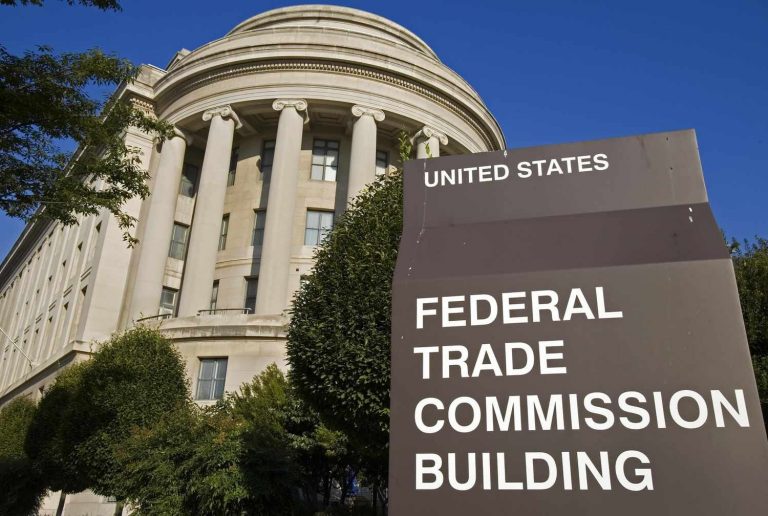
The U.S. Federal Trade Commission, now under an all-Republican leadership, has given conditional approval to a $13.5 billion merger between advertising giants Omnicom and Interpublic Group—on the unusual condition that the newly formed company cannot direct advertisers to avoid media platforms based on political or ideological viewpoints.
The FTC’s proposed consent order, made public Monday, targets concerns that media-buying power could be weaponized to block ad spending on platforms such as Elon Musk’s X (formerly Twitter), which lost major advertisers in 2023 after some ads appeared next to pro-Nazi and extremist content.
The merger combines the third- and fourth-largest ad-buying agencies in the U.S. and could reshape how billions of dollars in digital ad spending are allocated across media platforms.
Register for Tekedia Mini-MBA edition 20 (June 8 – Sept 5, 2026).
Register for Tekedia AI in Business Masterclass.
Join Tekedia Capital Syndicate and co-invest in great global startups.
Register for Tekedia AI Lab.
“With one fewer major competitor in the Media Buying Services industry… the remaining competitors have fewer impediments to coordinating the placement of advertisements,” the FTC wrote in its complaint, warning against consolidated control that could stifle dissenting platforms.
A Victory for Musk, A Warning to Advertisers
The order is widely seen as a win for Elon Musk, who has claimed that advertisers engaged in an “illegal boycott” against X for ideological reasons. Musk has repeatedly targeted the Global Alliance for Responsible Media (GARM)—a World Federation of Advertisers initiative that guided brands on “brand safety” by avoiding ads alongside harmful or politically extreme content.
GARM, which played a central role in ad content moderation, recently disbanded due to lack of resources and growing legal pressure, including a pending antitrust case filed by Musk’s X.

The FTC referenced GARM in its complaint, raising concerns that consolidating Omnicom and IPG would give them similar power to control advertising access through coordinated policies that could edge out controversial but legal content.
What’s In the FTC Order?
The proposed consent decree, spearheaded by Republican Chair Andrew Ferguson and Commissioner Melissa Holyoak, bars Omnicom-IPG from:
- Maintaining any internal policy that refuses to do business with advertisers based on political or ideological views.
- Steering ad dollars away from media publishers based on the publishers’ political or ideological alignment, unless explicitly requested by the client.
- Punishing platforms like X for their content unless clients independently demand such exclusions.
Advertisers will still be allowed to instruct the company to avoid certain websites or platforms for brand safety reasons. However, Omnicom cannot proactively enforce those exclusions across clients based on political content alone.

“Omnicom-IPG may choose with whom it does business and follow any lawful instruction from its customers,” Ferguson said in a statement. “No one will be forced to have their brand appear in venues they do not wish. But the firm cannot impose those values unilaterally.”
A Politicized FTC—and a Legal Gray Zone
The decision comes amid a political reshaping of the FTC under President Donald Trump. The agency, typically comprised of five members representing both parties, now operates with just three Republicans after Trump attempted to fire the remaining Democratic commissioners. Commissioner Mark Meador recused himself from the Omnicom-IPG decision, leaving Ferguson and Holyoak to approve the order.
This partisan alignment has raised concerns that the FTC’s traditionally bipartisan antitrust oversight is increasingly reflecting Republican cultural grievances—especially as the order leans into longstanding GOP complaints of “viewpoint discrimination” by Big Tech and mainstream media.
While the U.S. Supreme Court has repeatedly upheld the right to boycott, especially in political contexts, the FTC appears to be drawing a distinction between coordinated business decisions by dominant players and individual brand choices.
Ripple Effects on the Ad Industry
The ruling will likely ripple through the $1 trillion global advertising industry. Media buyers, brands, and publishers now face a less predictable regulatory landscape. The case may also set a precedent for future government intervention in content moderation and ad placement decisions, blurring the lines between business discretion and viewpoint discrimination.
Advertisers already wary of reputational risk must now tread carefully: while they retain the right to choose their media platforms, agencies like Omnicom cannot enforce blanket bans on platforms like X unless the advertiser explicitly instructs them to.
Bottom Line
The FTC’s greenlight of the Omnicom-IPG merger comes with a sharp caveat: ad giants must serve clients, not ideologies. As ideological debates reshape the digital economy, the future of ad placement may now rest on the fine print of agency contracts—and the ideological preferences of clients themselves.