

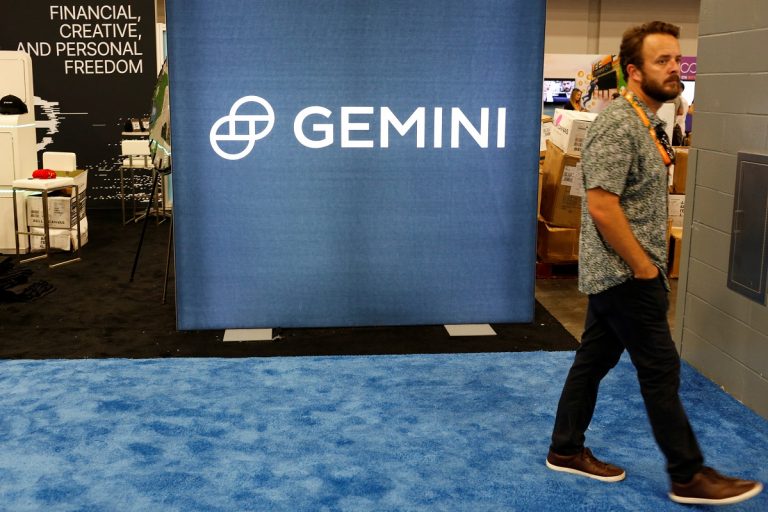
Gemini, the cryptocurrency exchange founded by the Winklevoss twins, has filed for a U.S. IPO to raise up to $317 million, targeting a valuation of $2.22 billion.
The company plans to sell 16.67 million shares of Class A common stock at $17–$19 each, listing on the Nasdaq under the ticker “GEMI.” The IPO is led by Goldman Sachs and Citigroup, with additional bookrunners including Morgan Stanley and Cantor. Proceeds will support operations, debt repayment, and expansion of stablecoin and crypto services.
Despite $18 billion in assets and offerings like trading, staking, and an XRP rewards credit card, Gemini reported a $282.5 million net loss on $68.6 million revenue in H1 2025. If successful, Gemini will be the third major U.S. crypto exchange to go public, following Coinbase (2021) and Bullish (2025), amid a favorable regulatory environment and strong investor interest in crypto IPOs.
Gemini’s IPO signals the cryptocurrency sector’s maturation, moving from speculative niche to a regulated, institutional-grade asset class. The involvement of Wall Street giants like Goldman Sachs, Citigroup, and Morgan Stanley as underwriters underscores growing confidence from traditional finance, a stark contrast to the skepticism crypto faced a decade ago.
Register for Tekedia Mini-MBA edition 20 (June 8 – Sept 5, 2026).
Register for Tekedia AI in Business Masterclass.
Join Tekedia Capital Syndicate and co-invest in great global startups.
Register for Tekedia AI Lab.
Regulatory tailwinds, such as the U.S. GENIUS Act for stablecoins and a crypto-friendly Trump administration, bolster Gemini’s timing. This mirrors how Meta capitalized on the social media boom and growing internet adoption in 2012 to establish itself as a tech titan.
However, Gemini’s $282.5 million net loss on $68.6 million revenue in H1 2025 raises concerns about financial sustainability, unlike Meta’s pre-IPO profitability ($1 billion net income on $3.7 billion revenue in 2011). This highlights the crypto sector’s volatility and Gemini’s reliance on market optimism rather than proven profitability.
Bridging Traditional Finance and Crypto
Gemini positions itself as a bridge between traditional finance and blockchain, offering custody for $18 billion in assets, staking, and a stablecoin (Gemini Dollar). Its EU MiCA license and partnerships with firms like Samsung and Ripple reflect a strategy to integrate with global financial systems, much like Meta’s push to connect billions through social networking.

Unlike Meta, which built a consumer-facing platform, Gemini targets institutional clients (10,000+), leveraging compliance and security to differentiate itself from competitors like Coinbase and Binance. This institutional focus parallels Meta’s pivot to enterprise solutions (e.g., Workplace) post-IPO but is narrower in scope.
Gemini faces intense competition from Coinbase (S&P 500 member) and Binance, which could erode its market share. Its $2.22 billion valuation is modest compared to Coinbase’s $85 billion at IPO, suggesting a mid-tier player with growth potential but also vulnerability.
The crypto market’s volatility, exemplified by historical “red September” price declines, poses risks to investor confidence, unlike the relatively stable social media landscape Meta navigated. Past controversies, like the Gemini Earn program’s SEC lawsuit (dropped in 2025) and a $1.1 billion settlement with Genesis, could dent investor trust, similar to privacy scandals that challenged Meta post-IPO.

Gemini plans to use IPO funds for operations, debt repayment, and expansion of services like stablecoins and tokenized assets. This mirrors Meta’s use of IPO proceeds to scale infrastructure and acquire companies (e.g., Instagram in 2012). However, Gemini’s smaller raise limits its ability to pursue transformative acquisitions.
Gemini’s IPO is often framed as a parallel to Meta’s, with both companies aiming to redefine their industries—social networking for Meta, cryptocurrency for Gemini. However, the comparison requires nuance: Like Mark Zuckerberg, the Winklevoss twins are high-profile figures leveraging their fame (from their Facebook lawsuit) to drive Gemini’s narrative as a trusted, regulated crypto platform.
Their early Bitcoin investments, earning them the “Bitcoin twins” moniker, echo Zuckerberg’s foresight in betting on social media’s ubiquity. Meta’s IPO capitalized on a proven business model (advertising) and a massive user base (900 million in 2012).
Gemini, conversely, operates in a nascent, volatile market with 523,000 monthly users, banking on future crypto adoption rather than current dominance. Meta’s 2012 IPO rode the wave of social media’s cultural and economic rise, becoming a household name.
Gemini’s IPO aligns with crypto’s integration into mainstream finance, evidenced by Bitcoin ETF approvals and Coinbase’s S&P 500 inclusion. Yet, crypto remains less pervasive than social media was in 2012, limiting Gemini’s cultural footprint.
Gemini’s “security-first” ethos and regulatory compliance (e.g., NYDFS charter, MiCA license) aim to build trust, much like Meta’s early focus on user experience. However, Gemini’s financial losses and regulatory scrutiny contrast with Meta’s pre-IPO stability.
Meta’s $104 billion valuation dwarfed Gemini’s $2.22 billion, reflecting the former’s broader market reach and revenue potential. Meta’s post-IPO growth (acquiring Instagram, WhatsApp) set a precedent for tech giants, while Gemini’s ambitions are constrained by its mid-sized scale and crypto’s regulatory uncertainties.
Gemini’s focus on institutional custody and tokenized assets positions it as a crypto infrastructure play, akin to Meta’s role as a social media backbone. Yet, its reliance on transaction fees (65.5% of revenue) mirrors Meta’s ad-driven model but lacks the same scalability.
Gemini’s IPO is a strategic move to cement crypto’s place in mainstream finance, leveraging regulatory clarity and institutional interest. It shares Meta’s ambition to redefine an industry but faces greater financial and market risks.