

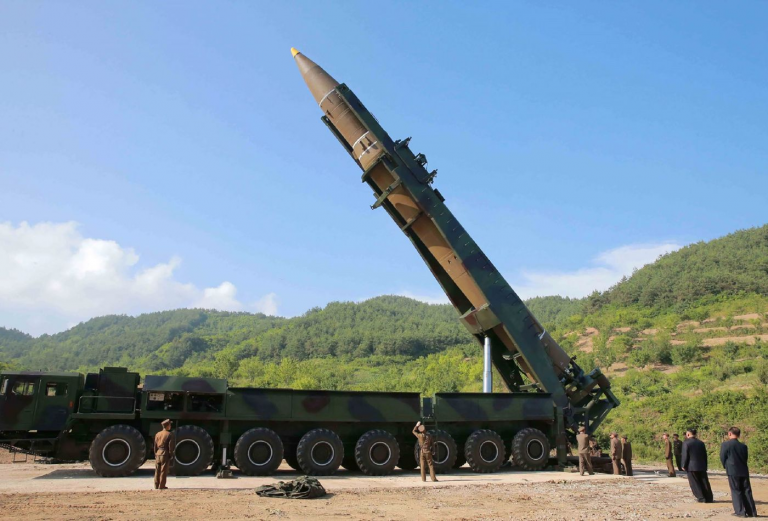
Germany and the United Kingdom are making progress in developing hypersonic long-range precision weapons, marking another important step in Europe’s efforts to strengthen its military capabilities amid rising geopolitical tensions.
According to defence company MBDA, the two countries are advancing work on technologies designed to deliver high-speed, highly accurate strikes against targets at considerable distances.
The development reflects growing concerns among European governments about the changing nature of modern warfare and the increasing importance of advanced missile systems.
Register for the next Tekedia Mini-MBA.
Register for Tekedia AI in Business Masterclass.
Join Tekedia Capital Syndicate and co-invest in great global startups.
As military competition intensifies globally, hypersonic weapons are attracting considerable attention because of their ability to travel at extremely high speeds while making interception more difficult for existing air and missile defence systems.
Hypersonic weapons generally travel at speeds exceeding Mach 5, or five times the speed of sound. Depending on their design, they can combine exceptional velocity with manoeuvrability, allowing them to follow unpredictable flight paths.
These characteristics present significant challenges for conventional defence systems, which are often designed to detect and track more predictable missile trajectories.

For Germany and the United Kingdom, progress in this area represents an opportunity to strengthen their defence partnership while reducing Europe’s dependence on military technologies developed outside the continent.
Cooperation between the two countries demonstrates how European defence companies and governments are increasingly working together to address emerging security challenges.
MBDA, one of Europe’s leading missile manufacturers, plays an important role in developing advanced weapons systems for several NATO members.

Its involvement highlights the strategic importance of the European defence industry as governments increase military spending and seek to modernise their armed forces.
The programme comes against the backdrop of Russia’s invasion of Ukraine, which has fundamentally changed Europe’s security calculations.
The conflict has demonstrated the importance of long-range strike capabilities, sophisticated air defence systems, intelligence networks and precision-guided weapons.
European governments have consequently become more focused on acquiring technologies capable of deterring potential aggression and responding effectively to emerging threats.
Germany has significantly increased its attention to defence modernisation, while the United Kingdom continues to position itself as a major contributor to NATO’s military capabilities.
Their cooperation on hypersonic technology could strengthen interoperability and create opportunities for broader industrial collaboration across Europe.
Developing operational hypersonic weapons remains technically demanding. Engineers must address extreme temperatures, propulsion challenges, guidance accuracy and the ability to maintain communication under difficult flight conditions.
Testing, manufacturing costs and integration with existing military platforms will also influence how quickly such technologies can become available for deployment.
Beyond the immediate military implications, progress in hypersonic weapons development could intensify international competition in advanced missile technology.
Countries including the United States, China and Russia have already invested heavily in related programmes, making the technology an increasingly important component of global military strategy.
The expansion of hypersonic capabilities raises concerns about strategic stability. Their speed and limited interception windows could reduce the time available for governments to assess potential attacks, increasing the risk of miscalculation during international crises.
Germany and the United Kingdom’s progress represents more than a technological achievement. It reflects Europe’s determination to strengthen its defence independence, improve deterrence and respond to a rapidly changing security environment.
As development continues, the programme could become an important part of the continent’s long-term military modernisation strategy.