

The ongoing U.S.-Israeli military conflict with Iran which escalated with strikes, including the killing of Supreme Leader Ali Khamenei is creating significant short-term and potential longer-term impacts on the German economy, as highlighted by Economy Minister Katherina Reiche’s warning on March 2, 2026.
Energy Price Surge
Germany, as a major energy importer with limited domestic production, is highly vulnerable to disruptions in global oil and gas supplies. The key risk is the Strait of Hormuz, through which about 20% of the world’s oil and significant LNG flows.
Iran has threatened or partially disrupted tanker traffic there, leading to vessels anchoring, rerouting around the Cape of Good Hope, insurance issues, and halted flows in some cases. Oil prices have already surged sharply; Brent crude toward $80/barrel or higher in early March 2026, up from pre-conflict levels around $65.
Register for Tekedia Mini-MBA edition 20 (June 8 – Sept 5, 2026).
Register for Tekedia AI in Business Masterclass.
Join Tekedia Capital Syndicate and co-invest in great global startups.
Register for Tekedia AI Lab.
Fuel and gas prices in Germany have risen rapidly — wholesale adjustments for middle distillates and gasoline up to €16 per 100 liters in some cases, with natural gas futures also climbing significantly. These increases are feeding through to consumer prices and industrial inputs, exacerbating inflation pressures in an economy already facing modest growth.
Analyses suggest that a prolonged disruption (beyond a few weeks) could push oil prices much higher potentially $100+/barrel in escalation scenarios, adding 0.2% or more drag on medium-term GDP growth per 10% oil price rise per ECB estimates. This compounds existing challenges like weak industrial output and high energy dependency post-Ukraine war.
Higher energy costs could add at least 1 percentage point to eurozone inflation if the conflict drags on, forcing the ECB to delay rate cuts or tighten policy, which hurts borrowing and investment. Growth slowdown: Europe’s already fragile recovery (eurozone growth forecasts ~1.2% in 2026) faces a “speed bump” or worse.

A short conflict under a month, as U.S. President Trump indicated might limit damage to temporary volatility. Prolonged fighting risks stagflation (stagnant growth + high inflation). European stocks including Germany’s DAX saw sharp declines; 1.6% drops on March 2, with banks, airlines, and energy-intensive sectors hit hardest due to risk aversion and higher costs.
Supply chain and trade risks: Disruptions could affect global shipping, raising transport costs and delaying imports and exports for Germany’s export-heavy economy. The German government has reactivated crisis mechanisms to monitor energy markets and supply risks closely.
Minister Reiche emphasized that impacts depend on conflict duration, effects on production facilities, and transport routes — with the Strait of Hormuz as the main concern. Germany imports relatively little crude directly from the region but remains exposed via global prices.

Experts note that if the conflict resolves quickly; within weeks, with Gulf producers like Saudi Arabia ramping up output to stabilize markets, Europe — including Germany — could weather it as a temporary shock. However, escalation (e.g., wider regional involvement or sustained Hormuz closure) would amplify burdens on households, industries, and public finances (potentially needing more subsidies for energy costs).
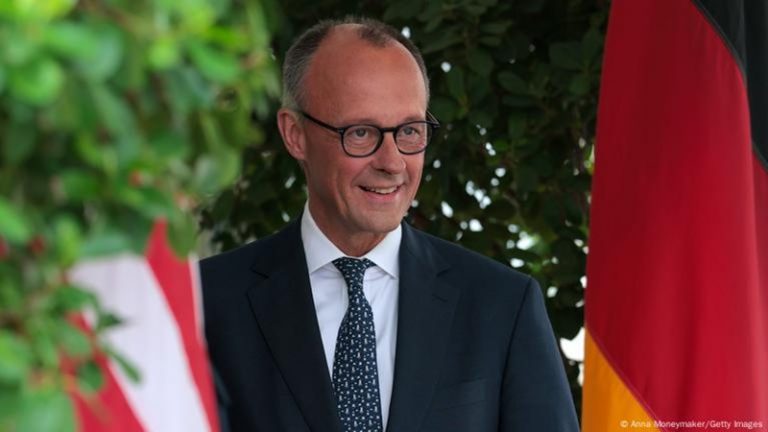
Chancellor Friedrich Merz’s upcoming discussions with U.S. President Trump may address these risks, alongside broader transatlantic ties, though Germany has avoided direct military involvement while urging restraint.
Overall, the situation adds fresh uncertainty to an economy already under pressure, with energy costs as the dominant transmission mechanism. Markets remain volatile, and the next few weeks will be critical in determining whether this becomes a minor setback or a deeper crisis.