

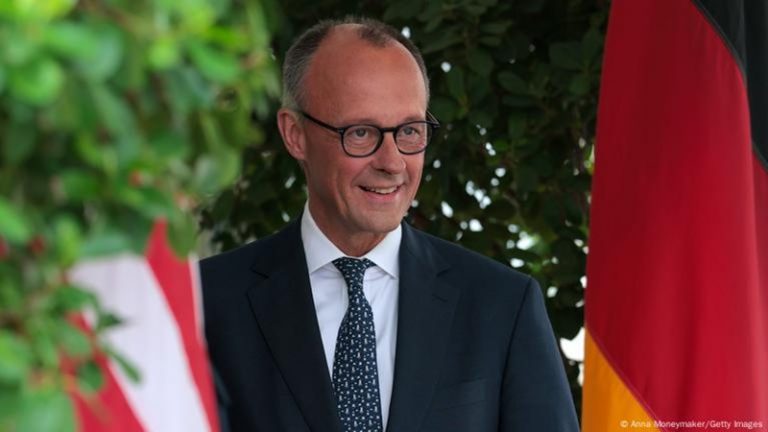
German Foreign Minister Johann Wadephul explicitly stated that Germany has no intention of participating in the ongoing US-Israeli military campaign against Iran.
He made these remarks in an interview with public broadcaster Deutschlandfunk, emphasizing that Berlin lacks the corresponding military resources in the region and has no plans for offensive involvement. This came after Israeli media reports suggested Germany was “seriously considering” joining if Iran continued retaliatory attacks, which Wadephul directly refuted.
He clarified that Germany’s role would be limited to defensive measures only—protecting its own deployed soldiers; at multinational bases in Jordan or Iraq if they come under attack—nothing more. Germany shares some goals with the US and Israel, such as dismantling Iran’s nuclear and ballistic missile programs, and has coordinated with European partners like France and the UK in E3 statements condemning Iran’s actions.
However, Chancellor Friedrich Merz has struck a cautious tone, focusing on diplomacy, calling for a “day after” plan for Iran, and urging restraint amid the escalation that began with large-scale US-Israeli strikes around late February/early March 2026. The conflict has widened rapidly, with Iran launching retaliatory strikes, significant casualties reported, and disruptions to global travel and oil routes.
Register for Tekedia Mini-MBA edition 20 (June 8 – Sept 5, 2026).
Register for Tekedia AI in Business Masterclass.
Join Tekedia Capital Syndicate and co-invest in great global startups.
Register for Tekedia AI Lab.
Germany is not committing troops or assets to offensive operations, aligning with its constitutional and resource constraints on such engagements. France’s stance on the ongoing US-Israel-Iran conflict is one of non-involvement in offensive operations, strong condemnation of Iran’s retaliatory actions, readiness for defensive support to allied Gulf states and Jordan, and active diplomacy for de-escalation.
France was not involved and had no prior knowledge of the initial US and Israeli military actions against Iran (which began around late February/early March 2026, targeting Iranian leadership, nuclear, and ballistic facilities). French Foreign Minister Jean-Noël Barrot has repeatedly emphasized this, including in a March 2 call with Chinese counterpart Wang Yi and in public remarks.
France along with Germany and the UK in the E3 format has strongly criticized Iran’s “indiscriminate and disproportionate” missile and drone attacks on regional countries, including those not directly involved in the initial strikes.
A joint E3 leaders’ statement from Presidents Macron, Chancellor Merz, and PM Starmer on March 1 described these as reckless, threatening allies, personnel, and civilians, and called for Iran to stop immediately. They highlighted Iran’s responsibility for escalation, violations of UN Security Council resolutions on nuclear/ballistic programs, support for armed groups, and rejection of negotiations.

France has declared it is “ready” and stands in “full support and complete solidarity” to participate in the defense of Gulf nations (Saudi Arabia, UAE, Qatar, Iraq, Bahrain, Kuwait, Oman) and Jordan if they face further Iranian attacks. This would be under collective self-defense principles of international law and existing agreements, proportionate, and upon request.
Barrot stated this explicitly on March 2 after a crisis meeting, noting France could contribute to defending these partners “dragged into a war they did not choose.” Barrot noted that the initial US-Israeli strikes were “unilateral” and should have been debated in multilateral forums like the UN Security Council for legitimacy.
France is prioritizing de-escalation, coordinating with China (agreeing on March 2 to work together for a political solution respecting Iranian people’s aspirations and collective security) and other partners. The E3 has urged resumption of negotiations, with Iran making concessions on nuclear, ballistic, and regional destabilization issues.

This aligns with France’s cautious balancing—tacitly sharing goals like curbing Iran’s nuclear and ballistic threats but avoiding direct offensive entanglement. France is also mobilizing to assist stranded nationals around 400,000 in the region amid airspace closures and chaos, and bolstering its regional military posture including after incidents affecting French assets.
France supports defensive protection of allies against Iranian aggression, blames Tehran for much of the widening escalation, distances itself from the offensive phase led by the US and Israel, and actively pursues diplomatic off-ramps with global partners like China. This mirrors Germany’s non-offensive stance but with a clearer offer of defensive military involvement if requested by Gulf/Jordanian allies.