

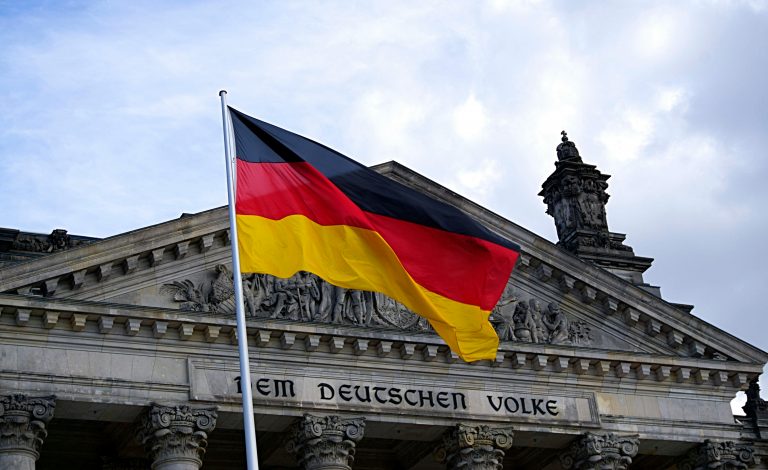
Germany has recently urged the European Union to intensify its efforts to support Syria’s economic recovery and stabilization following the prolonged civil war and the fall of the Assad regime in late 2024.
According to a position paper from Berlin addressed to the European Commission, Germany is pushing for expanded economic relations with Syria. Key proposals include: Initiating discussions with the European Investment Bank (EIB, owned by the EU’s 27 member states) about potentially resuming operations or involvement in Syria.
Placing greater emphasis on policies that promote economic recovery and post-war reconstruction, with the World Bank estimating reconstruction costs at least $216 billion. The rationale is that faster economic progress is essential for the country’s stability after over a decade of conflict.
Germany argues that stronger EU engagement in economic ties would help accelerate recovery and prevent setbacks in the transitional period. This call comes amid ongoing EU efforts since 2025, including: The lifting of all economic sanctions on Syria decided in May 2025, with Germany playing a key role in pushing for phased relief.
Register for Tekedia Mini-MBA edition 20 (June 8 – Sept 5, 2026).
Register for Tekedia AI in Business Masterclass.
Join Tekedia Capital Syndicate and co-invest in great global startups.
Register for Tekedia AI Lab.
Significant aid pledges, such as the EU’s €2.5 billion commitment for 2025–2026 and an additional €620 million package for 2026–2027 focused on humanitarian aid, early recovery, and bilateral support. Broader initiatives like enhanced trade cooperation and involvement in Mediterranean Pact programs to facilitate private investment and socio-economic rebuilding.
Germany has been a leading voice in supporting Syria’s transition, including through bilateral talks on financial reforms, debt restructuring, and investments in sectors like energy and infrastructure. However, challenges persist: Syria’s economy saw only modest 1% growth in 2025, with high poverty rates (over 90% of the population affected), inflation, and limited tangible benefits from sanctions relief on the ground.
The push reflects Berlin’s view that sustained EU action—beyond humanitarian aid—is critical for long-term stability, inclusive governance, and potentially facilitating the voluntary return of refugees. This aligns with earlier German commitments to reconstruction in areas like health, education, water, and economic development.
Syria’s energy sector—encompassing oil, natural gas, electricity generation, and renewables—is undergoing significant revival and attracting substantial foreign investments following the fall of the Assad regime in late 2024, the lifting of most international sanctions in 2025, and the government’s regain of control over key northeastern oil and gas fields in early 2026.

The sector was devastated by over a decade of conflict, with pre-war oil production around 400,000 barrels per day (bpd) dropping to roughly 120,000 bpd by late 2025. Electricity generation has been severely limited, often providing only a few hours of power daily in many areas due to damaged infrastructure, fuel shortages, and neglect.
Oil and Gas Production
Following the January 2026 handover of major fields like Al-Omar (the largest oil field) and Conoco/Tabiyeh gas complexes from Kurdish-led forces to central government control, production is rebounding. Oil output has increased by tens of thousands of bpd through low-cost repairs, workovers, and facility upgrades.
The Syrian Petroleum Company targets further gains, with expectations of reaching 100,000+ bpd soon and potential for doubling gas production to 14-15 million cubic meters per day by end-2026.
Electricity: Generation has improved from ~3 hours/day in some regions in early 2025 to 13+ hours in many areas by early 2026, with ambitions for 24/7 nationwide supply by end-2026. Gas imports from Azerbaijan via Turkey, Jordan/Qatar, and planned from Egypt support power plants in Aleppo, Homs, and Damascus.

Reconstruction needs for the broader energy sector (oil, gas, power, water) exceed $30 billion, with urgent requirements around $10 billion for power infrastructure alone. The World Bank estimates overall post-conflict reconstruction at ~$216 billion.
The transitional government has amended investment laws to allow up to 100% foreign ownership, attracting Gulf states, Turkey, the US, and others. Major deals focus on power plants, upstream redevelopment, and renewables. A $7 billion consortium led by Qatar’s UCC Holding signed in May 2025 for 5,000 MW capacity: four combined-cycle gas turbine (CCGT) plants (4,000 MW total) and 1,000 MW solar.
Locations include Aleppo, Deir ez-Zor, Homs, and others. This is structured as a public-private partnership and is one of the biggest post-war energy investments. Oil and Gas Upstream: US Chevron signed agreements with Qatari partners for offshore exploration and development, with operations starting soon.
UAE’s Dana Gas: MoU for redeveloping key gas fields like Abu Rabah. Other majors (ConocoPhillips, TotalEnergies, Eni) in talks or MoUs. Saudi firms (e.g., TAQA, ADES) providing technical support; Saudi Arabia announced broader investments including energy as part of a $2 billion+ package.
Azerbaijan (SOCAR) supplies 1.2 billion cubic meters annually since August 2025 for 1,200–1,300 MW generation. Regional pipelines (Arab Gas Pipeline via Jordan) and planned Egyptian supplies. World Bank $146 million grant for the “Syria Electricity Emergency Project” to repair transmission lines and substations.
US firms (Baker Hughes, Hunt Energy, Argent LNG) developing roadmaps for oil/gas/power tied to a new Syrian Sovereign Wealth Fund. Saudi ACWA Power: Joint agreement for 2.5 GW renewables (solar/wind). Gulf investments alone reached ~$28 billion across sectors in 2025, with energy as a priority.
European involvement remains limited but growing: Germany’s Siemens discussed opportunities in 2025, and the EU via pledges like €2.5 billion for 2025–2026 and €620 million for 2026–2027 focuses on humanitarian and early recovery aid, with Germany pushing for more economic engagement.
Despite momentum, hurdles include slow MoU implementation, infrastructure damage requiring massive rehab, governance and transparency concerns, political fragility, and the need for sustained stability to unlock full potential. Production gains in 2026 are expected to be incremental at first, focused on repairs rather than major new developments.
The sector’s revival is central to Syria’s economic stabilization, reducing import dependency, generating revenue for reconstruction, and improving living conditions through reliable power. International investment—primarily from Gulf and regional players—drives progress, with 2026 positioned as a pivotal year for tangible recovery in output and capacity.