

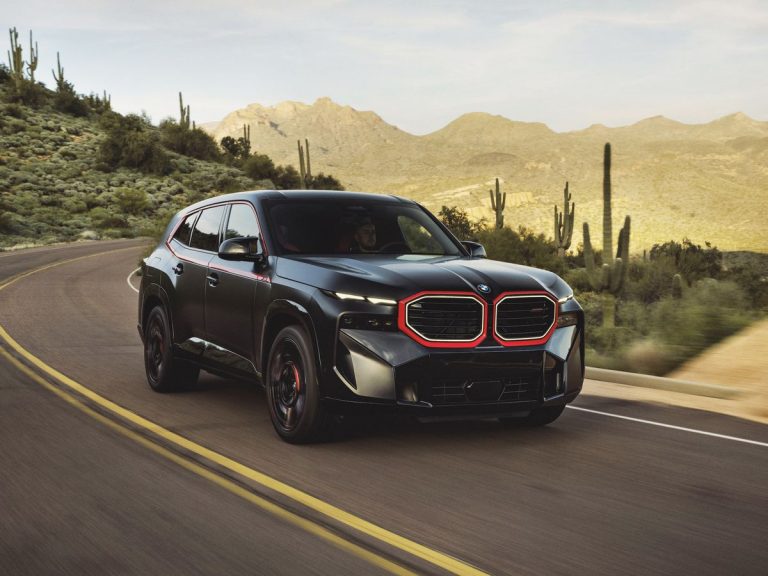
Germany’s automotive industry is showing signs of renewed optimism, with business sentiment among car manufacturers improving sharply in October despite mounting challenges facing the sector.
According to experts at the ifo economic institute, confidence across the country’s automotive industry strengthened during the month, suggesting that manufacturers may be becoming more optimistic about future business conditions.
However, the improved outlook comes against a difficult backdrop, highlighted by BMW’s latest financial results and another warning about its profitability.
Register for the next Tekedia Mini-MBA.
Register for Tekedia AI in Business Masterclass.
Join Tekedia Capital Syndicate and co-invest in great global startups.
The improvement in sentiment is notable because Germany’s automobile industry has faced considerable pressure from weakening demand, rising production costs, international competition and the expensive transition towards electric vehicles.
For years, the automotive sector has been one of the most important pillars of the German economy, supporting millions of jobs and contributing significantly to industrial exports. Recent difficulties have therefore raised concerns about the country’s broader economic competitiveness.
The ifo institute’s latest assessment suggests that businesses are beginning to see opportunities for improvement despite these structural challenges.

Better expectations could indicate that manufacturers anticipate more stable demand, improved production conditions or stronger commercial prospects in the coming months. Improved confidence does not necessarily mean that the industry’s underlying problems have disappeared.
BMW’s latest earnings announcement illustrates the difficulties facing even Germany’s most established automotive manufacturers. The luxury carmaker reported a nearly 15% decline in third-quarter net profit on Wednesday.
Reflecting the impact of weaker sales in China and other pressures affecting its business. The disappointing performance followed another profit warning issued just one day earlier, reinforcing concerns about the company’s financial outlook.

China remains important to BMW because it represents one of the world’s largest automobile markets and a major destination for premium vehicles.
However, demand has weakened amid intense competition from domestic manufacturers, changing consumer preferences and challenging economic conditions.
Chinese electric vehicle companies have increasingly attracted customers with competitively priced models, advanced technology and rapidly improving product offerings.
This competition has created additional difficulties for international manufacturers, including BMW, Mercedes-Benz and Volkswagen. Chinese brands have expanded their influence through aggressive pricing strategies and technological innovation.
Putting pressure on established European companies to reconsider their business models. Weaker Chinese sales present a significant challenge because the company relies on the market to support its global growth ambitions.
Lower demand can affect revenue, production volumes and profitability, particularly when manufacturers must continue investing heavily in electric vehicles, software development and future technologies.
Germany’s automotive industry is navigating the transition away from traditional combustion engines. Although electric vehicle adoption is expanding, manufacturers face questions about affordability, charging infrastructure, consumer demand and the profitability of electric models.
European companies must simultaneously compete with established international rivals and emerging Chinese manufacturers. Despite these obstacles, October’s improvement in business sentiment offers a potentially encouraging signal.
Stronger confidence could support investment decisions and help manufacturers maintain production while preparing for changing market conditions. BMW’s disappointing results demonstrate that optimism must be balanced against economic realities.
The company’s struggles highlight how quickly international competition and weaker demand can affect even financially established businesses. Germany’s automotive industry faces a complicated recovery.
Improved sentiment provides some encouragement, but sustained growth will depend on stronger demand, competitive electric vehicles and the ability of manufacturers to defend their positions in international markets.
Germany’s Electric Car Sales Surge 80% as Energy Consumption Set to Decline in 2026
Germany’s energy transition is gaining momentum as electric vehicle sales continue to accelerate while the country’s overall energy consumption is expected to decline significantly in 2026.
The latest figures highlight two important developments in Europe’s largest economy: growing consumer interest in electric mobility and changing patterns of national energy demand.
These trends reflect Germany’s ongoing efforts to modernize its economy, reduce dependence on fossil fuels and advance its climate objectives.
According to the Federal Motor Transport Authority (KBA), electric car sales in Germany increased by an impressive 80% year-on-year in October. The strong performance indicates that demand for battery-powered vehicles remains resilient.
Providing further evidence that electric mobility is becoming an increasingly important part of the country’s automotive market. The surge is significant for Germany, which has traditionally relied heavily on its automotive industry as a major source of employment, exports and industrial production.
Manufacturers such as Volkswagen, Mercedes-Benz, BMW and Porsche are investing heavily in electric vehicle technology as competition intensifies from international rivals, particularly Chinese manufacturers.
The October increase suggests that consumers are gradually becoming more comfortable with electric vehicles as manufacturers introduce new models across different price categories.
Improvements in battery technology, driving range, charging infrastructure and vehicle performance are helping address some of the concerns that previously discouraged potential buyers.
Government policies and incentives have played an important role in shaping Germany’s electric vehicle market. Although the withdrawal and restructuring of certain purchase subsidies previously created uncertainty.
Manufacturers and policymakers continue to face pressure to make electric cars more affordable and accessible. The latest sales figures could encourage further investment in charging networks, battery production and domestic electric vehicle supply chains.
However, the transition is not without challenges. Germany’s automotive industry is dealing with high production costs, international competition and uncertainty surrounding the future of electric vehicle subsidies.
Chinese manufacturers are expanding their presence in Europe, forcing established German brands to reconsider pricing strategies and accelerate product development.
Meanwhile, Germany’s broader energy outlook is undergoing another important transformation. A group of independent experts has projected that total energy consumption in the country will fall significantly in 2026.
The forecast suggests that Germany could experience another year of declining energy demand as economic conditions, industrial activity, efficiency improvements and structural changes influence consumption patterns.
Lower energy consumption could support Germany’s climate ambitions by reducing pressure on energy supplies and potentially limiting emissions, particularly if renewable sources account for a growing proportion of the country’s energy mix.
However, declining demand does not automatically indicate economic progress. Industrial weakness, reduced manufacturing activity and subdued business investment could also contribute to lower consumption.
This distinction is important because Germany has faced considerable economic challenges, including elevated production costs, industrial restructuring and weak competitiveness in several traditional manufacturing sectors.
Policymakers must therefore ensure that energy efficiency improvements do not come at the expense of industrial output and economic growth.
The combination of rising electric vehicle sales and declining energy consumption presents an interesting picture of Germany’s evolving economy. While electrification is creating opportunities for manufacturers, suppliers and infrastructure companies.
The country must maintain reliable and affordable energy supplies to support its industrial transformation. October’s electric vehicle sales growth provides encouraging evidence that Germany’s mobility transition is progressing.
Whether this momentum can be sustained throughout 2027 will depend on affordability, infrastructure investment, consumer confidence and government policy. Falling energy consumption will test Germany’s ability to balance environmental objectives with industrial competitiveness and long-term economic stability.