

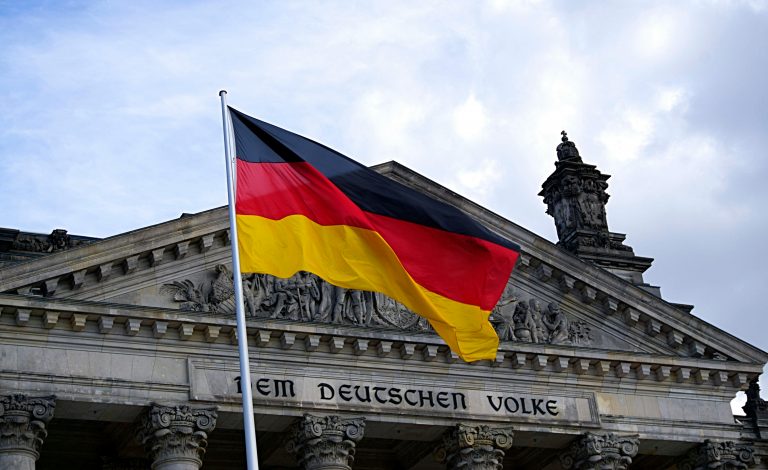
Germany’s manufacturing sector slipped deeper into contraction in December, closing out 2025 on a fragile note that underlines how vulnerable Europe’s largest industrial economy remains to weak global demand, high costs, and prolonged uncertainty in key export markets.
The HCOB final Purchasing Managers’ Index (PMI) for German manufacturing, compiled by S&P Global, fell to 47.0 in December from 48.2 in November. The final reading was weaker than the preliminary estimate of 47.7, signaling a sharper deterioration in conditions than first indicated. Any reading below 50 points to contraction, while levels above that threshold indicate expansion.
December marked the first decline in factory output in 10 months, ending a tentative recovery that had raised cautious hopes earlier in 2025 that the sector was stabilizing after a prolonged slump. Instead, the latest data suggest that improvement was short-lived.
Register for Tekedia Mini-MBA edition 20 (June 8 – Sept 5, 2026).
Register for Tekedia AI in Business Masterclass.
Join Tekedia Capital Syndicate and co-invest in great global startups.
Register for Tekedia AI Lab.
The primary drag came from exports, a critical engine of German manufacturing. Export orders fell for a fifth consecutive month, with the pace of decline accelerating to its fastest rate since December 2024. That trend reflects weakening demand from major overseas markets, including China, where industrial activity has struggled, and parts of Europe, where high interest rates and subdued consumer spending have constrained growth.
“Manufacturing had shown hints of recovery earlier in 2025, but the downturn has deepened again in December, driven by investment and consumer goods,” said Cyrus de la Rubia, chief economist at Hamburg Commercial Bank AG.
His assessment points to a slowdown that is no longer confined to a single niche but cuts across core segments of Germany’s industrial base.

The survey revealed broad-based strain on factory operations. Employment fell at the steepest pace in six months, as manufacturers trimmed workforces to align capacity with weaker order books. Cuts to purchasing activity and inventories also deepened, signaling caution among firms about stocking up amid uncertainty over future demand.
For Germany, where manufacturing jobs carry outsized economic and political significance, sustained workforce reductions are a sensitive issue. The sector has already been grappling with structural shifts, including the transition away from combustion engines, rising competition from Chinese manufacturers, and the need to invest heavily in digitalization and decarbonization.
Cost pressures, while less acute than during the peak of the energy crisis, remain a persistent challenge. Energy prices have eased from extreme levels, but they are still higher than pre-crisis norms, particularly for energy-intensive industries such as chemicals, metals, and glass. At the same time, elevated borrowing costs through much of 2025 dampened investment, both at home and among key trading partners.

The December PMI also highlights how Germany’s manufacturing struggles fit into a broader European pattern. Factory activity across the euro zone has remained under pressure, but Germany’s heavy reliance on exports and capital goods makes it especially exposed when global trade slows. Weakness in German factories often ripples through supply chains across Central and Eastern Europe, amplifying the regional impact.
Despite the grim near-term picture, the survey showed a modest improvement in confidence about the future. Manufacturers’ expectations for output over the next 12 months rose to a six-month high. Firms cited hopes that new product launches, alongside increased public spending on defense and infrastructure, could help lift demand in 2026.
“With the start of government-backed infrastructure projects and the booming demand for defense equipment, things could look different in 2026,” de la Rubia said.
Germany has pledged higher defense spending amid shifting security priorities, and policymakers have also signaled support for infrastructure investment to modernize transport, energy, and digital networks.
Those expectations, however, hinge on policy follow-through and an improvement in external demand. Economists note that without a clearer rebound in exports or a stronger pickup in private investment, any recovery could prove uneven. The outlook is further complicated by geopolitical risks, trade tensions, and uncertainty over how quickly global interest rates will fall.
The December PMI figures leave Germany’s manufacturing sector entering 2026 in a weakened state, having failed to build sustained momentum in the past year. While optimism about future production suggests firms are not giving up on a turnaround, the data underline how dependent that recovery may be on fiscal support, improved global conditions, and the ability of manufacturers to adapt to structural change.