

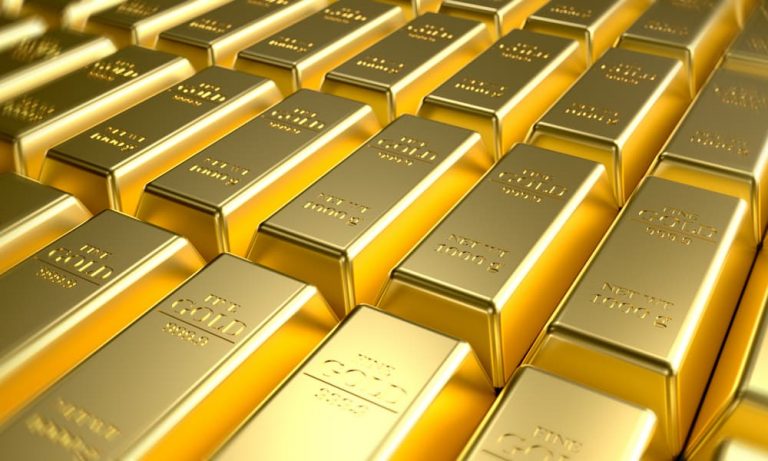
Gold was on course for a weekly decline on Friday as a sharp rise in US Treasury yields and growing expectations of further Federal Reserve rate increases reduced the appeal of an asset that does not generate interest income.
Spot gold rose 0.3% to $4,291.06 an ounce by 0844 GMT, but remained about 2% lower for the week. US gold futures gained 0.7% to $4,326.60.
The weekly decline comes as the bond market has undergone a sharp repricing. The US 10-year Treasury yield has moved to near two-decade highs, while the 30-year yield reached its highest level since 2004. Rising yields increase the opportunity cost of holding gold because investors can earn higher returns from government securities while retaining exposure to an asset considered relatively low risk.
Register for the next Tekedia Mini-MBA.
Register for Tekedia AI in Business Masterclass.
Join Tekedia Capital Syndicate and co-invest in great global startups.
“Ongoing inflationary pressures are driving those rate hike fears higher, which probably will stay until there’s a resolution to the issues around the Strait of Hormuz and the wider Middle East region,” said Nitesh Shah, commodity strategist at WisdomTree.
The relationship between gold, oil and interest rates has become cordial and toxic in the current market. Higher oil prices threaten to keep inflation elevated, which increases pressure on the Fed to maintain or further tighten monetary policy. Higher interest rates then strengthen the incentive to hold yield-bearing assets, creating a headwind for bullion.
Fed Tightening Changes The Gold Equation
The Federal Reserve raised interest rates by 25 basis points last week, its first increase in three years, and signaled that additional increases could follow. Markets are now pricing a roughly 71% probability of another rate increase in October and a 95% probability of a December hike, according to the CME FedWatch Tool.

That represents a significant shift in expectations for an asset class that has benefited from expectations of lower interest rates and persistent concerns about inflation, currency debasement, and geopolitical risk.
Gold’s traditional role as an inflation hedge has not disappeared, but the current environment illustrates why inflation alone does not determine its direction. If inflation rises at the same time as interest rates remain low or negative in real terms, gold can become more attractive. If inflation rises while central banks respond aggressively with higher rates, the resulting increase in real and nominal yields can weigh on bullion.
That tension is now playing out in the market.

The latest US economic data have reinforced expectations that the economy remains sufficiently resilient for the Fed to continue tightening. New York Fed President John Williams said Thursday that it was reasonable to expect the central bank could need to raise rates again before the end of the year.
The result is a more difficult backdrop for gold, even though the same inflation pressures supporting higher rates are also creating reasons for investors to maintain exposure to hard assets.
Middle East Remains The Key Variable
The geopolitical situation is adding another layer of uncertainty. US and Iranian negotiators in New York are exploring a potential agreement under which Tehran would reopen the Strait of Hormuz while Washington would lift its economic blockade of Iran, according to sources close to the talks.
Any credible progress toward reopening the waterway could put downward pressure on oil prices and, in turn, reduce some of the inflation premium embedded in global markets.
But that would have mixed implications for gold.
Analysts have explained that lower oil prices could reduce inflation expectations and diminish the need for aggressive monetary tightening, potentially supporting bullion through lower yields. At the same time, a successful diplomatic resolution would reduce one of the major sources of geopolitical demand for safe-haven assets.
The market has already demonstrated how quickly expectations can change. Gold and equities recovered from their session lows after reports that Washington and Tehran were exploring a phased path out of the conflict.
Oil, however, remains elevated. Brent crude rose more than 3% to nearly $107 a barrel after a Houthi missile attack on Saudi Arabia revived concerns about further supply disruptions.
“This just reinforces the view that we’re dealing with one major market catalyst right now,” said Bill Northey, senior investment director at U.S. Bank Wealth Management. “It’s really all about oil and inflation and the effect on interest rates, and then the interest rate cascading across the capital markets.”
That chain is now defining the broader investment environment: geopolitical developments affect oil, oil affects inflation expectations, inflation influences Fed policy, and interest-rate expectations then move bonds, currencies, equities and precious metals.
Gold Still Has Structural Support
The current decline does not necessarily eliminate the longer-term arguments supporting gold. Physical demand in India increased modestly this week as lower prices attracted buyers ahead of the country’s festive season. That provides some support to the market at a time when financial investors are reducing exposure.
Central-bank demand is another structural source of support. Gold has been used by central banks as a reserve asset, especially as governments seek to diversify away from concentrated exposure to major currencies.
Nikos Tzabouras, senior market analyst at Jefferies-owned Tradu.com, said lingering concerns over government deficits could revive demand for hard assets.
“Lingering deficit fears could revive the debasement trend that drives investors toward hard assets like gold,” he said. “Alongside persistent central bank demand, the precious metal has a credible case for a strong fourth-quarter recovery, should the macro winds begin to shift.”
The argument is that gold’s investment case does not depend exclusively on interest rates. Concerns over government debt, fiscal sustainability, currency purchasing power and geopolitical instability can all influence demand.
That has yielded a potential counterweight to the pressure from higher Treasury yields.
The immediate problem is that those longer-term factors are competing with a powerful short-term force: the repricing of US monetary policy.
The S&P 500 Took A Smack
The pressure on gold is part of a broader adjustment across financial markets. The S&P 500 ended Thursday almost unchanged, falling 0.02% to 7,704.13. The Nasdaq gained 0.01% to 26,939.37, while the Dow Jones Industrial Average fell 0.31% to 51,349.98.
Eight of the 11 S&P 500 sectors declined, led by materials, which fell 1.18%, and consumer staples, which lost 0.96%. The market’s breadth was weak. Declining stocks outnumbered advancing shares in the S&P 500 by about 1.9 to 1. The index recorded 14 new highs and 41 new lows, while the Nasdaq recorded 53 new highs and 238 new lows. That indicates that the headline index performance is masking considerable dispersion underneath the surface.
The resilience of the major indexes has been supported in part by technology and AI-related stocks. Microsoft fell 0.5%, and Broadcom lost 1.3%, while Advanced Micro Devices rose 2.4%. Meta Platforms gained 4.5% following the launch of a small handheld device linked to its AI assistant.
Oracle fell 3.5% after a report that it had sent a “force majeure” notice to a New Mexico data center. Blue Owl, the project’s developer, also fell sharply.
The contrast between strong AI-related earnings expectations and rising bond yields is getting thin. Higher Treasury yields raise the discount rate used to value future corporate earnings, making highly valued growth stocks more sensitive to changes in interest rates.
The S&P 500 was trading at just under 19 times expected earnings this week, its lowest valuation since 2023, according to LSEG data. Much of the recent increase in earnings expectations has been driven by AI-related companies. That means the equity market is simultaneously benefiting from expectations of strong AI-driven earnings and facing a higher cost of capital.
Other Precious Metals Remain Under Pressure
Gold was not alone in facing a difficult week. Spot silver rose 1.1% on Friday to $64.62 an ounce, while platinum gained 0.6% to $1,758.54. Palladium fell 1.1% to $1,254.73. All three metals were still heading for weekly losses.
The divergent daily moves do little to change the broader picture. Higher yields and tighter monetary expectations have created a challenging environment across precious metals, even as physical and industrial demand provide support for individual markets.
For gold, analysts say the critical variable remains the direction of real yields and expectations for the Federal Reserve. If oil remains above $100 and inflation expectations continue rising, the Fed may face pressure to maintain its tightening cycle, increasing the opportunity cost of holding bullion.
A meaningful decline in oil prices, evidence of softer inflation, or a deterioration in US economic activity could have the opposite effect by reducing expectations for additional rate hikes and lowering Treasury yields.