

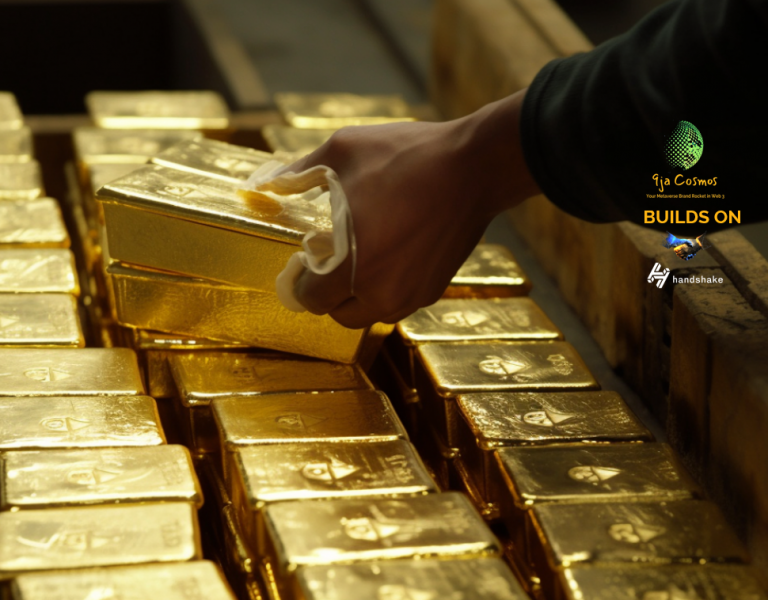
Gold pushed to its highest level in nearly two months on Friday, powered by a weaker dollar, growing expectations of additional U.S. interest rate cuts, and a fresh wave of safe-haven appetite linked to economic and geopolitical tension.
Silver extended an extraordinary 2025 breakout, shattering another record and underscoring a year in which industrial metals have outperformed even the most bullish projections.
Spot gold rose 1% to $4,327.31 an ounce by 1248 GMT, its strongest reading since October 21 and enough to secure a 3.1% gain for the week. The U.S. futures market tracked the same trajectory, with contracts climbing 1.2% to $4,363.20.
Register for Tekedia Mini-MBA edition 20 (June 8 – Sept 5, 2026).
Register for Tekedia AI in Business Masterclass.
Join Tekedia Capital Syndicate and co-invest in great global startups.
Register for Tekedia AI Lab.
A softer dollar has been central to gold’s latest move. The U.S. currency drifted near a two-month low and was heading for a third consecutive weekly slide, easing pressure on commodity prices globally and making bullion more attractive for international buyers. The dollar’s retreat has been tied partly to weakening U.S. labor data, including a spike in weekly jobless claims — the largest increase in almost four and a half years. That jump erased the sharp drop seen the previous week and raised doubts about the durability of U.S. labor market resilience.
Market analysts said the labor data injected a new layer of caution into investor sentiment. Zain Vawda of MarketPulse by OANDA described gold’s upward push as a combination of economic nerves and geopolitical unease.
“The sharp rise in U.S. weekly jobless claims as well as U.S.-Venezuela tensions are underpinning gold and keeping haven demand strong,” he said.

The Federal Reserve’s third rate cut of the year — a 25-basis-point reduction announced on Wednesday — added more fuel to the metal’s momentum. Although the Fed signaled a more measured approach to further easing, markets have already priced in two rate cuts for 2026. That expectation, combined with softening labor indicators, has strengthened the appeal of non-yielding assets like gold, which typically benefit when borrowing costs fall and real yields weaken.
Attention now shifts to next week’s U.S. non-farm payrolls report, which is expected to play a critical role in shaping near-term Fed expectations. A weak reading would likely deepen the case for lower U.S. rates and could drive bullion toward an even stronger first quarter in 2026.
A separate support pillar emerged from geopolitical tensions involving Washington and Caracas. The U.S. government is preparing to intercept additional ships carrying Venezuelan oil after seizing a tanker this week. The incident heightened anxiety in energy markets and helped push investors toward traditional hedges. Tense energy corridors have historically generated rapid inflows into gold, especially when traders fear disruptions to oil supply routes or a slide in diplomatic stability.

In Asia, the response to high global prices was visible in physical markets. Indian gold dealers widened discounts this week, even though the country is in the middle of the wedding season, traditionally the strongest period for demand. Buyers have been unwilling to absorb prices at current levels. Demand in China followed a similar path, with elevated spot levels discouraging fresh purchases.
Silver, meanwhile, staged another dramatic climb, touching a new record of $64.56 an ounce before easing slightly to $64.09. The metal is poised for a 10% weekly surge and has more than doubled this year. Industrial consumption has remained the dominant force behind silver’s rise, driven by booming demand from solar panel manufacturers, electric vehicle producers, semiconductor fabrication, and emerging energy-storage technologies.
Global inventories have been sliding for months, tightening supply conditions in key hubs and lifting long-term price projections. Silver’s inclusion on the U.S. critical minerals list earlier this year added institutional weight to its rally, making it far more central to U.S. strategic supply planning.
Ole Hansen of Saxo Bank traced the rally to a blend of real-economy demand, thinning inventory levels, and heavy speculative flows.
“Silver is supported by industrial demand amid fears of shortages, a continued tight market, and the speculative frenzy, mostly from retail investors which has helped drive inflows to Silver ETFs,” he said.
Other precious metals gained altitude as well. Platinum rose 3.2% to $1,750.35, and palladium climbed 2.6% to $1,523.10, putting both metals on track for solid weekly gains after a sluggish first half of the year.
Taken together, gold’s steady climb, silver’s blistering rally, and the broader surge across the complex suggest that investors are positioning for an uncertain 2026. Economic signals from the United States have started to wobble, geopolitical tensions remain unstable, and the Federal Reserve is edging deeper into an easing cycle, even if cautiously.
In that environment, the market has migrated back toward precious metals with a level of conviction that had been absent for months — marking a decisive shift in global trading sentiment as the year draws to a close.