

Google has unveiled a sweeping expansion of its Gemini AI ecosystem for Android, signaling a major shift in how smartphones may operate in the AI era.
The move follows the growing trend of AI assistants increasingly acting less like passive chatbots and more like autonomous operating systems capable of navigating apps, completing tasks, and making decisions across devices.
At its “Android Show: I/O Edition” event on Tuesday, Google introduced a series of Gemini Intelligence-branded features that push Android deeper into the emerging world of agentic AI. The new capabilities include cross-app task execution, autonomous web browsing, AI-assisted form completion, advanced voice dictation, and even tools that allow users to create Android widgets through natural language prompts.
Register for the next Tekedia Mini-MBA.
Register for Tekedia AI in Business Masterclass.
Join Tekedia Capital Syndicate and co-invest in great global startups.
The announcement underscores how aggressively Google is trying to position Android as the dominant consumer AI platform at a time when the smartphone industry is undergoing its biggest interface transition since the rise of touchscreens and mobile apps. Rather than relying on users to manually navigate applications, Google is increasingly redesigning Android around AI orchestration, where Gemini functions as an intelligent layer sitting above apps and services.
The strategy mirrors a broader shift across the technology industry. Major companies, including Apple, Microsoft, and Alibaba, are all racing to transform AI assistants into action-oriented systems capable of handling workflows, shopping, communication, and productivity tasks with minimal human input.
For Google, however, the stakes are particularly high because Android remains the world’s largest mobile operating system. Embedding Gemini deeply into Android gives the company an opportunity to defend its ecosystem against the growing risk that standalone AI assistants could weaken traditional app stores and search-driven business models.

Gemini Evolves From Assistant To Operating System Layer
The new features significantly expand Gemini’s ability to act autonomously across applications. One demonstration showed Gemini copying a grocery list from a notes app and automatically transferring items into a shopping cart inside another application after a user simply described the task. The assistant uses the content currently visible on the phone’s screen as contextual input and pauses for final user confirmation before completing transactions.
That seemingly simple workflow highlights a much larger transformation underway in mobile computing. For more than a decade, smartphones have depended on users manually switching between apps, searching menus, and performing repetitive interactions. Google is now betting that AI agents capable of understanding intent and coordinating multiple services can dramatically reduce that friction.
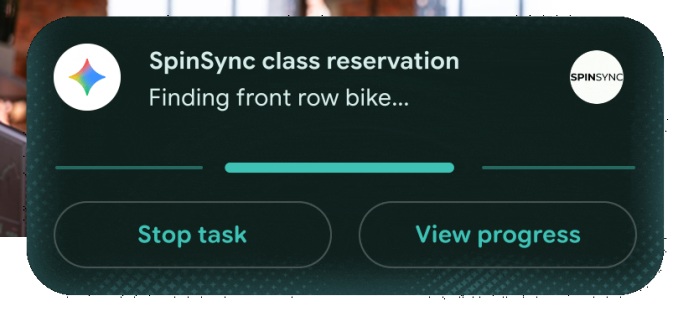
The company had already previewed some of these “agentic” capabilities earlier this year during the launch of Samsung Galaxy S26 devices, where Gemini demonstrated tasks such as booking exercise classes and pulling information from Gmail.

Tuesday’s announcements indicate Google is accelerating those ambitions. Another major addition is Gemini’s expanding ability to browse the web and complete online actions autonomously. Initially launched experimentally earlier this year, the feature is now coming directly to Android devices. The functionality pushes Google closer to a future where AI agents may increasingly interact with websites on behalf of users, potentially reshaping how online commerce, advertising, and search traffic operate.
That possibility is seen as a huge advantage for Google. The company’s advertising empire was built around traditional search behavior, where users actively browse links and web pages. AI agents capable of directly executing tasks could fundamentally alter those patterns by reducing the number of conventional search queries and page visits.
But Google risks losing ground if competitors define the next computing interface first. That tension explains why Google is moving aggressively to integrate Gemini into nearly every layer of Android.
AI Competition Moves Directly Onto Smartphones
The company is also introducing Gemini-powered capabilities inside Gboard, Android’s widely used keyboard. A new feature called Rambler uses multimodal AI to transcribe speech in a user’s natural tone while automatically removing filler words and formatting text more coherently.
The push reflects a broader industry trend that has seen generative AI increasingly replacing traditional voice assistants and dictation tools with systems capable of understanding context, tone, and conversational structure. Google is additionally leaning into the fast-growing “vibe coding” movement, where users generate software tools through natural language rather than conventional programming.
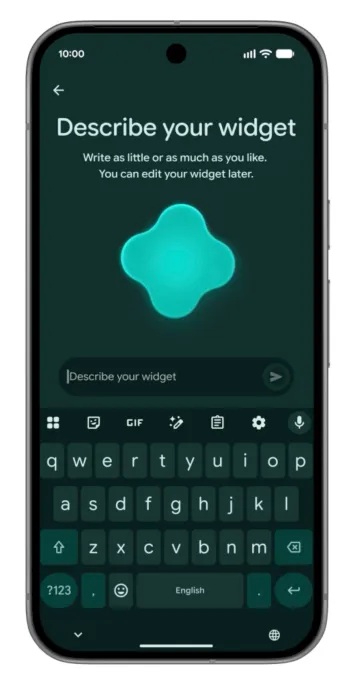
The company announced a feature allowing users to create custom Android widgets simply by describing what they want. One example included building a meal-planning widget in response to a prompt requesting weekly high-protein recipes.
The capability is seen as an example of how AI may gradually lower barriers to software creation for ordinary consumers. Instead of downloading prebuilt apps or learning coding languages, users may increasingly generate personalized digital tools dynamically through AI interfaces.
That trend is already reshaping software development more broadly. Companies such as Anthropic, OpenAI, and Google itself have reported explosive growth in AI-assisted coding tools, with executives increasingly arguing that software engineering is becoming partially automated.
Google recently disclosed that AI now generates a substantial portion of new code internally across the company. The latest Android announcements also intensify competition with Apple ahead of its upcoming developer conference, where investors expect the iPhone maker to reveal expanded AI features for iOS.
While Apple has traditionally prioritized tightly controlled privacy-centric ecosystems, Google appears to be prioritizing aggressive functionality and ecosystem integration. The race may ultimately determine which company controls the next dominant consumer computing interface.
For years, smartphones were defined by hardware quality and app ecosystems. Increasingly, however, the battleground is shifting toward AI agents capable of understanding user intent, navigating digital environments, and automating everyday tasks. Google’s latest Gemini expansion suggests the company believes the future smartphone experience may no longer revolve around apps at all, but around intelligent systems operating continuously between them.