

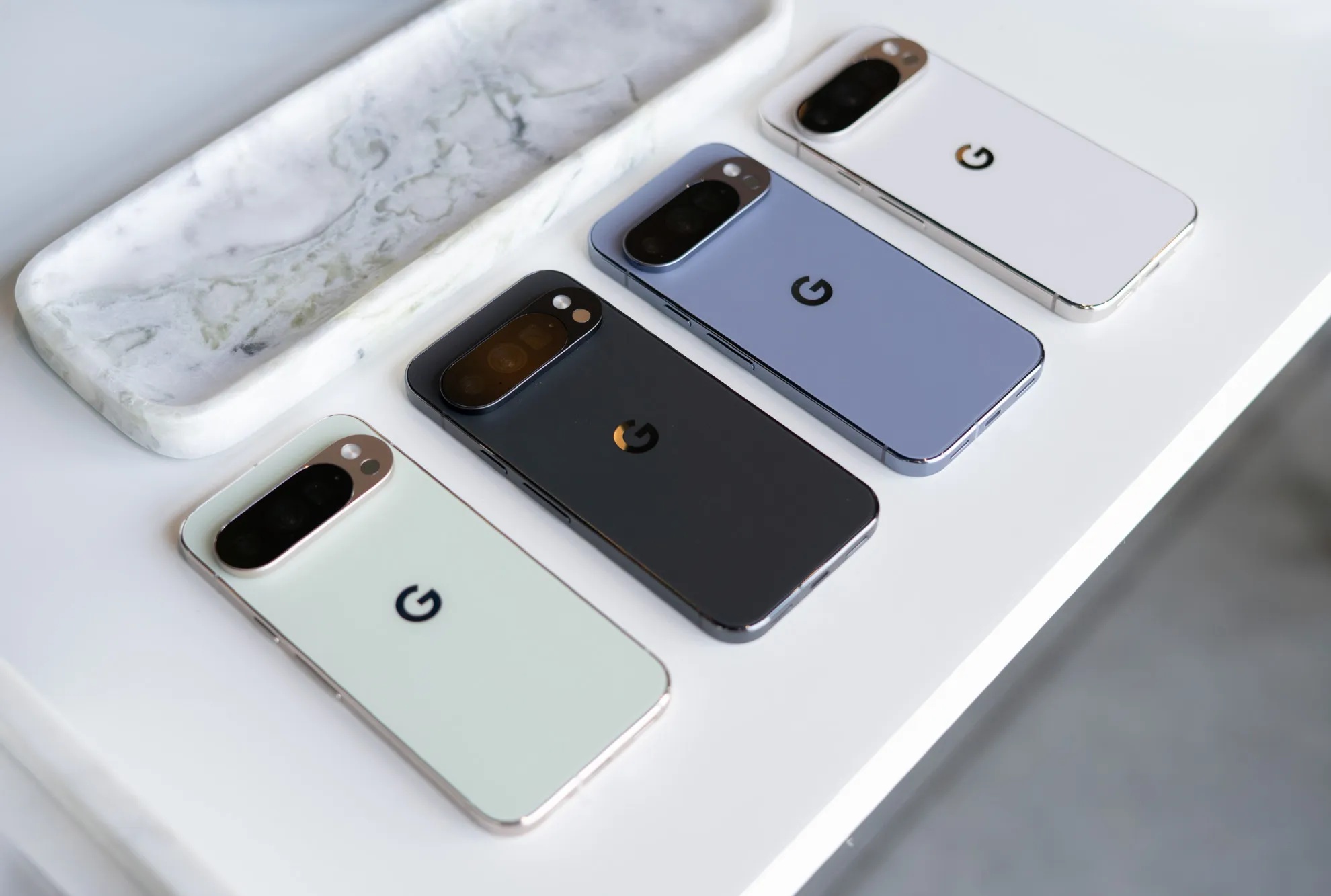
Google on Wednesday introduced its latest family of Pixel smartphones, placing its Gemini assistant at the heart of the devices as artificial intelligence increasingly becomes the new battleground for hardware makers.
The Alphabet-owned company announced the Pixel 10 series, which includes several models and features new AI-powered tools alongside upgraded cameras. The baseline Pixel 10 starts at $799 and comes in multiple colors. A more powerful Pixel 10 Pro starts at $999, while the Pixel 10 Pro XL, which offers a larger screen and 256GB of base storage, retails at $1,199. Google is also releasing an updated foldable device, the Pixel 10 Pro Fold, starting at $1,799.
The Pixel launch comes weeks before Apple is expected to announce new iPhones in September. While Google’s smartphone market share remains in the single digits, far behind Apple, Samsung, and Motorola, the Pixel line plays an important strategic role. It allows Google to push out cutting-edge Android features directly to consumers and showcase how it believes its software stacks up against Apple’s iOS.
Register for Tekedia Mini-MBA edition 20 (June 8 – Sept 5, 2026).
Register for Tekedia AI in Business Masterclass.
Join Tekedia Capital Syndicate and co-invest in great global startups.
Register for Tekedia AI Lab.
Google is also using the devices as a gateway to its expanding portfolio of AI services. DeepMind CEO Demis Hassabis has previously described the company’s long-term vision for a universal assistant that “can seamlessly operate over any domain, any modality or any device.” At an all-hands meeting last year, Hassabis told employees that Google products would “evolve massively over the next year or two,” signaling that the Pixel line would be central to this shift.
Among the new features, Google is highlighting “Magic Cue,” a tool designed to anticipate user needs. For instance, if a user dials an airline, Magic Cue automatically pulls up flight details and suggests relevant actions. The Pixel 10 series also integrates “Gemini Live,” an AI feature that enables real-time back-and-forth conversations about what appears on the phone’s screen. It is built on Project Astra, an image recognition system Google first revealed last year.
For photography, Google introduced “Camera Coach,” an AI tool that can describe a scene, recommend angles and lighting, and even merge similar photos into a composite where “everyone looks their best.”

The Pixel 10 Pro Fold features an 8-inch internal display, the largest among foldable smartphones, with two layers of anti-impact film and a new high-strength hinge designed to last over a decade of use. Google also touted its multitasking capabilities, including split-screen functionality for running different apps side by side, such as comparing flight details and hotel availability while planning a trip.
The devices also come with a one-year subscription to Google’s “AI Pro” plan, which typically costs $19 a month. The subscription offers extra Gemini features, early access to products like NotebookLM and Veo 3, and expanded cloud storage.
Google is betting that its AI edge can give it momentum against rivals. The company has mocked Apple’s delays in rolling out its “Apple Intelligence” suite, noting that Siri’s major upgrade has been pushed back until 2026. A recent Pixel 10 advertisement poked fun at Apple, saying: “If you buy a new phone because of a feature that’s coming soon, but it’s coming soon for a full year, you could change your definition of soon, or change your phone.”

Google unveiled its upgraded Pixel 10 smartphones Wednesday, including a dustproof and water-resistant foldable phone. It also debuted a refreshed smartwatch, Pixel Watch 4, as well as budget-friendlier Pixel Buds 2A, while also teasing fall updates to the Pixel Buds Pro 2. But AI was the through line across devices, with a proactive help tool called Magic Cue and camera-related AI tools added to phones. Meanwhile, Pixel Watch 4 added an AI-powered health coach — with NBA superstar Steph Curry now serving as Google’s wearables performance adviser.
Critics generally consider Google’s Gemini models more advanced than the AI underpinning Apple Intelligence, but it remains unclear whether AI alone can sway consumers. Despite rapid advances in generative AI, there is little evidence so far that artificial intelligence features are driving mass smartphone adoption or prompting large numbers of users to switch ecosystems.
Still, analysts say the potential is significant. If Google can produce a breakthrough feature that resonates with mainstream users, it could start to chip away at Apple’s dominant customer base. With Samsung already making strides with its Galaxy Z Fold 7 line and Apple reportedly preparing a foldable iPhone by 2026, Google’s push reflects how device makers are racing not just on hardware, but on the AI assistants that will define how people interact with their phones in the years ahead.