

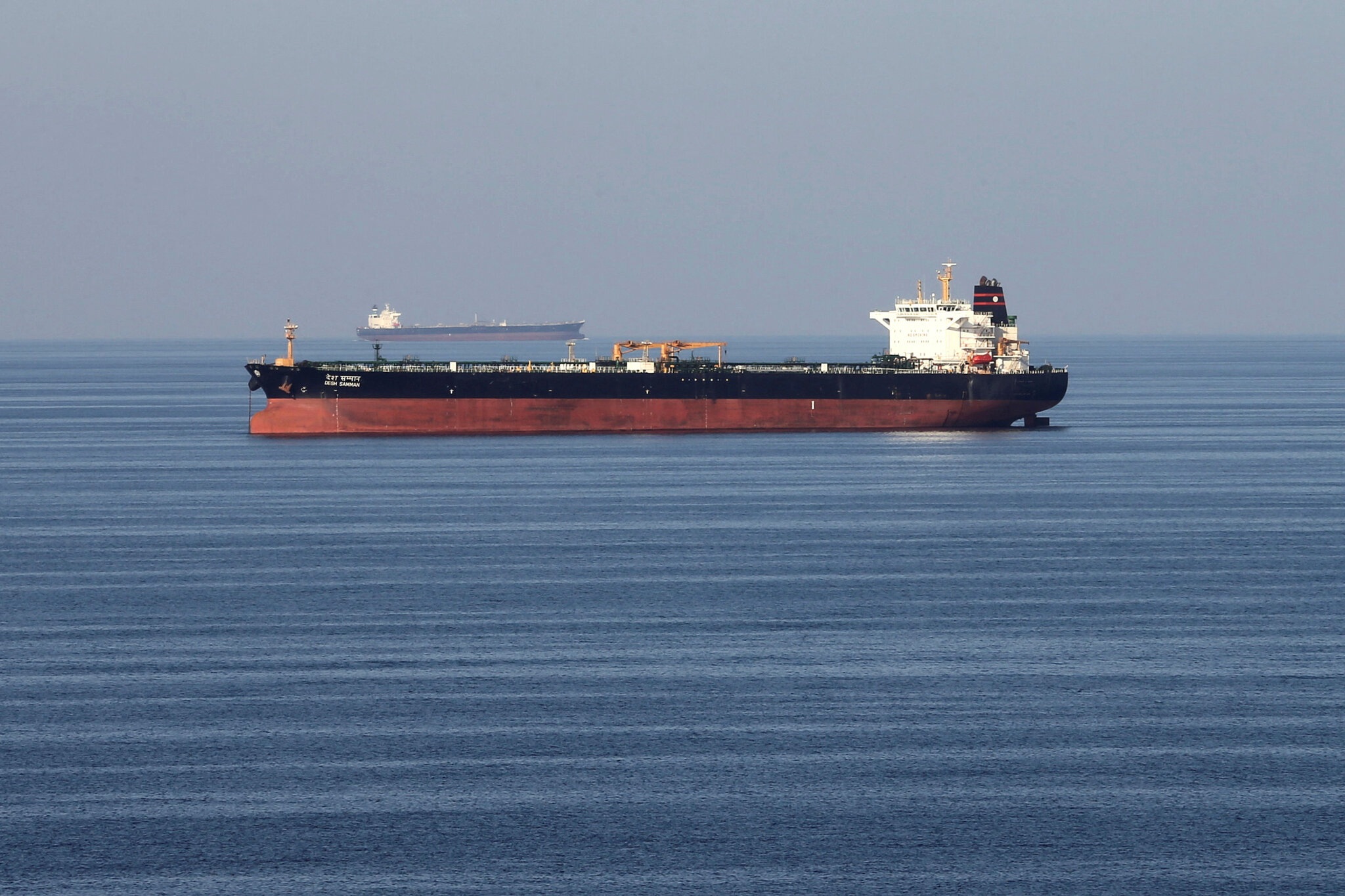
President Donald Trump’s proposal to impose a 20% fee on cargo transiting the Strait of Hormuz, combined with the collapse of the interim U.S.-Iran agreement, is accelerating one of the Gulf’s biggest strategic infrastructure shifts in decades as oil-producing nations race to reduce dependence on the world’s most important energy chokepoint.
The renewed conflict has transformed long-term diversification plans into an immediate strategic priority. With military strikes resuming, commercial shipping facing fresh attacks and insurance costs rising sharply, Gulf producers are increasingly investing in pipelines, ports and export terminals that bypass the Strait of Hormuz, aiming to shield oil exports from future geopolitical disruptions.
The renewed hostilities have already begun reverberating through global energy markets. Brent crude has climbed roughly 6% since Trump declared the interim agreement with Iran “over,” as traders price in the growing risk of supply disruptions, higher freight costs and tighter global crude availability. Analysts warn that a prolonged military confrontation could push prices substantially higher if exports from the Gulf face further constraints.
Register for the next Tekedia Mini-MBA.
Register for Tekedia AI in Business Masterclass.
Join Tekedia Capital Syndicate and co-invest in great global startups.
The latest developments are also revealing a broader shift in energy security strategy. For decades, Gulf producers prioritized expanding production capacity. Today, the ability to move crude reliably to international markets is becoming just as important as producing it, with export resilience emerging as a competitive advantage.
Among the clearest examples is the United Arab Emirates’ reported plan to construct a new deep-water port and container terminal in Fujairah on the Gulf of Oman, outside the Strait of Hormuz. According to the Financial Times, Dubai-based DP World is in discussions to develop both a new port and expand existing facilities in Fujairah.
If completed, the project would significantly strengthen the UAE’s ability to maintain trade even during periods of heightened military tension in the Gulf.

Ahmed bin Sulayem, chief executive of the Dubai Multi Commodities Centre, described the reported investment as both an emergency response and part of a broader long-term strategy.
“Until conditions in the Strait of Hormuz are safer, as of now, I don’t believe there will be much focus on shipping lines going there,” he told CNBC.
The UAE has also demonstrated unusual operational flexibility during the crisis by using shuttle tankers to transport crude from terminals inside the Strait of Hormuz to waters beyond the chokepoint, where cargoes are transferred to larger vessels destined for Asia. The strategy has enabled exports to continue even as commercial shipping faces elevated security risks.

Saudi Arabia has likewise benefited from years of investment in alternative infrastructure.
According to Andy Lipow, president of Lipow Oil Associates, the kingdom is currently diverting roughly 4 million barrels of crude per day through its East-West Pipeline, or Petroline, which links eastern oil fields with the Red Sea export terminal at Yanbu.
Stretching approximately 750 miles and capable of transporting as much as 7 million barrels per day following recent upgrades, the pipeline allows Saudi Arabia to bypass the Strait of Hormuz entirely, reducing its exposure to disruptions in the Gulf.
Bob McNally, president of Rapidan Energy Group, described the system as one of the biggest success stories to emerge from the conflict.
“What real master stroke was Saudi Arabia being able to put all that extra oil through the Yanbu pipeline,” he said, noting that Saudi exports have remained remarkably resilient despite the conflict.
Yet analysts quoted by CNBC caution that bypassing Hormuz merely relocates geopolitical risk rather than eliminating it.
Crude shipped from Yanbu must still transit the Red Sea and pass through the Bab el-Mandeb Strait, another strategic maritime corridor that has repeatedly come under attack from Yemen’s Houthi militants. Any disruption there could threaten millions of additional barrels of daily exports.
Carole Nakhle, chief executive of Crystol Energy, said the UAE’s investment in alternative export routes carries geopolitical as well as commercial significance.
“The second they reduce that kind of exposure to the Strait of Hormuz, the more bargaining power they will have in any potential deal with the Iranians, and that by itself is going to deflate some of the Iranians’ power and influence in the region,” she said.
The crisis is also exposing a widening divide among Gulf producers.
According to the International Energy Agency, Saudi Arabia and the UAE remain the only Gulf producers with operational pipeline systems capable of bypassing Hormuz, with available spare capacity estimated at between 3.5 million and 5.5 million barrels per day.
By contrast, Iraq, Kuwait, Qatar, Bahrain, and Iran continue to rely overwhelmingly on the strait for crude and liquefied natural gas exports, leaving them considerably more vulnerable to any prolonged disruption. That imbalance could reshape future investment decisions across the region. Countries lacking alternative export routes may now prioritize pipeline construction, storage facilities and new maritime infrastructure alongside upstream oil production.
The implications extend well beyond regional producers.
The Strait of Hormuz normally handles around one-fifth of global oil consumption and a substantial share of global LNG exports. Any sustained disruption not only tightens crude supplies but also raises shipping costs, insurance premiums and freight rates, feeding into higher transportation and manufacturing costs worldwide.
For central banks already grappling with persistent inflation, renewed energy price shocks complicate the outlook for interest rates. Higher oil prices increase input costs across industries and could delay monetary easing in major economies, particularly if geopolitical tensions remain elevated.
The infrastructure race also underpins a change within the global energy sector. Rather than focusing solely on increasing production, governments and national oil companies are increasingly investing in supply-chain resilience, strategic logistics and export flexibility. The ability to guarantee uninterrupted deliveries is becoming a valuable asset for attracting long-term buyers and maintaining market share.
However, meaningful diversification remains a long-term undertaking.
Adam Posen, president of the Peterson Institute for International Economics, estimates it could take between 18 and 24 months to develop sufficient pipelines, shipping infrastructure, and logistical alternatives capable of materially reducing dependence on the Strait of Hormuz.
Until then, every escalation between Washington and Tehran is likely to continue reverberating through global energy markets, with oil prices, inflation expectations, shipping costs and investor sentiment remaining highly sensitive to developments in the Strait.