

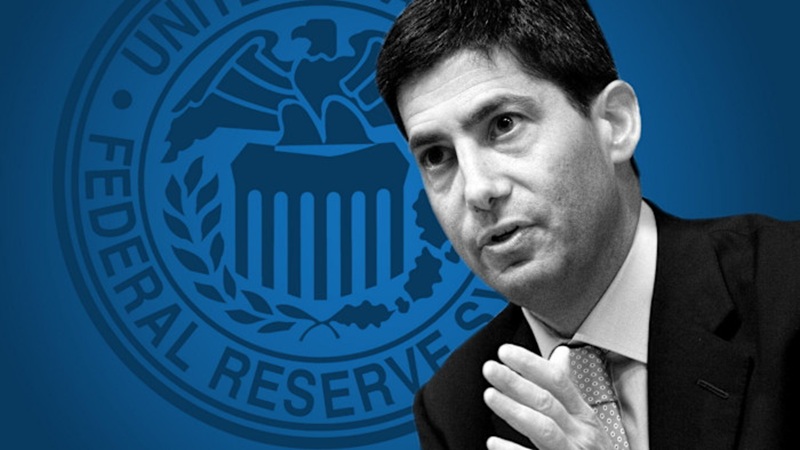
Gulf stock markets mostly closed lower on Sunday as investors turned cautious after Federal Reserve Chair Kevin Warsh signaled that U.S. interest rates may need to remain elevated to ensure inflation returns to the central bank’s 2% target.
Warsh’s comments at the Fed’s annual economic symposium in Jackson Hole prompted a sharp repricing of U.S. monetary policy expectations. He said policymakers would “have work to do” if they were not confident that underlying inflation was moving back toward 2% and indicated that financial conditions did not appear restrictive.
The comments strengthened expectations of another U.S. rate increase. Market-implied odds of a hike at the Fed’s September meeting climbed to 55.7%, from 35.4% on Thursday, according to CME Group’s FedWatch tool.
Register for the next Tekedia Mini-MBA.
Register for Tekedia AI in Business Masterclass.
Join Tekedia Capital Syndicate and co-invest in great global startups.
The shift is significant for Gulf markets because most regional currencies are pegged to the U.S. dollar. Gulf central banks generally have limited scope to cut or hold rates independently when the Fed is tightening, as large interest-rate differentials can put pressure on currency pegs and capital flows.
Higher U.S. yields can also make dollar-denominated bonds more attractive relative to emerging-market equities, while increasing borrowing costs for companies and households. Banks can benefit from higher interest income in some circumstances, but tighter financial conditions can eventually weigh on credit demand, asset valuations and economic activity.
Saudi Arabia’s benchmark index fell 0.7% for a second consecutive session, with most constituents ending in negative territory. Saudi Arabian Mining declined 3.3%, while Saudi National Bank, the kingdom’s largest lender by assets, lost 1.2%.

The decline also followed several sessions of gains, increasing the incentive for investors to lock in profits as the global interest-rate outlook becomes less favorable.
“The Saudi market could remain vulnerable to further downside if investors continue taking profits after several sessions of gains,” said Hani Abuagla, senior market analyst at XTB MENA.
Qatar’s benchmark index edged 0.1% lower, with financial and communications stocks weighing on the market. Doha Bank dropped 5.1%, while Commercial Bank fell 2.5%.

Energy-related stocks provided some support. Industries Qatar gained 0.6%, while Gulf International Services advanced 3.9%.
Qatar’s energy market is also being closely monitored because of continuing uncertainty around shipping through the Strait of Hormuz. QatarEnergy sold at least 7 million barrels of various Qatari crude grades through a tender during the week for October loading, according to trade sources.
The Strait remains a critical risk for Gulf markets. Roughly one-fifth of global daily oil and liquefied natural gas supplies normally pass through the waterway, meaning any deterioration in shipping conditions could quickly affect crude prices, freight costs, inflation expectations and the outlook for global interest rates.
For Gulf economies, higher oil prices present a mixed picture. They can strengthen government revenues and external balances for major hydrocarbon exporters, but a renewed energy-price shock could also keep global inflation elevated. That would make it harder for the Fed and other central banks to shift toward lower interest rates.
“Looking ahead, GCC markets are likely to remain sensitive to shipping developments in the Strait of Hormuz and any diplomatic progress,” Abuagla said. “Strong domestic fundamentals may help limit downside risks, though investor caution could persist as global bond yields rose following Warsh’s remarks, with attention now turning to the Fed’s next meeting.”
The gap between energy-sector support and tighter global financial conditions is likely to remain a defining feature of Gulf markets. Strong oil and gas revenues can cushion government finances and corporate earnings, but higher U.S. yields raise the opportunity cost of holding equities and can place pressure on valuations.
Outside the Gulf, Egypt’s blue-chip index fell 0.3%, with most shares trading lower. Commercial International Bank declined 0.8%, while Talaat Moustafa Group lost 1.3%.
Abu Qir Fertilizers and Chemical Industries was a notable exception, rising 4.8% after the company said it had expanded ammonia production capacity and reduced natural-gas consumption.
The broader regional move shows how quickly Gulf equities can respond to changes in U.S. monetary-policy expectations. With currency regimes closely linked to the dollar, investors are now balancing three competing forces: the prospect of higher-for-longer U.S. interest rates, the earnings and fiscal support provided by energy markets, and the geopolitical risks surrounding the Strait of Hormuz.