


Most marketers know UGC works. User-generated content drives higher engagement, builds trust faster, and converts better than traditional brand advertising. But what many marketing teams don’t talk about publicly is how expensive and unpredictable the traditional UGC process has become.
Behind every authentic-looking creator video lies a complex web of negotiations, revisions, missed deadlines, and budget overruns. The cost isn’t just financial. It’s also measured in time, missed opportunities, and creative fatigue. For brands trying to maintain consistent output across multiple platforms, the traditional UGC model is starting to break down.
The Real Economics of Traditional UGC
Let’s break down what it actually costs to produce UGC the traditional way:
Creator Fees ? Micro-influencers charge anywhere from $100 to $500 per video. Mid-tier creators can demand $1,000 to $5,000. For brands running monthly campaigns across multiple products, these fees add up to tens of thousands of dollars.
Time Investment Finding the right creators, negotiating terms, briefing them on brand guidelines, and managing revisions can take 10 to 20 hours per campaign. For lean marketing teams, that’s nearly a full work week.
Usage Rights Many creators charge additional fees for extended usage rights or exclusivity. A video that costs $300 to produce might require an extra $200 for rights that allow the brand to use it in paid ads for more than 30 days.
Revision Cycles Creators don’t always nail it on the first try. Requesting changes, waiting for updated versions, and coordinating feedback loops can add days or weeks to production timelines.
Platform Coordination Different platforms require different formats. A TikTok video needs to be reformatted for Instagram Reels, YouTube Shorts, and sometimes Facebook. Each adaptation requires additional work.
When you add it all up, a single piece of UGC content can easily cost $500 to $2,000 when factoring in time, fees, and opportunity costs. For brands that need 20, 50, or 100 videos per quarter, the math becomes unsustainable.
The Opportunity Cost: What You Miss While Waiting
Speed matters in digital marketing. Trends move fast, and audiences reward brands that participate in cultural moments quickly. According to a 2024 Sprout Social report, brands responding to viral trends within 48 hours see up to 60% higher engagement compared to those who join later.
But traditional UGC workflows can’t move that fast. By the time a brand identifies a trend, briefs a creator, receives the content, and goes through approvals, the moment has often passed. What was timely becomes stale. What could have been relevant becomes forgotten.
This is the hidden cost that doesn’t show up in budgets: missed opportunities. Every trend your brand can’t participate in represents lost visibility, engagement, and potential conversions.
When Quality Becomes Inconsistent
Not every creator delivers the same level of quality. Some nail the tone immediately. Others produce content that feels off-brand or doesn’t align with messaging priorities. The challenge is that you don’t always know what you’ll get until after you’ve invested time and money.
This inconsistency creates two problems:
Wasted Resources Content that doesn’t meet standards has to be redone, doubling costs and extending timelines.
Brand Dilution When UGC varies wildly in style, tone, and production quality, it dilutes brand identity. Audiences notice when a brand’s content feels disjointed or inconsistent.
AI UGC generators solve this by standardizing quality without sacrificing authenticity. Every video follows brand guidelines while maintaining the conversational, relatable tone that makes UGC effective.
How AI Changes the UGC Economics
AI UGC tools fundamentally reshape the cost structure of content production. Instead of paying per video, brands pay for platform access, which typically ranges from $50 to $200 per month depending on volume and features. Within that subscription, they can generate unlimited variations.
Here’s what that means in practice:
Per-Video Cost Drops Dramatically ? A brand producing 50 UGC videos per month through traditional means might spend $25,000. With an AI UGC generator, the same output costs $100 to $200. That’s more than a 90% cost reduction.
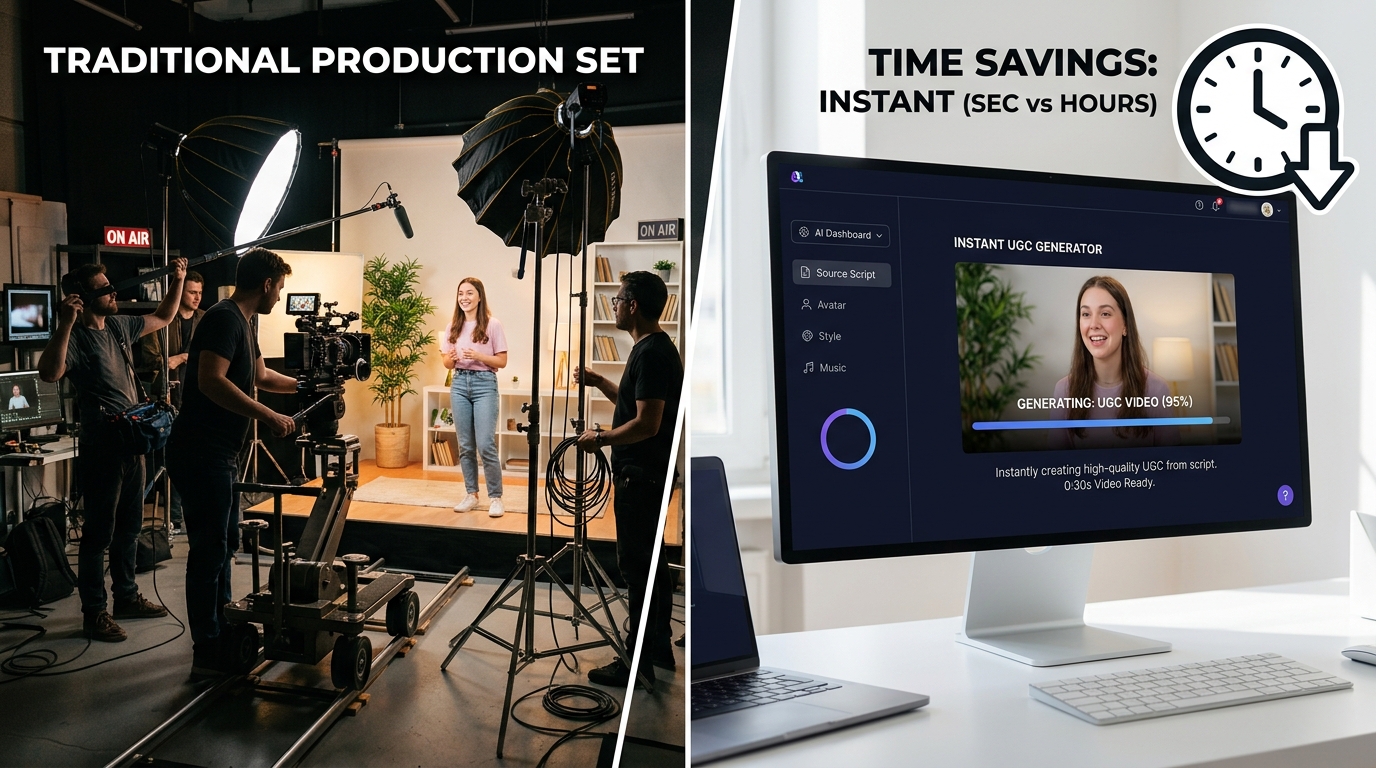
Production Speed Increases 10xWhat used to take days or weeks now takes minutes. Powered by advanced motion models like Seedance 2.0, brands can go from a single product image to a finished UGC video in under an hour, with fluid, cinematic animations that feel genuinely human—enabling real-time participation in trending topics.
Testing Volume Expands Traditional budgets might allow for 5 to 10 creative variations. AI enables 50 to 100 variations, dramatically improving the odds of identifying high-performing content.
Global Reach Without Multiplying Costs ? Localizing content for different markets used to require hiring creators in each region. AI UGC generators support 140+ languages and regional accents, making global campaigns affordable for mid-sized brands.
Practical Workflow: Traditional vs. AI UGC
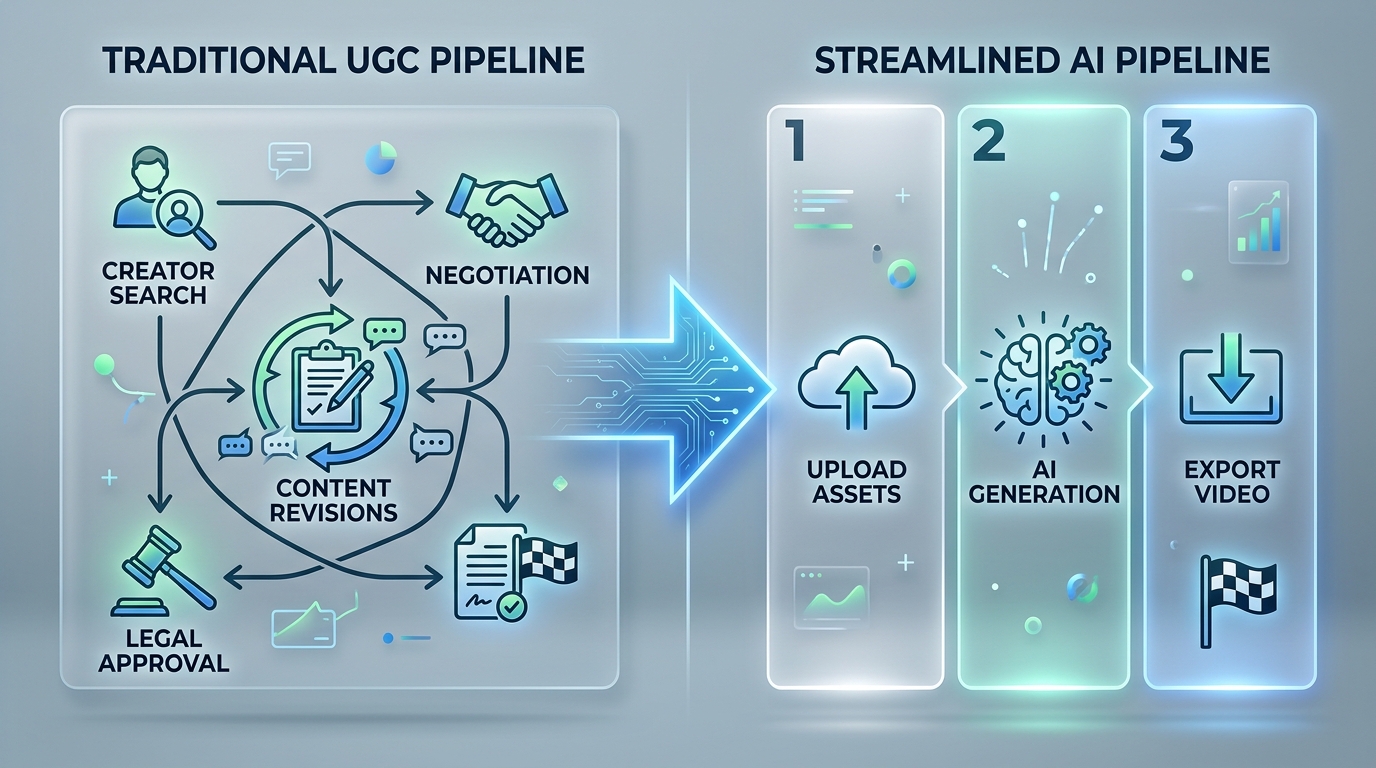
Traditional UGC Workflow:
- Identify creators and negotiate rates (3-5 days)
- Brief creators on product and messaging (1-2 days)
- Wait for content delivery (5-10 days)
- Review, request revisions if needed (2-5 days)
- Obtain usage rights and finalize legal terms (1-3 days)
- Reformat for different platforms (1-2 days)
Total time: 2 to 4 weeks Total cost per video: $500 to $2,000
AI UGC Workflow:
- Upload product image or URL (2 minutes)
- Select avatar and voice style (1 minute)
- Input script or let AI generate one (2 minutes)
- Generate video (5 minutes)
- Review and make adjustments if needed (5 minutes)
- Export in multiple platform formats (2 minutes)
Total time: Under 20 minutes Total cost per video: $2 to $5 (based on subscription model and site)
The difference isn’t marginal. It’s transformational.
The Creative Benefits Beyond Cost
While cost savings are significant, AI UGC generators also unlock creative possibilities that traditional workflows can’t match.
Rapid Iteration Marketers can test dozens of hooks, CTAs, and product angles in a single afternoon. This iterative approach helps identify winning formulas faster.
Seasonal Adaptability Holiday campaigns, flash sales, and time-sensitive promotions no longer require weeks of planning. Content can be generated and deployed within hours.
Consistent Brand Voice AI tools maintain tonal consistency across all videos, ensuring that every piece of content reinforces brand identity rather than diluting it.
Anonymous Creation Some brands prefer not to feature real people in their marketing. AI UGC allows them to create authentic-looking content without showing faces or revealing identities.
When Traditional UGC Still Makes Sense
AI isn’t a universal replacement for creator partnerships. There are scenarios where working with real creators remains valuable:
- Long-term brand ambassador relationships
- High-budget campaign centerpieces requiring celebrity involvement
- Content that benefits from genuine personal stories or unique perspectives
- Partnerships that extend beyond content into community building
But for the bulk of everyday content needs, product demos, ad variations, and rapid-response marketing, AI UGC generators offer a more practical solution.
The Future of Hybrid Content Strategies
The most sophisticated brands in 2026 aren’t choosing between traditional UGC and AI-generated content. They’re using both strategically.
Traditional UGC handles:
- Flagship campaigns
- Ambassador partnerships
- High-visibility brand moments
AI UGC handles:
- Daily social content
- Ad creative testing
- Product launches
- Retargeting campaigns
- Localized variations
This hybrid approach maximizes efficiency without sacrificing authenticity or brand connection.
What This Means for Marketing Teams
The rise of Topview AI UGC generators represents more than a cost-saving opportunity. It’s a strategic shift that allows marketing teams to focus on higher-value work: strategy, messaging, creative direction, and audience analysis.
When production bottlenecks disappear, teams can spend more time thinking about what to say rather than how to produce it. That shift elevates the role of marketers from content coordinators to strategic storytellers.
Topview’s AI platform accelerates this transition by making professional UGC video creation accessible to any brand, regardless of size or budget. With over 500 realistic avatars, support for 140+ languages, and the ability to generate platform-optimized videos in minutes, it removes the traditional barriers that kept UGC creation exclusive to brands with large budgets.
The question for marketing leaders isn’t whether AI will play a role in UGC production. It’s whether your team is ready to embrace the efficiency, speed, and creative freedom it provides.