

The artificial intelligence boom is transforming the global economy, but its costs are increasingly extending far beyond the technology industry.
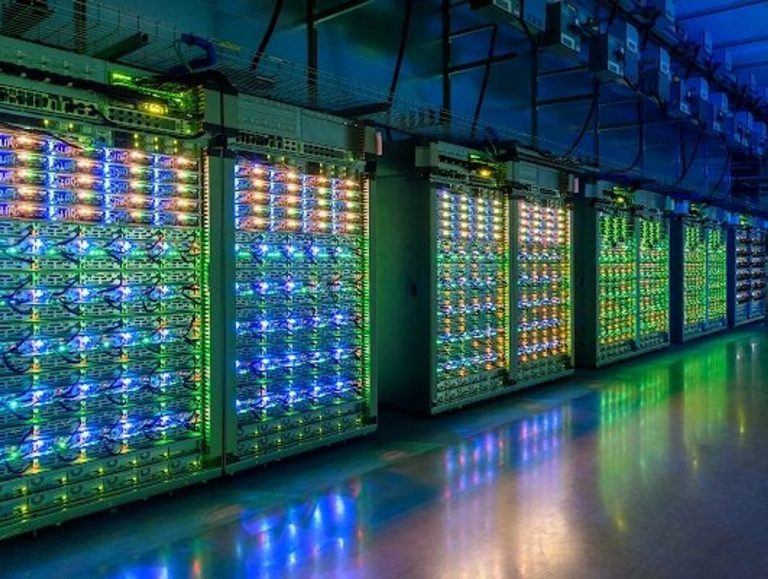
Behind every AI chatbot, image generator and automated agent sits a rapidly expanding network of data centers packed with powerful chips.
These facilities require enormous amounts of electricity, water, land and construction materials, creating a new source of economic pressure that consumers are beginning to feel.
The biggest pressure point is electricity. AI data centers consume vastly more power than conventional computing facilities because advanced AI models require thousands of graphics processors and specialized accelerators operating around the clock.
Register for the next Tekedia Mini-MBA.
Register for Tekedia AI in Business Masterclass.
Join Tekedia Capital Syndicate and co-invest in great global startups.
As technology companies race to build larger facilities, demand for electricity is growing faster in some regions than utilities and grids can comfortably accommodate. That can push utilities to invest billions in new generation, transmission lines and substations.
Ultimately, those costs can find their way into electricity bills. The problem is particularly significant because AI companies are competing for the same limited power resources as households, manufacturers and other businesses.
In areas experiencing rapid data-center expansion, utilities may need to build infrastructure specifically to support large computing campuses. Even when technology companies contribute to those projects, some costs can be distributed across the wider electricity system.

Then there is the physical construction boom. Modern AI data centers are enormous industrial projects requiring concrete, steel, copper, electrical equipment, cooling systems and backup generators.
A surge in demand for these materials can increase prices, especially when supply chains are already constrained. Copper is particularly important because data centers require extensive electrical infrastructure.
While transformers and other specialized equipment can have lengthy manufacturing lead times.
Land is another increasingly valuable resource. Technology companies are seeking large parcels close to power generation and major transmission networks.

As competition intensifies, land values can rise, particularly around communities that become attractive destinations for data-center development. Housing costs can also come under pressure if thousands of construction workers, engineers and other employees move into smaller communities.
Water presents another concern. Many data centers require sophisticated cooling systems to prevent computing equipment from overheating. In water-stressed regions, competition between data centers, agriculture, households and other industries could become increasingly contentious.
Even when companies use more efficient cooling technologies, the scale of new facilities means their aggregate resource consumption can still be significant.
There is also a financial cost. AI infrastructure requires extraordinary amounts of capital, and companies are borrowing, raising money and entering massive infrastructure agreements to finance the buildout.
Investors may eventually demand higher returns to compensate for the enormous spending and operational risks. Those costs can influence the prices businesses charge for AI services. Yet the story is not entirely negative.
AI data centers can generate construction jobs, attract investment, strengthen local infrastructure and stimulate demand for new energy projects. The technologies developed to power them could accelerate renewable energy deployment, battery storage and grid modernization.
The central question is therefore not whether AI should expand, but who should pay for its expansion. If the benefits of artificial intelligence are captured mainly by technology companies while electricity, water, infrastructure and housing costs are distributed among ordinary consumers, the economic bargain becomes harder to justify.
AI may make businesses more productive and services cheaper. But during the infrastructure race required to build it, the opposite can happen. The hidden price of artificial intelligence is increasingly appearing in the cost of power, materials, land and public infrastructure.
The AI revolution may promise a cheaper future, but getting there could make the present considerably more expensive.