

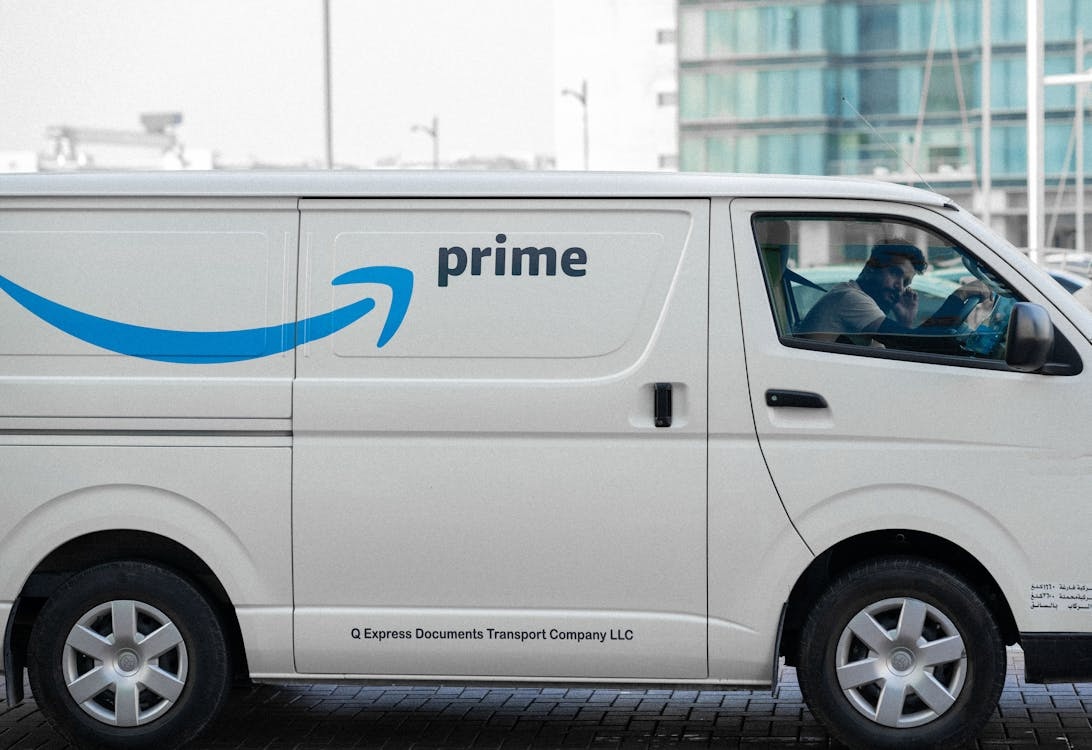
Walk one block in midtown Manhattan during any weekday and you’ll cross paths with at least one of them. An Amazon van. A FedEx box truck. A USPS step van. A UPS Worldwide Express truck. A DoorDash bike. A refrigerated Sysco semi unloading at a restaurant. A Whole Foods Prime van.
The vehicles built to move parcels through New York City have multiplied in the last five years. The legal mechanics of what happens when one of them hits a pedestrian, a cyclist, or another vehicle have shifted with them.
For business operators in logistics, mobility, and adjacent tech, the transformation in claims handling is worth watching.
Why the math changed
Three things drove the surge. E-commerce volume in metro New York grew sharply between 2019 and 2024. Same-day grocery and prepared-food delivery scaled in the same window. And the carrier networks responded by adding fleet, not by getting more efficient with the fleet they had.
The result on the street is a much higher density of commercial vehicles in pedestrian-heavy environments, often operated by drivers under platform-level time pressure. NYC’s Vision Zero program has noted year-over-year increases in pedestrian and cyclist incidents involving commercial vehicles. The steepest rise is in the borough centers where last-mile fulfillment concentrates.
The contractor structure problem
Here’s the part that surprises plaintiffs and defendants alike. When an Amazon-branded van rear-ends a sedan in Long Island City, the driver almost certainly isn’t an Amazon employee. They work for a Delivery Service Partner (DSP), a small third-party company that contracts with Amazon to handle a specific geography. Amazon owns the brand on the side of the truck. The legal employer is the DSP, which has its own insurance, its own liability posture, and its own document-retention practices.
The same pattern repeats across the industry. FedEx Ground operates through Independent Service Providers. Many food-delivery riders are 1099 contractors of the platform that dispatched them, not employees. USPS subcontracts certain routes to third parties. The brand on the vehicle is rarely the entity that signs the driver’s paycheck.
What this means for any injury claim: identifying every potentially responsible party in the first few weeks is half the case. Suing the wrong entity is a procedural mistake that’s expensive to fix.
What it means for legal claims
For an injured pedestrian or cyclist, the modern claim looks different from a 2015 truck accident claim:
- More defendants in the caption. The driver, the DSP or ISP or subcontractor, the platform brand, the vehicle’s titled owner if different, and the relevant insurers all may end up named.
- More cross-claims. The platform brand’s insurer points at the DSP. The DSP points at the driver. The driver points at the vehicle owner. Sorting it out takes time.
- More documentary discovery. Dispatch logs, route-assignment records, package-throughput data, driver-onboarding files. All of it lives on platforms that didn’t exist a decade ago.
A serious last-mile case in Queens typically depends on how quickly a truck accident lawyer in Queens can act. The right counsel serves preservation letters on the platform brand, the DSP, and the insurance carrier before routine document-retention cycles erase the relevant records. FMCSA-required ELD records, dispatch app data, and platform telemetry often have retention windows measured in weeks, not months.
Practical steps after a crash
If you’re hit by a delivery vehicle in NYC:
- Photograph everything before it moves. The van, the door numbers (DSPs have unique identifiers), any badges on the driver, the cargo area if visible.
- Capture the platform brand and the smaller company name printed on the side or back. Both are usually there if you look.
- Get the police report from the responding precinct. NYPD does these by request after the initial filing.
- Do not give a recorded statement to any insurer (the platform’s, the DSP’s, or your own) until you’ve talked to an attorney.
- Do this in the first weeks. Last-mile platforms cycle their data fast.
The takeaway
NYC’s last-mile boom didn’t just add trucks. It restructured the legal layer underneath those trucks. For anyone building logistics technology, watching how claims actually unfold in the courts is a useful corrective to what the marketing decks say about driver classification and platform liability. For anyone injured by one of these vehicles, the practical truth is simpler: act fast, photograph everything, and name every entity in the chain before the records get purged.