

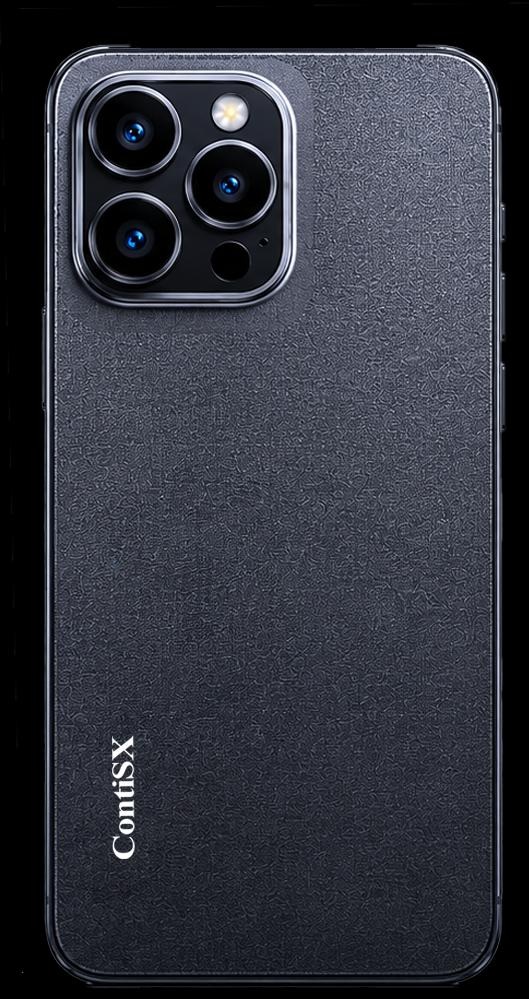
Nigeria is home to one of Africa’s largest Muslim populations, yet participation in the country’s capital market remains relatively low. While several factors contribute to this gap, one of the most significant is the limited availability and visibility of investment products that align with Islamic financial principles. The launch of the ContiSX Phone, powered by the Cube ecosystem, presents an opportunity to address this challenge. Its success, however, will depend not only on technological innovation but also on whether it can earn the confidence of Muslim investors through genuine Shariah-compliant financial services.
Technology alone does not drive financial inclusion. Trust does. For many Muslim investors, the decision to invest is guided by religious principles that prohibit riba (interest), excessive uncertainty, and investment in businesses whose primary activities are considered impermissible under Islamic law. Any platform seeking to attract this market must therefore demonstrate that compliance is built into its investment ecosystem rather than treated as an optional feature.
The ContiSX Phone has already been positioned as more than a smartphone. It is intended to function as a gateway to digital investing, business financing, and capital market participation. This creates an opportunity to rethink how Islamic finance can be delivered through a mobile-first platform.
Register for the next Tekedia Mini-MBA.
Register for Tekedia AI in Business Masterclass.
Join Tekedia Capital Syndicate and co-invest in great global startups.
One of the strongest ways ContiSX could attract Muslim investors is by creating a dedicated Islamic investment marketplace. Rather than asking investors to search through hundreds of securities to determine which are permissible, the platform could provide a clearly labelled section containing only Shariah-compliant investment opportunities. This would simplify investment decisions while increasing confidence in the platform.
The marketplace should include Shariah-screened equities, Sukuk, Islamic mutual funds, exchange-traded funds that meet Islamic investment criteria, and equity-based funding opportunities for small and medium-sized enterprises. Such an ecosystem would allow investors to diversify their portfolios without compromising their religious convictions.
Equally important is the establishment of an independent Shariah Advisory Council. Every successful Islamic financial institution relies on credible scholars to review products, certify compliance, and provide ongoing oversight. Without such governance, claims of Shariah compliance are unlikely to gain widespread acceptance. Transparency would become a competitive advantage if ContiSX publishes the screening methodology, advisory opinions, and periodic compliance reports directly within the phone’s investment application.

Artificial intelligence also offers unique possibilities. The AI capabilities promoted for the ContiSX Phone could be adapted to support ethical investing. Instead of merely recommending securities based on expected returns, the system could analyse companies against recognised Islamic screening standards. Investors could receive notifications whenever a company’s compliance status changes, allowing them to make informed decisions without conducting complex financial analysis themselves.
The phone could also include tools that automatically classify investments as compliant or non-compliant, estimate portfolio purification where applicable, and generate simple compliance reports for users. Such features would transform the device from a trading platform into a trusted financial companion.
Another opportunity lies in financing Nigerian businesses through Islamic partnership models. Many entrepreneurs avoid conventional borrowing because of interest-based financing. ContiSX could introduce digital structures based on Musharakah, Mudarabah, Murabaha, and Ijara, allowing businesses to raise capital through profit-sharing or asset-backed financing arrangements. This would not only attract Muslim investors but also expand access to finance for entrepreneurs seeking ethical alternatives.

Education will be equally important. Many potential investors remain unfamiliar with Islamic capital market products. The ContiSX Phone could include an educational hub explaining concepts such as Sukuk, profit-sharing, risk-sharing, halal investing, and Shariah screening using videos, interactive guides, and AI-powered assistance. Financial literacy delivered through the same device used for investing could significantly reduce barriers to participation.
Nigeria already possesses a growing Islamic finance ecosystem, including sovereign Sukuk, non-interest banking, and Takaful insurance. Yet these services often operate independently. The ContiSX Phone has the potential to become the digital platform that connects these components into a single investment experience. Integration with Islamic banks, non-interest payment systems, and licensed Islamic asset managers would further strengthen its appeal.
This opportunity extends beyond Nigeria. Across Africa, millions of Muslims remain underserved by conventional capital markets. A mobile platform that combines modern financial technology with credible Islamic governance could position ContiSX as a regional leader in ethical investing. Such positioning would attract not only Muslim investors but also non-Muslim investors increasingly interested in environmental, social, governance, and values-based investment strategies, many of which share common principles with Islamic finance.
If ContiSX embraces Islamic finance as a core strategic pillar rather than a niche offering, it could unlock a vast and largely untapped segment of Nigeria’s investment community. In doing so, it would demonstrate that financial innovation is not merely about building smarter devices but about designing financial ecosystems that reflect the diverse values of the people they are meant to serve.