

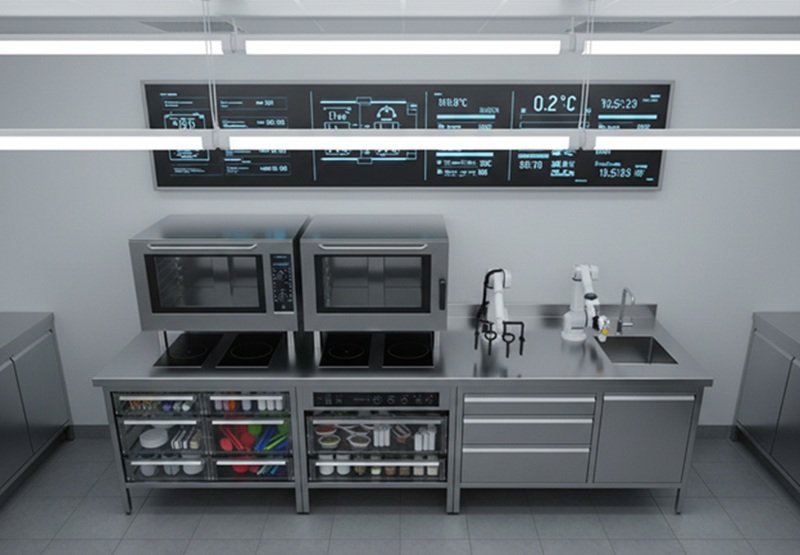
Around 8,000 ghost kitchens, also known as microkitchens, exist nationally, with new small-footprint food concepts launched every day across urban markets. If you are operating a microkitchen, you cannot afford to waste a single inch of floor space or a second of staff movement. Small footprints require precise choreography because inefficiencies scale exponentially when you are working in a tight box.
Image Source: Google Gemini
Embracing Visual Tools
Start with process mapping to visualize every step your team takes during a rush. By sketching out a spaghetti diagram of your floor, you can spot where paths cross and where bottlenecks happen.
Spaghetti diagrams identify unnecessary motion that silently drains your daily throughput. You need a layout that flows logically from prep to service.
Optimizing Your Kitchen Equipment Layout
Effective space planning relies on selecting equipment that does more with less. When your footprint is limited, you should focus on gear that can handle multiple cooking methods simultaneously. You need versatile assets to survive.
Choosing the right base equipment prevents the need for secondary, less efficient units. Stacking your cooking surface allows you to reclaim valuable square footage that would otherwise be wasted on redundant stands or support structures. When you invest in high-performance equipment, you effectively double your capacity without needing an expensive building expansion.
Consider these factors before finalizing your hot side:
- Footprint compatibility with your existing ventilation hood
- Energy requirements versus your current utility infrastructure
- Multi-functionality for different menu items during peak hours
You should evaluate your needs by analyzing how your menu items actually perform in the kitchen. For instance, many owners find that they can consolidate their cooking operations significantly by choosing to shop Restaurant Supply convection ovens that offer high, even heat distribution across every rack. This reduces the number of items needed on the line.
Validating Performance With Data
Traditional kitchens rely on gut feeling, but successful microkitchens rely on IoT frameworks founded on simple sensors. When you install sensors, you gain a clear view of your operational health that manual logs simply cannot provide.
IoT-enabled sensors reduce unplanned downtime by alerting you to equipment degradation long before a complete failure occurs. This proactive approach saves you from emergency repair costs and lost sales during your most profitable windows. You can also track energy usage to see exactly when your power draw peaks, helping you optimize your shifts to stay within budget.
Smart monitoring turns raw data into actionable kitchen intelligence, keeping your margins protected. You should run a one-week pilot test with these sensors to establish your baseline throughput before committing to a full-scale renovation of your service line.
Refining Your Culinary Workflow
Small spaces demand disciplined inventory management to keep the line clear. You should organize your stations based on the frequency of use for each ingredient. Everything your team touches often must remain within arm’s reach.
If you find that staff members are constantly walking to a walk-in cooler, your flow is broken. Keep your high-velocity items in reach-in units at the prep station to maintain a steady rhythm. A clean, organized line allows your team to move with speed and confidence.
Once your layout is locked, focus on standardizing your service procedures. Training your staff to follow the same motion patterns ensures that you maintain consistency even during the busiest rushes. You should review your layout every quarter to ensure it still matches your current menu and volume demands.
Future Proofing Your Operations
Keeping your setup adaptable ensures long-term viability. As market trends shift and your menu evolves, your equipment must keep pace. Review the versatility of modern cooking equipment to ensure your layout supports your growth for years to come. And for more insights into how tech is changing a range of industries, from food service to finance, check out other posts on our site.