

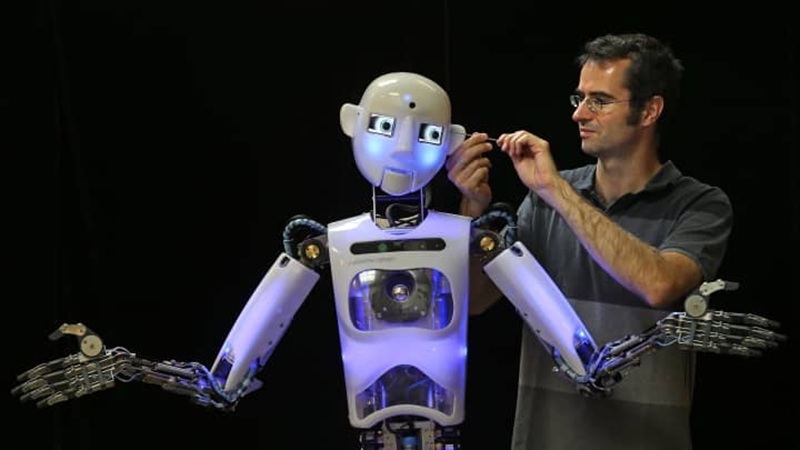
Hyundai Motor Group is preparing to acquire the remaining 9.65% stake in robotics company Boston Dynamics from SoftBank Group for approximately $325 million, a move that would make the renowned U.S. robotics firm a wholly owned subsidiary and deepen Hyundai’s long-term bet on automation and intelligent machines.
According to South Korea’s Maeil Business Newspaper, Hyundai Motor is expected to convene a board meeting on June 22 to approve the transaction. The report said SoftBank informed Hyundai that it intends to exercise a put option negotiated when Hyundai acquired control of Boston Dynamics in 2021, allowing SoftBank to sell its remaining stake.
If completed, the deal would mark the final stage of Hyundai’s takeover of one of the world’s most recognized robotics companies and underscore the growing convergence between the automotive, artificial intelligence, and robotics industries.
Register for the next Tekedia Mini-MBA.
Register for Tekedia AI in Business Masterclass.
Join Tekedia Capital Syndicate and co-invest in great global startups.
The acquisition comes at a time when major industrial companies are racing to position themselves for what many see as the next wave of automation. While investors have focused heavily on generative AI and data centers, manufacturers are increasingly directing attention toward “physical AI” — the application of AI technologies in robots, autonomous systems, and industrial automation.
Boston Dynamics occupies a unique position in that landscape. The company gained global attention through robots such as Spot, the four-legged inspection robot, and Atlas, its humanoid robot platform. While Boston Dynamics spent years being viewed primarily as a cutting-edge research company, it has recently shifted toward commercial deployment in logistics, warehouse automation, industrial inspection, and manufacturing environments.
For Hyundai, full ownership could provide greater flexibility in integrating robotics technologies across its businesses. The group already controls more than 90% of Boston Dynamics through a consortium that includes Hyundai Motor Company, Kia Corporation, Hyundai Mobis, Hyundai Glovis, and Hyundai Motor Group Executive Chair Euisun Chung.

The strategic rationale extends beyond traditional automotive manufacturing. Hyundai has increasingly positioned itself as a broader mobility company, investing heavily in autonomous driving, smart factories, advanced logistics systems, and future transportation technologies.
Boston Dynamics could become a critical component of that vision.
Its warehouse automation systems could enhance Hyundai’s logistics operations, while humanoid robots may eventually play roles in manufacturing environments facing labor shortages. The technology could also support Hyundai’s ambitions in smart cities, mobility services, and autonomous industrial operations.

The timing is notable because robotics is attracting renewed investor attention as advances in AI dramatically improve robot capabilities. Companies such as NVIDIA, Tesla, and numerous startups are investing heavily in humanoid and industrial robots powered by AI models capable of understanding and interacting with the physical world.
Industry analysts now see robotics as a potential multi-trillion-dollar market over the coming decades, particularly as aging populations, labor shortages, and rising wage costs push businesses toward greater automation.
For SoftBank, the sale would continue its strategy of monetizing mature investments while recycling capital into new growth opportunities. The Japanese conglomerate originally acquired Boston Dynamics from Alphabet in 2017 before selling a controlling stake to Hyundai in 2021.
The reported $325 million transaction values the remaining stake at a level broadly consistent with Boston Dynamics’ strategic importance rather than its current earnings profile. Like many advanced robotics firms, Boston Dynamics remains in investment mode, prioritizing product development and commercialization over short-term profitability.
The acquisition would give Hyundai complete control over future decisions regarding product development, commercialization strategy, and integration with its broader mobility ecosystem.
As the automotive industry increasingly expands beyond vehicles into software, AI, and robotics, Hyundai’s move suggests it sees intelligent machines as a core pillar of its next phase of growth rather than a peripheral technology investment.