

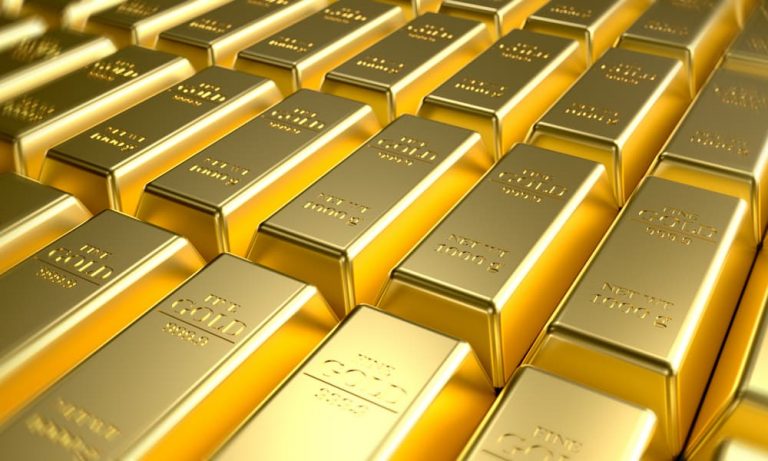
Physical gold demand showed tentative signs of recovery across major Asian markets this week as prices fell to their lowest levels in more than two months, encouraging bargain hunters to return.
However, persistent uncertainty surrounding the implementation of the U.S.-Iran peace framework continues to restrain broader buying activity, particularly among investors waiting for clearer geopolitical and monetary policy signals.
The contrasting trends point to a market caught between attractive lower prices and lingering uncertainty about the global economic outlook.
Register for the next Tekedia Mini-MBA.
Register for Tekedia AI in Business Masterclass.
Join Tekedia Capital Syndicate and co-invest in great global startups.
In India, the world’s second-largest gold consumer, dealers widened discounts sharply as prices dropped and volatility remained elevated. Discounts expanded to as much as $54 an ounce over official domestic prices, compared with $35 a week earlier, reflecting efforts by traders to stimulate demand and clear inventories.
Domestic gold prices fell to 146,252 rupees per 10 grams on Friday, their lowest level since early April, creating opportunities for consumers who had largely stayed away from the market during gold’s record-breaking rally earlier this year.
Jewelers reported that lower prices were beginning to attract buyers back into showrooms, although demand remains far from robust.

“The price correction is helping bring buyers back to the market, but excessive volatility is prompting some buyers to wait for a clearer price trend,” market participants were quoted as saying.
The hesitation underpins a broader shift in investor sentiment. Gold has lost more than 23% of its value since the outbreak of the U.S.-Israeli conflict with Iran in February, reversing a substantial portion of the gains that had propelled the precious metal to record highs earlier in the year.
The decline has been driven largely by changing expectations around inflation and interest rates. Earlier fears that the Middle East conflict would trigger a prolonged energy shock pushed investors toward safe-haven assets such as gold. However, the tentative ceasefire agreement between Washington and Tehran and expectations that the Strait of Hormuz could reopen have eased some of those concerns.

Confidence remains fragile because investors are increasingly questioning whether the peace process will proceed smoothly after negotiations scheduled for Switzerland failed to materialize. U.S. Vice President JD Vance cancelled plans to travel for talks with Iranian negotiators, while Swiss officials confirmed that the planned discussions would not take place. Iran has also expressed reservations about aspects of the implementation process, raising fresh doubts about the durability of the agreement.
Those uncertainties continue to influence gold markets globally.
In China, the world’s largest gold consumer, physical demand weakened further as buyers stayed on the sidelines awaiting clarity on both the geopolitical situation and future gold prices. Premiums in the Chinese market disappeared entirely, with bullion trading at discounts of $4 to $8 an ounce below international benchmark prices. It marked the first time since December that Chinese gold has traded at a discount, highlighting the extent of the recent slowdown in buying activity.
The shift weighs heavily because Chinese investors have been among the strongest drivers of global gold demand over the past two years, particularly during periods of economic uncertainty and property market weakness.
However, traders say investors are now adopting a wait-and-see approach.
The Shanghai physical gold market has remained notably quiet, with limited evidence of significant bargain hunting despite the sharp decline in prices. Investors remain concerned that the Middle East peace process could unravel or that central banks could maintain restrictive monetary policies for longer than expected.
“I am not seeing much buying interest. Investors across China are still concerned about uncertainty ?in the Middle East and are waiting for a clearer picture,” said ?Peter Fung, ?head of dealing at Wing Fung Precious Metals.
“Demand may pick up after the holidays or maybe in July or August.”
Global investors are also grappling with a changing interest-rate environment. Recent comments from Federal Reserve Chairman Kevin Warsh have reinforced expectations that U.S. rates may remain elevated, or even rise further, if inflation risks persist. Higher interest rates typically weigh on gold because the metal does not generate income and becomes less attractive relative to yield-bearing assets.
At the same time, lower oil prices resulting from the ceasefire have reduced immediate inflation fears, weakening one of the key drivers that supported gold during the conflict.
Still, analysts caution against assuming the gold bull market has ended.
Longer-term structural factors continue to support the metal. Rising global debt levels, fiscal concerns across major economies, geopolitical fragmentation, and continued central bank purchases remain supportive of demand over the medium term.
Physical markets elsewhere in Asia reflected similarly subdued conditions. In Hong Kong, gold traded between par and a $2 premium over international prices. In Singapore, premiums ranged from a $0.50 discount to a $1.80 premium, while Japan recorded modest discounts of around $0.25 an ounce.
The broader picture suggests that while lower prices are beginning to attract some buying interest, particularly from jewelers replenishing inventories, investors remain cautious.
For gold demand to recover meaningfully, markets will likely need greater clarity on two critical issues: the possibilities that the U.S.-Iran peace framework evolves into a durable agreement and central banks, especially the Federal Reserve, signal a less restrictive policy outlook.
Until then, bargain hunting is expected to provide temporary support, while uncertainty surrounding geopolitics, interest rates, and global growth is likely to keep physical demand uneven across Asia’s key gold markets.