

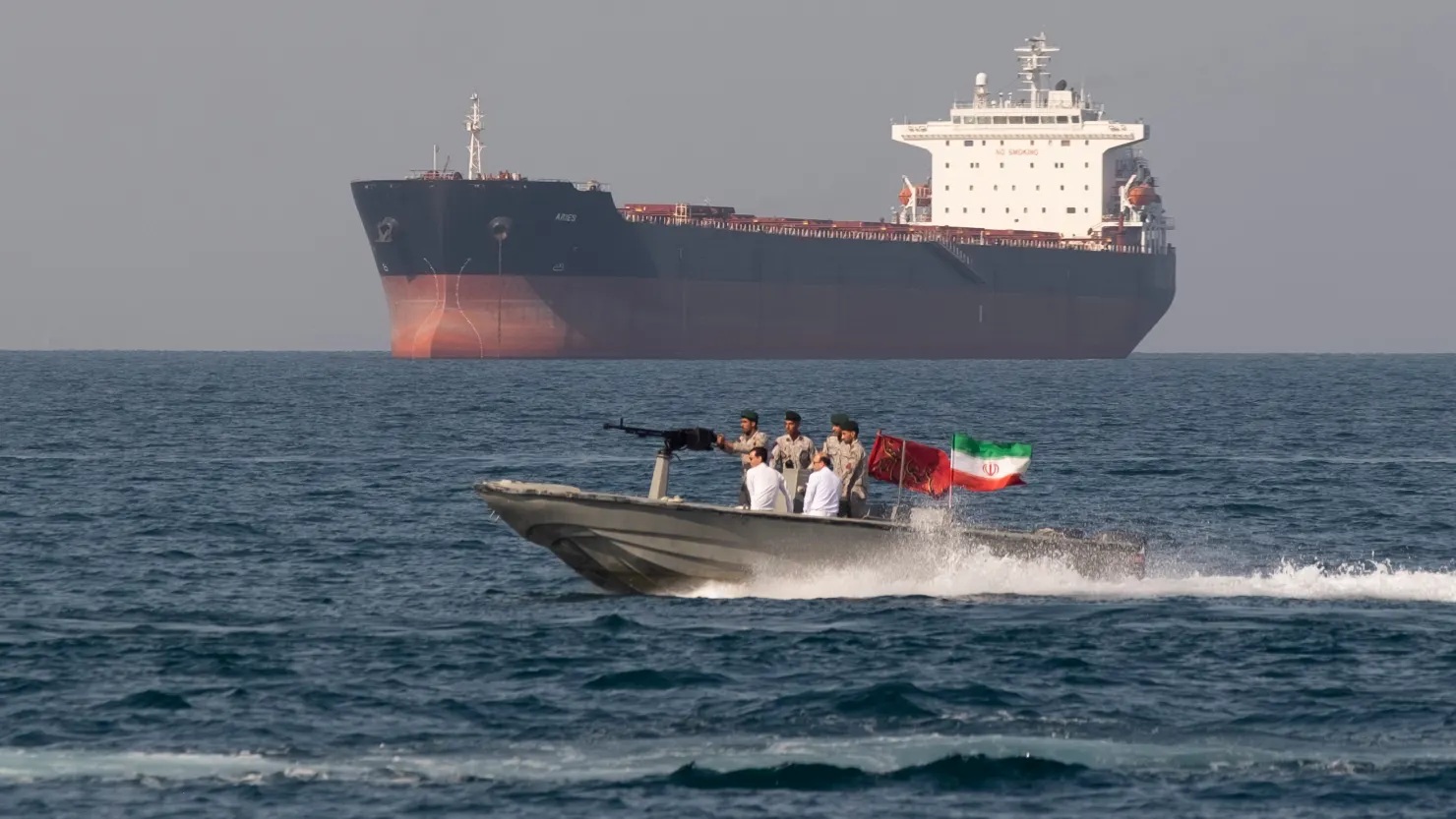
Iranian officials, particularly through the Islamic Revolutionary Guard Corps (IRGC), have issued statements threatening the “complete” or “total” closure of the Strait of Hormuz—and potentially keeping it shut until damaged Iranian infrastructure is rebuilt—if the US or allies strike Iran’s energy or power facilities.
This escalation is part of the ongoing 2026 Iran conflict involving US and Israeli military actions against Iran. The Strait of Hormuz is a narrow chokepoint between Iran and Oman, through which roughly 20% of global oil and a significant share of liquefied natural gas (LNG) normally flows. It’s long been viewed as Iran’s “ultimate weapon” in a conflict, as it can disrupt supplies from Saudi Arabia, UAE, Qatar, Kuwait, and Iraq.
Following US-Israeli strikes on Iran which began around late February 2026 and included targets that killed senior Iranian leaders, Iran retaliated with missile/drone attacks on regional targets and effectively halted most commercial shipping through the strait starting early March 2026.
The IRGC warned it would attack vessels attempting passage, leading to a sharp drop in traffic from ~150+ vessels/day to a trickle. Iran has allowed limited exceptions; some tankers to China, India, or allies but broadly disrupted flows, contributing to spikes in oil and European gas prices.
Register for Tekedia Mini-MBA edition 20 (June 8 – Sept 5, 2026).
Register for Tekedia AI in Business Masterclass.
Join Tekedia Capital Syndicate and co-invest in great global startups.
Register for Tekedia AI Lab.
US President Donald Trump issued a 48-hour ultimatum starting late March 22 demanding Iran fully reopen the strait “without threat” to shipping, warning that failure would lead to US strikes to “obliterate” Iran’s power plants, starting with the largest. He later extended the deadline amid reported talks.
In direct response, Iran’s IRGC stated the strait would be “completely closed” immediately if the US targets Iranian power plants or energy infrastructure—and would remain shut until any damaged sites are rebuilt. They also broadened warnings to potential strikes on Gulf states’ energy, power, and desalination facilities.
This fits a pattern: Iran has repeatedly threatened Hormuz closure over decades but has now acted on it more forcefully amid the war, using mine-laying, naval forces, and attacks on ships as enforcement. Reduced Gulf exports have already driven oil/gas price surges, higher shipping costs/surcharges, and rerouting around Africa.

A prolonged full closure could worsen global inflation and energy shocks, though alternatives like increased US/ other production or strategic reserves offer some buffer. Reopening would likely require significant naval operations. Iran has anti-ship missiles, drones, mines, and speedboats suited for asymmetric warfare in the confined waters.
Reports mention “productive conversations” or indirect channels, with Iran issuing broader ceasefire demands; US base closures, sanctions removal. Trump has signaled openness to de-escalation but maintains pressure.
Iran’s threat is credible in the short term due to its geography and military posture in the strait, but sustaining a full, indefinite blockade carries huge risks for Tehran itself (economic isolation, potential wider war). The situation remains fluid—deadlines have shifted, and both sides are balancing escalation with talks.
Global shipping and energy firms are already adapting with higher insurance and surcharges. The ongoing effective closure of the Strait of Hormuz—through which ~20% of global oil and a significant portion of LNG normally transits—has triggered a major supply shock amid the 2026 US-Israel-Iran conflict.

This has driven sharp increases in global oil prices, with volatility tied to headlines on threats, deadlines, and potential talks. Brent crude: Trading around $110–114/barrel, with recent highs near $119 and peaks earlier in the crisis approaching or exceeding $126 in some reports. It has risen substantially from pre-conflict levels ~$70–75 in late February.
WTI crude (US benchmark): Around $98–100/barrel, up from the $60s–70s range, though it has seen intra-day swings and a wider discount to Brent over $14 at times due to regional factors. Prices have fluctuated wildly: Initial surges of 10–30%+ in early March, pullbacks on talk of releases or diplomacy, then rebounds on renewed threats.
Analysts note that the physical effects of reduced flows (down to a “trickle”) are still working through the system and not fully priced in by futures markets. The strait handles ~20 million barrels per day (bpd) of crude and products pre-crisis. Effective closure has removed a large portion of Gulf exports (Saudi, UAE, Iraq, Kuwait, Qatar, etc.), hitting Asia hardest but tightening global balances.
However, these cover only part of the gap. Spare capacity outside the region is limited, and insurance/shipping costs have spiked, with many operators avoiding the area. Analysts’ outlooks depend heavily on duration: Short-term/limited disruption (weeks to 1–3 months): Brent averaging ~$100–110, with spikes to $130 during peak tightness. Dallas Fed models a one-quarter closure pushing WTI to ~$98.
Prolonged closure (3–6 months): Brent could average $100–120 for 2026 overall, with sustained spikes to $130–170 during the disruption before easing toward $90 by year-end (Fitch Ratings). Extreme full-year scenarios see higher averages.
Goldman Sachs and others have hiked 2026 forecasts assuming ongoing tightness and stockpiling. Chevron’s CEO emphasized real physical shortages not yet fully reflected. Tail risks: $150+ or even higher if escalation widens, though naval intervention could reopen flows faster.
Markets price in a “risk premium” that could evaporate quickly on de-escalation or reopening. Higher oil prices act as a tax on consumers and industry, with ripple effects: Inflation: Adds 0.6–0.7 percentage points (or more) to global headline inflation via fuel, transport, and downstream costs. Europe and import-dependent Asia face stronger stagflation risks.
Could shave 0.2–0.4 percentage points or up to 2.9 pp annualized in a severe quarter per Dallas Fed off global GDP. Asia (heavy Gulf importer) sees the biggest hit; Europe/Japan vulnerable due to energy dependence. US benefits somewhat as a net exporter but still faces consumer pain.
Gasoline and energy costs: US average regular gas has risen to ~$3.90–4.00/gallon up ~$1 from pre-crisis, with risks of new records if unresolved. Diesel, jet fuel, and heating costs also climb, hitting logistics and manufacturing. Other sectors: Higher freight/shipping costs, reduced industrial activity especially in Asia, potential currency pressures in emerging markets, and tighter monetary policy dilemmas for central banks.
Oil producers see investment boosts; energy-intensive industries and importers suffer. Stock markets have shown volatility, with energy stocks outperforming. A short disruption functions mainly as an oil shock; a multi-quarter one becomes a broader inflation + growth shock, echoing 1970s-style pressures but with today’s tighter starting conditions.
US/other production ramps, SPR releases, demand destruction at high prices ~$100+ can curb some consumption, and potential OPEC+ adjustments. Diplomatic progress or military action to reopen the strait could reverse gains quickly. Recent reports of talks caused sharp pullbacks.
The situation remains highly fluid—tied to deadlines, threats on energy infrastructure, and battlefield developments. Corporate leaders express concern over sustained high prices but aren’t yet in full panic mode for a brief episode. The Hormuz disruption has already delivered a significant price surge and economic headwinds, with potential for much worse if prolonged. Markets are watching every headline for signs of reopening versus escalation.