

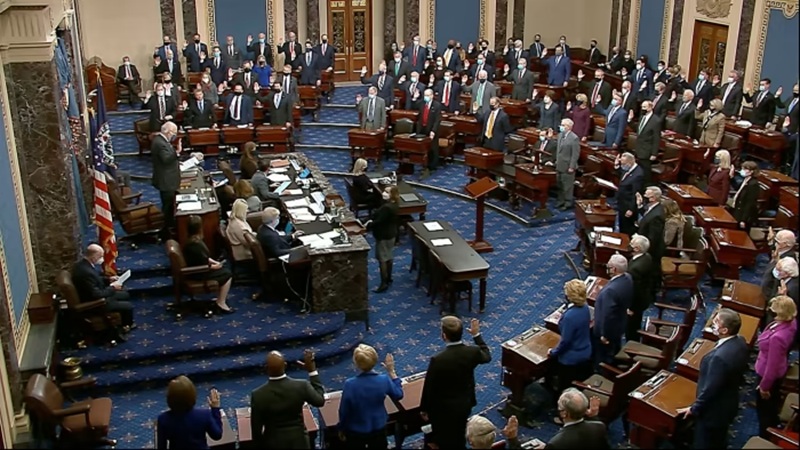
The release of the United States Senate’s latest 309-page draft of the CLARITY Act marks another major step in the evolution of America’s digital asset regulatory framework.
At the same time, the Senate’s advancement of Kevin Warsh’s nomination for Federal Reserve Chairman signals a broader shift in how Washington may approach monetary policy, financial innovation, and market regulation in the coming years. Together, these developments highlight a transformative moment for both traditional finance and the rapidly expanding cryptocurrency sector.
The CLARITY Act has emerged as one of the most closely watched legislative efforts in the digital asset industry. For years, crypto companies, investors, and policymakers have debated how cryptocurrencies should be classified and regulated. Regulatory uncertainty has often been cited as one of the biggest barriers preventing the United States from fully embracing blockchain innovation.
The new Senate draft attempts to address these concerns by defining oversight responsibilities between federal agencies, particularly the Securities and Exchange Commission and the Commodity Futures Trading Commission. Supporters of the bill argue that clearer rules could encourage innovation while protecting consumers and investors.
Register for the next Tekedia Mini-MBA.
Register for Tekedia AI in Business Masterclass.
Join Tekedia Capital Syndicate and co-invest in great global startups.
Many crypto firms have complained that existing regulations were designed for traditional financial products and are ill-suited for decentralized networks, tokenized assets, and blockchain-based financial systems. By creating a more structured legal framework, lawmakers hope to reduce confusion surrounding token issuance, exchange operations, custody standards, and decentralized finance applications.
The sheer size of the legislation — spanning 309 pages — reflects the complexity of the digital asset industry itself. Cryptocurrencies are no longer a niche technology experiment. They now intersect with banking, payments, securities trading, artificial intelligence infrastructure, and even geopolitical strategy. Stablecoins, tokenized real-world assets, and blockchain settlement systems are increasingly being discussed as core components of the future financial system.
The Senate’s move to advance Kevin Warsh’s nomination for Federal Reserve Chairman adds another layer of significance to current financial policy debates. Warsh, a former Federal Reserve governor, is widely viewed as a market-oriented policymaker with strong views on inflation, central banking credibility, and economic discipline.

His nomination arrives during a period of persistent inflation concerns, elevated government debt, and heightened scrutiny over interest rate policy.
Financial markets are closely analyzing what a Warsh-led Federal Reserve could mean for risk assets, including cryptocurrencies and equities. Some investors believe he could favor tighter monetary conditions to preserve the Fed’s inflation-fighting reputation, while others argue he may support policies that encourage long-term economic growth and financial innovation.
Either way, his leadership would likely shape global capital markets at a critical time. The simultaneous progress of the CLARITY Act and Warsh’s nomination underscores how interconnected digital assets and macroeconomic policy have become. Cryptocurrency is no longer operating outside the traditional financial system; it is increasingly becoming part of it.
Regulatory clarity and central bank leadership will both play decisive roles in determining how capital flows, innovation develops, and financial markets evolve over the next decade. These developments suggest the United States is entering a new phase in financial regulation — one where crypto policy and monetary policy are becoming deeply intertwined.
