

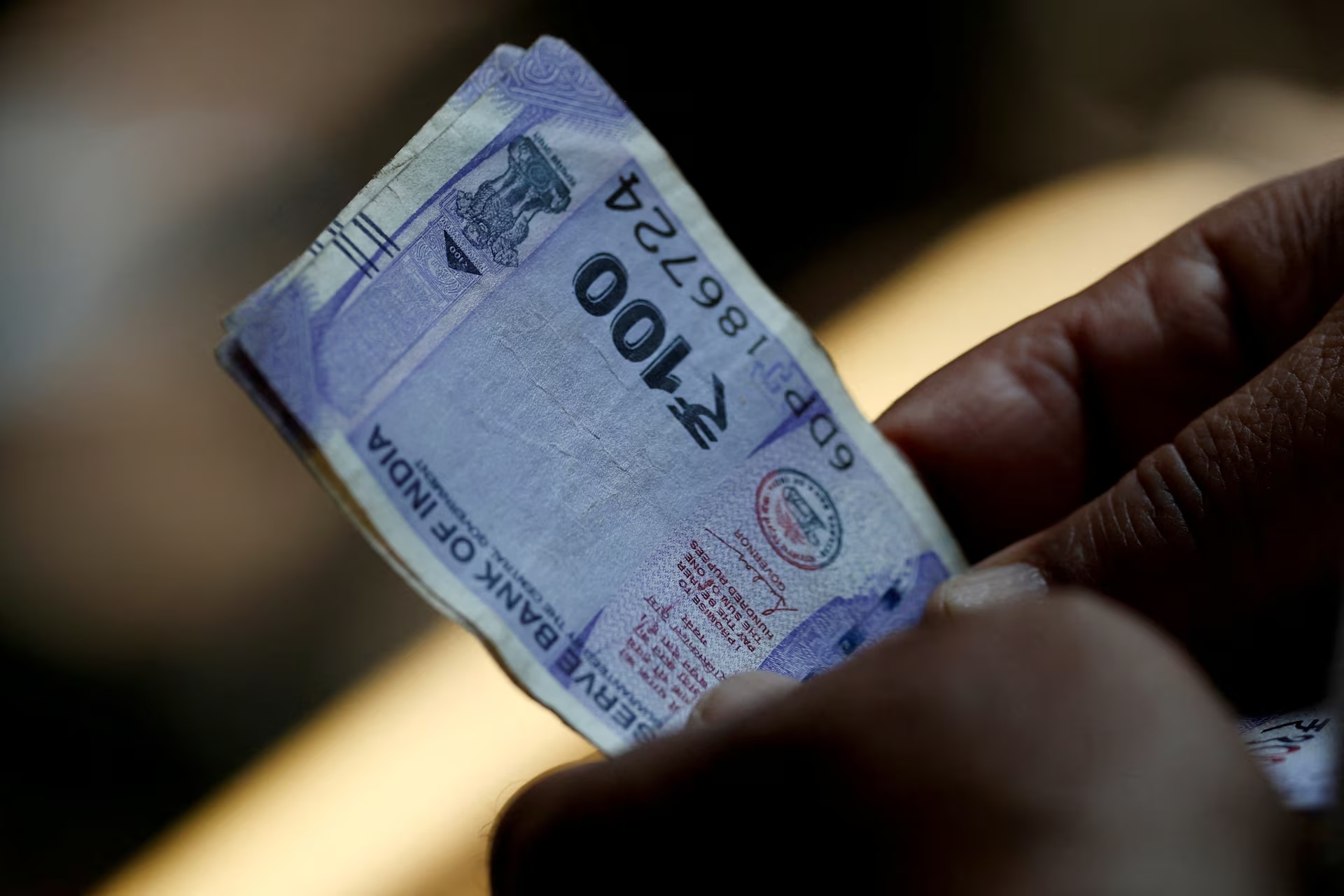
The Indian rupee (INR) has hit a record low against the US dollar (USD), breaching the 93 level amid intense pressure from an ongoing global energy crisis triggered by the escalating war involving Iran in the Middle East.
The USD/INR exchange rate has surged to around 93.71–93.7350 or higher intraday peaks near 93.48–93.81 in some reports, marking a new all-time low for the rupee. This surpasses previous records set earlier in March, such as: Around 92.63 on March 18. 92.4750 or lower in mid-March (e.g., 92.3575 on March 12).
The rupee has weakened significantly in 2026 so far—down about 3–4% year-to-date—accelerating sharply in recent weeks. The Reserve Bank of India (RBI) has intervened multiple times including via state-run banks selling dollars to curb the slide, but persistent external pressures have overwhelmed those efforts on volatile days.
The primary driver is the disruption to global energy supplies from the Iran conflict. This has caused:Sharp surge in crude oil prices — Oil has spiked well above $100 per barrel, with over 40% rises since late February due to attacks on energy infrastructure, halted exports, and risks in the Strait of Hormuz.
Register for Tekedia Mini-MBA edition 20 (June 8 – Sept 5, 2026).
Register for Tekedia AI in Business Masterclass.
Join Tekedia Capital Syndicate and co-invest in great global startups.
Register for Tekedia AI Lab.
Higher import costs for India — As a major oil importer relying on ~85% imports, India faces a ballooning trade deficit, increased dollar demand for energy payments, and imported inflation risks. Broader macroeconomic pressures — Elevated energy prices create a terms-of-trade shock, fuel capital outflows, a stronger US dollar, and reduced risk appetite in emerging markets.
These factors have compounded since late February/early March, with the conflict showing no quick resolution. Analysts warn that if the war prolongs, the rupee could weaken further toward 95 or beyond. Higher fuel and energy costs could disrupt India’s growth-inflation balance.
Increased import bills strain forex reserves, while global volatility adds to FII outflows. This aligns with a broader global energy shock, where fossil fuel dependency exposes economies to geopolitical volatility—echoing past crises but intensified here by Middle East disruptions.

Oil prices remain elevated due to the ongoing global energy crisis and disruptions in the Middle East, particularly involving Iran and the Strait of Hormuz. Brent crude is trading around $107–109 per barrel with recent settlements near $107.26–109.04, reflecting daily fluctuations and a sharp ~50% rise over the past month from earlier lows.
This follows a surge from around $70–80 earlier in the year, driven by supply risks, reduced shipments through key chokepoints, and some production outages.Forecasts for the rest of 2026 are highly uncertain and heavily contingent on the duration and intensity of the geopolitical conflict.
A prolonged disruption could keep prices elevated longer, while any de-escalation or resolution would likely trigger a sharp correction toward oversupply dynamics. Major institutions have revised outlooks upward in recent weeks to account for the crisis, but most still anticipate a downward trajectory later in the year assuming partial or full resolution of disruptions.

Brent remains above $95/bbl over the next two months through May, then falls below $80/bbl in Q3, reaching around $70/bbl by year-end. Full-year average implied around $79/bbl up significantly from pre-crisis projections of ~$58–$69/bbl for 2026. This is highly dependent on conflict duration and resulting outages; longer disruptions push averages higher.
Goldman Sachs — Recent revisions: Q2 average $76/bbl, with Q4 at $66–71/bbl (earlier hikes from lower baselines). Year-end targets reflect risks from Hormuz flows; downside if normalization occurs faster.
J.P. Morgan Global Research — Maintains a bearish long-term view: Brent averaging around $60/bbl in 2026 overall; high-$50s to $60 range, even after the spike, due to expected global oversupply and soft fundamentals once geopolitical noise fades.
S&P Global Ratings: Raised remaining 2026 assumptions to $80/bbl Brent reflecting longer-than-expected Hormuz issues. WTI typically trades at a discount to Brent currently around $5–10/bbl lower in volatile periods. Forecasts generally align: EIA-implied: Lower than Brent, potentially in the $60s–$70s range by year-end.
Prolonged conflict, extended Hormuz disruptions, or broader production losses ? Prices could stay $90–120+/bbl through much of 2026. De-escalation by mid-2026, resumed flows, non-OPEC+ supply growth (U.S., Brazil, etc.), and inventory builds ? Sharp decline to $60–70/bbl or lower by late 2026, reflecting pre-crisis oversupply trends.
Global demand growth (~0.9–1 mb/d), OPEC+ policy (potential output hikes), U.S. production response to high prices, and economic conditions. The current spike is a classic war premium, but fundamentals point to eventual moderation unless the crisis deepens significantly.