

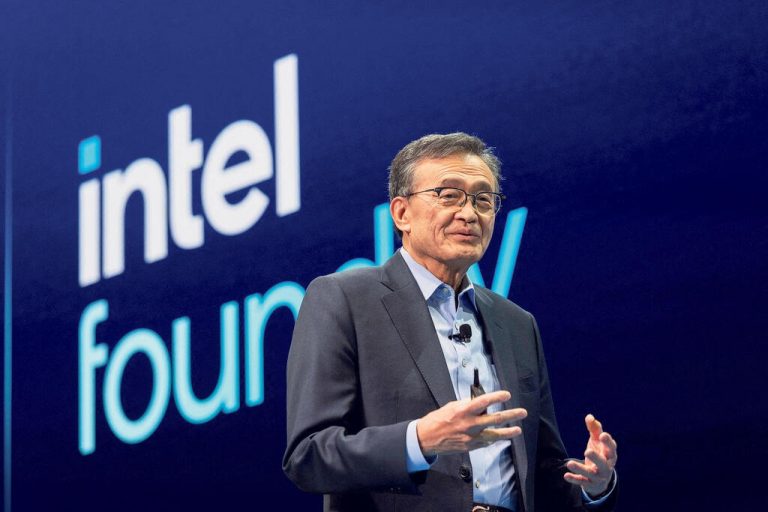
The chief executives of Intel and Broadcom have warned that access to capital and the rising cost of financing could become the biggest constraints on the artificial intelligence boom, potentially limiting infrastructure expansion even as demand for computing power continues to exceed available supply.
Broadcom CEO Hock Tan said financing could prove a more persistent obstacle than shortages of semiconductors, memory chips or electricity, which have repeatedly disrupted the industry’s efforts to expand capacity. Intel CEO Lip-Bu Tan similarly pointed to the cost of capital and growing pressure on businesses to demonstrate that their investments in AI will generate adequate returns.
“[What] I think might be the biggest constraint is capital,” Hock Tan said at the DBS Asia Future Forward Conference in Singapore on Monday.
Register for the next Tekedia Mini-MBA.
Register for Tekedia AI in Business Masterclass.
Join Tekedia Capital Syndicate and co-invest in great global startups.
“If there’s any challenge in the front, it’s capital and the cost of capital, and then the other part is in the longer run, people want to see the ROI,” Lip-Bu Tan said.
Their warnings introduce a financial dimension to the constraints facing the AI industry. While technology companies have spent heavily on advanced processors, data centers and power infrastructure to meet anticipated demand, the sustainability of that spending depends on financing conditions and the ability of businesses to convert computing capacity into revenue and productivity gains.
The distinction is significant for an industry whose expansion requires substantial upfront investment. Data centers, chip manufacturing capacity, and supporting electricity infrastructure can take years to develop, while the commercial benefits of AI adoption may emerge more gradually. If borrowing costs remain elevated or expected returns fail to materialize, companies could find it harder to justify new projects even when demand for computing resources remains strong.

The AI investment cycle has generated enormous demand for specialized computing infrastructure, encouraging technology companies and their suppliers to commit capital to new facilities, processors and supporting systems.
However, the cost of financing these projects is becoming a more important consideration. This is because higher bond yields can increase borrowing expenses for companies raising debt to fund data center construction, equipment purchases and other infrastructure investments. For projects that require large initial expenditures and depend on future demand, more expensive financing can weaken expected returns and make investment decisions more difficult.
Hock Tan’s warning suggests that capital availability could become a binding constraint even if manufacturers succeed in resolving current shortages of physical components. A company may have access to the technology and electricity needed to expand computing capacity but still struggle to finance the investment at a cost that makes commercial sense.

The issue has become more relevant as spending on AI infrastructure spreads across technology companies, semiconductor suppliers, data center operators, and energy providers. Each part of the supply chain requires funding, and the financial viability of one segment can affect investment across the broader ecosystem.
For semiconductor companies, demand for advanced chips depends partly on customers’ ability to finance the systems in which those chips are deployed. Data center operators, in turn, need sufficient funding to build facilities and secure electricity supplies before they can generate revenue from customers. If financing becomes more expensive, some planned projects could be delayed, scaled back or reassessed.
The executives’ comments do not suggest that the industry is already experiencing a broad funding shortage. Rather, they identify capital costs and the requirement for demonstrable returns as potential limits on how quickly the current investment cycle can continue.
That reckoning matters because strong demand does not automatically guarantee that every planned project will be profitable. Companies must assess whether future revenue will justify construction costs, financing expenses, equipment depreciation and ongoing operating expenditure.
Hock Tan said the industry had repeatedly encountered supply bottlenecks over the past two years, only for manufacturers and infrastructure providers to find ways to overcome them.
“[In the] last two years we have seen a series of bottlenecks that keep coming out, but then we overcome it,” he said. “Memory shortage today might not be that way a year from now.”
He suggested that wafer shortages could ease by 2028 or 2029, while electricity availability could also improve as additional infrastructure comes online.
The outlook points to a potential shift in the nature of the AI industry’s constraints. Shortages of memory, semiconductor manufacturing capacity and electricity have limited the deployment of computing infrastructure, but investment in additional production and energy capacity could gradually relieve some of that pressure.
Such improvements would not necessarily eliminate the bottlenecks. Semiconductor manufacturing requires significant investment and long lead times, while new electricity generation, transmission and data center connections can take years to deliver. Nevertheless, Hock Tan’s assessment suggests that some current supply constraints may be temporary relative to the longer-term financing challenge.
Despite those concerns, Broadcom and Intel remain optimistic about near-term demand.
“There is more demand for compute infrastructure than we can supply,” Hock Tan said, adding that the imbalance could continue through 2029 and potentially into 2030.
Lip-Bu Tan likewise said he did not expect a significant slowdown in the next two to three years, pointing to the expanding use of AI applications and continued demand for computing power.
The forecasts indicate that the executives see a substantial pipeline of demand for infrastructure, even as they acknowledge that the industry’s longer-term growth is not assured. For chipmakers and equipment suppliers, continued investment by cloud providers and other customers could sustain strong orders over the coming years.
However, the expected persistence of demand also raises questions about how much capital the industry will need to deploy before its investments generate sufficient cash flow. Expanding supply to meet current demand may require companies to commit funds well ahead of the revenue those facilities are expected to produce.
Beyond financing and physical infrastructure, both executives highlighted the importance of AI adoption and the economic value businesses ultimately derive from the technology.
Hock Tan cautioned that demand for computing infrastructure could weaken if adoption of advanced AI models disappoints or improvements in their capabilities begin to plateau. Such a scenario could undermine assumptions underpinning some infrastructure spending plans, particularly where investments rely on continued growth in computing requirements.
Lip-Bu Tan emphasized that businesses would increasingly need to demonstrate tangible returns from AI, whether through improved efficiency, lower operating costs or new business models.
The challenge is that investment in AI infrastructure and the realization of economic benefits do not necessarily occur at the same pace. Companies can incur substantial costs to build computing capacity before customers adopt the resulting services at scale or before internal AI deployments produce measurable productivity improvements. That creates a potential mismatch between spending and returns. If revenue growth or efficiency gains fall short of expectations, investors and lenders may become less willing to finance additional capacity, especially when borrowing costs are high.
Therefore, the industry faces two related tests. In the near term, analysts say it must secure enough capital to build infrastructure for a market where demand currently exceeds supply. Over a longer period, it must demonstrate that the resulting computing capacity can support sustainable revenue growth and economically meaningful applications.