

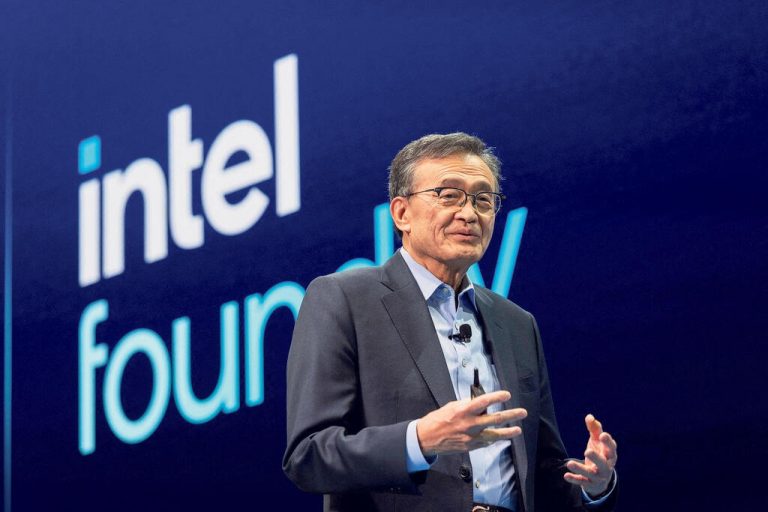
Semiconductor giant Intel is undergoing one of its most significant leadership shakeups in years as new CEO Lip-Bu Tan accelerates efforts to reposition the company in the face of mounting competition.
Since taking the helm in March, Tan has moved swiftly to bring in fresh talent, reorganize core operations, and signal to investors that Intel intends to reclaim its place at the center of the semiconductor industry.
On Monday, Intel announced that Michelle Johnston Holthaus, a three-decade veteran and most recently CEO of Intel products, will step down. She will stay on as a strategic adviser. The departure of Holthaus, one of Intel’s longest-serving leaders, underscores Tan’s willingness to make bold changes to a company once defined by stability and continuity at the top.
Register for Tekedia Mini-MBA edition 20 (June 8 – Sept 5, 2026).
Register for Tekedia AI in Business Masterclass.
Join Tekedia Capital Syndicate and co-invest in great global startups.
Register for Tekedia AI Lab.
As part of its restructuring, Intel also unveiled a new central engineering group tasked with building custom silicon for outside clients. This move marks a notable pivot as Intel intensifies its push into foundry services—a space traditionally dominated by Taiwan’s TSMC and South Korea’s Samsung. The division will be led by Srinivasan “Srini” Iyengar, who joined Intel from Cadence Design Systems in July.
Further appointments were also announced. Kevork Kechichian, formerly of ARM, will now head Intel’s data center group, while Jim Johnson has been elevated to senior vice president and general manager of Intel’s client computing group. Naga Chandrasekaran, currently chief technology and operations officer of Intel Foundry, will see his responsibilities expand as the company ramps up investments in custom chip manufacturing.
“With Srini leading Central Engineering, we’re aligning innovation and execution more tightly in service to customers,” Tan said in a press release. “We are laser-focused on delivering world-class products and empowering our engineering teams to move faster and execute with excellence. Kevork, Jim, and Srini are exceptional leaders whose deep technical acumen and industry relationships will be instrumental as we continue building a new Intel.”

These leadership moves follow other changes earlier this year. In July, Intel brought in four new executives in sales and engineering roles, including Greg Ernst as chief revenue officer. And, of course, Tan’s own appointment in March was a pivotal moment, signaling the board’s desire for a transformative leader to chart a new path forward.
The reshuffle comes at a time of heightened scrutiny. Just weeks ago, the U.S. government announced a plan to convert $11.1 billion in existing Chips Act grants into a 10% equity stake in Intel. The deal, one of the largest of its kind, also includes a provision penalizing Intel if its ownership of the foundry unit falls below 50%. Washington’s unprecedented intervention highlights the strategic importance of Intel’s turnaround not just to its shareholders but to U.S. national security interests as America races to reduce reliance on Asian chipmakers.
In a comparative context, Intel’s aggressive leadership changes stand in contrast with rivals. TSMC, despite leadership transitions, has largely maintained continuity while pushing technological boundaries in chip miniaturization. Nvidia, meanwhile, continues to thrive under the long-standing leadership of Jensen Huang, cementing its dominance in AI accelerators. Intel’s challenge is therefore unique: it must simultaneously restructure its leadership, modernize its technology base, and prove that it can compete in foundry services—all while under the watchful eye of the U.S. government.

Yet Intel is far from alone in its leadership shakeup. Across the industry, rivals and peers are making similar moves. Microsoft, for instance, saw the surprise departure of Panos Panay, its longtime hardware chief, as it restructured its Windows and devices group. Apple has recently reshuffled its senior hardware engineering leadership as it pivots more aggressively into mixed-reality headsets. Even Google has undergone senior-level changes within its AI division, most notably merging Google Brain and DeepMind under a single umbrella last year to accelerate its race against OpenAI.
In this context, Intel’s reshuffle is less an anomaly than part of a broader recalibration across the tech sector, where rapid innovation in AI, cloud, and semiconductors is forcing long-standing incumbents to rethink both strategy and leadership.
The challenge for Intel, however, remains acute. While rivals like Nvidia thrive under the continuity of Jensen Huang’s leadership and TSMC maintains stability despite succession planning at the top, Intel is trying to pull off a turnaround in the midst of internal flux and government oversight.
Looking ahead, Tan’s strategy seems designed to position Intel as both a product powerhouse and a trusted foundry partner. If successful, Intel could reclaim lost ground against Asian rivals and re-establish itself as the linchpin of U.S. semiconductor independence.
The best-case scenario would see Intel leveraging new leadership and government backing to secure major external contracts, scale foundry operations, and re-enter the race in advanced process nodes. The worst-case, however, is that the company’s cultural upheaval and competitive lag prove too much to overcome, leaving Intel vulnerable to losing further ground in both data center and consumer markets.