

The artificial intelligence boom is no longer just a story of rapid breakthroughs and bold promises. It is increasingly a story about money — staggering amounts of it — and how long investors are willing to keep writing cheques before profits appear.
Across the industry, companies are spending tens of billions of dollars on ever-larger models, sprawling data centers, and specialized chips, all in pursuit of dominance in what is widely described as a once-in-a-generation technological shift.
For now, the narrative still holds. AI, its backers argue, will eventually transform productivity, business models, and entire economies. That belief has been strong enough to support eye-watering valuations and justify losses that would be unthinkable in most other sectors. But as spending accelerates, a harder question is pushing its way to the surface: who can afford to stay in the race long enough to win?
Register for Tekedia Mini-MBA edition 20 (June 8 – Sept 5, 2026).
Register for Tekedia AI in Business Masterclass.
Join Tekedia Capital Syndicate and co-invest in great global startups.
Register for Tekedia AI Lab.
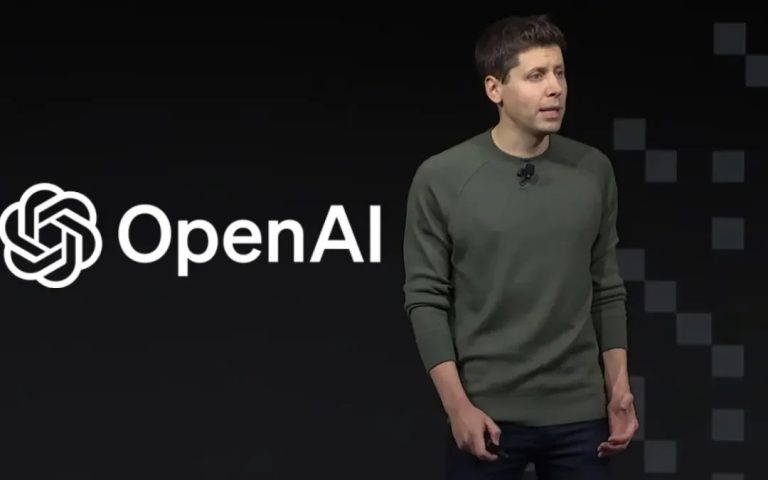
That question hangs most heavily over OpenAI, the company that did more than any other to bring generative AI into the mainstream. Since the release of ChatGPT just over three years ago, OpenAI has become a household name and a central force in the global AI conversation. Yet behind the visibility and influence lies a financial position that many analysts now see as increasingly precarious.
Unlike rivals such as Google and Meta, OpenAI does not have a mature, cash-generating core business to fund its ambitions. Google can lean on advertising and cloud computing. Meta can tap profits from its social media empire. Both can afford to pour hundreds of billions of dollars into AI over many years, even if returns are slow to materialize. OpenAI cannot. It survives on external funding, partnerships, and the hope that scale will eventually unlock a sustainable business.
That has not stopped the company from committing to extraordinary levels of spending. OpenAI is expected to lay out well over $1 trillion before the end of the decade, largely on computing infrastructure and model development. It is a bet that size and speed will prove decisive, even as revenue lags far behind costs.

Subscription uptake for ChatGPT has been weaker than many early forecasts suggested, highlighting users’ limited willingness to pay directly for AI tools. While the company has begun exploring enterprise services, licensing deals, and other commercial avenues, those efforts are still in their infancy.
The imbalance between spending and income has sharpened concerns about how long OpenAI can keep burning cash. In a recent essay for the New York Times, quoted by Yahoo Finance, Sebastian Mallaby, a senior fellow at the Council on Foreign Relations, warned that the company could run out of money “over the next 18 months.” His argument is rooted less in skepticism about AI itself and more in the brutal economics of the race now unfolding.
Mallaby is not dismissive of the technology. On the contrary, he is bullish, arguing that while new technologies usually take decades to be deployed effectively, AI has made “striking” progress in just three years. His analysis instead focuses on competitive advantage. Companies with deep, profitable legacy businesses can afford to treat AI as a long-term investment. OpenAI, without that cushion, must repeatedly return to capital markets to fund losses that are already enormous.

Those losses are mounting fast. Despite raising record sums for a private company, OpenAI is estimated to have burned through more than $8 billion in 2025 alone. Mallaby argues that even if the firm scales back some commitments or uses its highly valued shares to offset certain costs, it still faces a daunting funding gap. The scale of capital required, he suggests, may simply exceed what investors are willing to provide indefinitely.
If funding dries up, consolidation becomes the most likely outcome. Mallaby suggests OpenAI could be absorbed by a cash-rich technology giant such as Microsoft or Amazon, effectively ending its existence as an independent player. Such a scenario would not necessarily mark a failure of AI as a technology. Instead, it would underline how capital-intensive the industry has become and how difficult it is for standalone firms to compete with tech behemoths that can afford years of losses.
That distinction matters. Even in a collapse or takeover scenario, OpenAI’s influence would be hard to erase. The company helped set the pace of innovation, forced competitors to accelerate their own AI efforts, and reshaped public expectations of what machines can do. As Mallaby puts it, the failure of OpenAI would not be an indictment of AI, but rather the end of what he describes as the most hype-driven builder of it.
Others across the industry share the sense that a reckoning is approaching. Several analysts describe 2026 as a make-or-break year for OpenAI, as investor patience wears thin and competition intensifies. Pressure is also rising on the broader AI sector to show clearer paths to profitability, particularly as interest rates and macroeconomic uncertainty make easy money harder to come by.
Sam Altman, OpenAI’s chief executive, shows no sign of backing down. He has reportedly declared “code red” internally and is doubling down on ChatGPT, determined to keep pace with Google, which is rapidly closing the gap with its own AI models. The strategy suggests a belief that retreat would be more dangerous than pressing ahead.
However, the efforts have done so little to quell growing skepticism. One venture capital executive, who invested in a rival AI firm, recently described OpenAI’s trajectory to The Economist as “the WeWork story on steroids,” invoking a company that expanded aggressively on the back of hype and capital before collapsing under the weight of its own business model.
Against this backdrop, it is becoming clear that the AI boom is entering a more unforgiving phase, and the focus is shifting from what the technology can do to what it can earn.