

U.S. President Donald Trump on Sunday escalated tensions with Beijing by threatening to impose a sweeping 50% tariff on Chinese goods if Washington confirms reports that China is preparing to supply air defense weapons to Iran.
The threat, which follows the U.S. Navy’s move to mount a blockade at the Strait of Hormuz, has added a fresh trade and geopolitical fault line to an already volatile Middle East crisis. The blockade is being viewed by analysts as carrying a major energy-market strategy: redirecting global crude demand toward American exports.
The warning came after reports emerged that U.S. intelligence believes Beijing may be preparing to send man-portable air defense systems, or MANPADS, to Tehran, a development that would mark a notable escalation in China’s involvement in the conflict if confirmed.
Register for the next Tekedia Mini-MBA.
Register for Tekedia AI in Business Masterclass.
Join Tekedia Capital Syndicate and co-invest in great global startups.
Speaking during a televised phone interview with Fox News on Sunday, Trump said any confirmed military assistance to Iran would trigger severe economic retaliation.
“I hear news reports about China giving [Iran] the shoulder missiles… what’s called the shoulder missile, anti-aircraft missile. I doubt they would do that… but if we catch them doing that, they get a 50% tariff, which is a staggering — that’s a staggering amount.”
Yet even as he issued the threat, Trump cast doubt on the reporting itself, saying such accounts “[don’t] mean much to me, because they’re still fake.”

That contradiction has done little to calm markets. Instead, it has sharpened concerns that the Iran conflict is now spilling into U.S.-China trade relations, just weeks before Trump is expected to meet Chinese President Xi Jinping in Beijing on May 14 and 15.
What is increasingly drawing scrutiny, however, is the broader economic logic behind Washington’s blockade posture.
With the Strait of Hormuz effectively disrupted and Iranian oil flows constrained, traders and geopolitical analysts are increasingly interpreting the blockade as more than a military pressure tactic. It is being seen as a mechanism to reroute global crude demand away from Gulf suppliers and toward U.S. shale and liquefied natural gas exporters.

Trump himself reinforced that interpretation in a Truth Social post on Saturday.
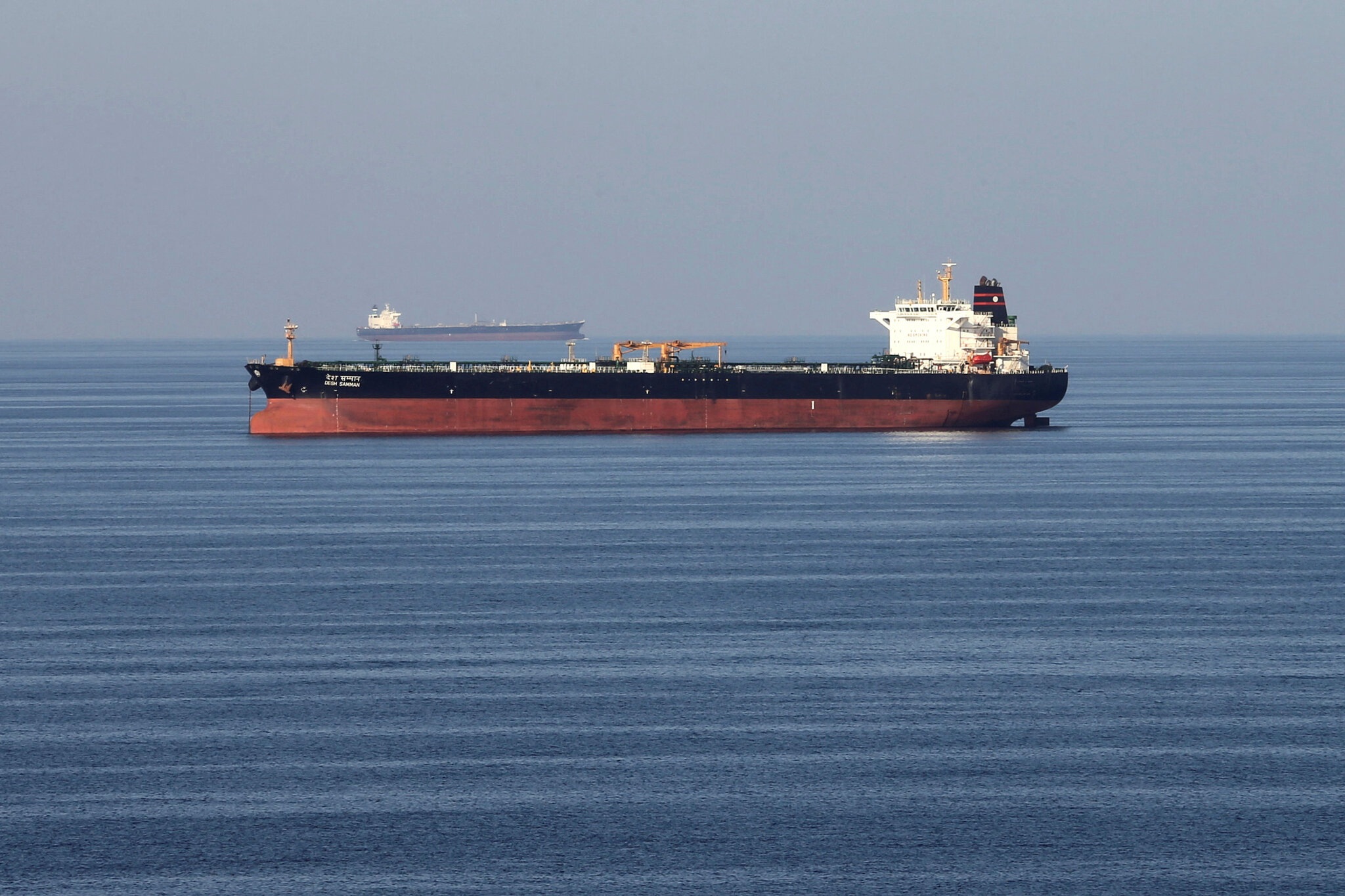
“Massive numbers of completely empty oil tankers, some of the largest anywhere in the World, are heading, right now, to the United States to load up with the best and ‘sweetest’ oil and gas anywhere in the World.”
The phrase “sweetest oil” is significant in energy-market terminology. Sweet crude refers to oil with low sulfur content, which is cheaper to refine into gasoline and diesel. U.S. benchmark grades, particularly shale crude from the Permian Basin, are often marketed as premium light sweet crude.
By publicly highlighting incoming empty tankers, Trump appeared to be signaling that the United States is positioning itself as the immediate alternative supplier for buyers displaced by Gulf shipping disruptions.
That has led some market participants to believe that the blockade serves a dual purpose: to squeeze Tehran economically while channeling emergency demand into U.S. export terminals. In effect, the disruption in Hormuz could force major Asian buyers, including India, South Korea, Japan, and even parts of Europe, to increase purchases of American crude and LNG cargoes.
“Cat is out of the bag finally,” said Mir Mohammad Alikhan, a Wall Street analyst. “Trump does not want the Straits of Hormuz opened. Rather he wants the world to buy oil from America.”
With Brent and WTI both sharply higher since the conflict escalated, U.S. producers stand to benefit from stronger export margins, particularly as American crude is now trading at a premium amid supply concerns.
This is where China enters the equation in a more complex way. China remains Iran’s largest oil customer, reportedly taking more than 80% of Tehran’s sanctioned crude exports in 2025. Any confirmed military assistance from Beijing would not only deepen strategic tensions but also risk disrupting China’s own energy security, given its heavy dependence on seaborne imports and exposure to higher freight and insurance costs in the Gulf.
That economic vulnerability partly explains why Beijing has so far maintained a cautious public posture, presenting itself as supportive of peace efforts while avoiding any acknowledged military role.
Still, if intelligence regarding the missile shipment is substantiated, it would represent a marked shift from diplomatic support to material involvement.
The systems in question, shoulder-fired anti-aircraft missiles, would not dramatically alter the strategic balance on their own, but they could complicate U.S. and allied air operations by raising the risks to helicopters, drones, and low-altitude surveillance flights.
The tariff threat, therefore, serves both as punishment and deterrence. It also revives the prospect of a renewed U.S.-China trade confrontation at a moment when global supply chains are already under pressure from rising energy costs and shipping disruptions.
A 50% tariff on Chinese imports would reverberate well beyond bilateral trade. It could raise costs for American manufacturers, intensify inflationary pressure already fueled by higher oil prices, and inject fresh uncertainty into equity and currency markets.