

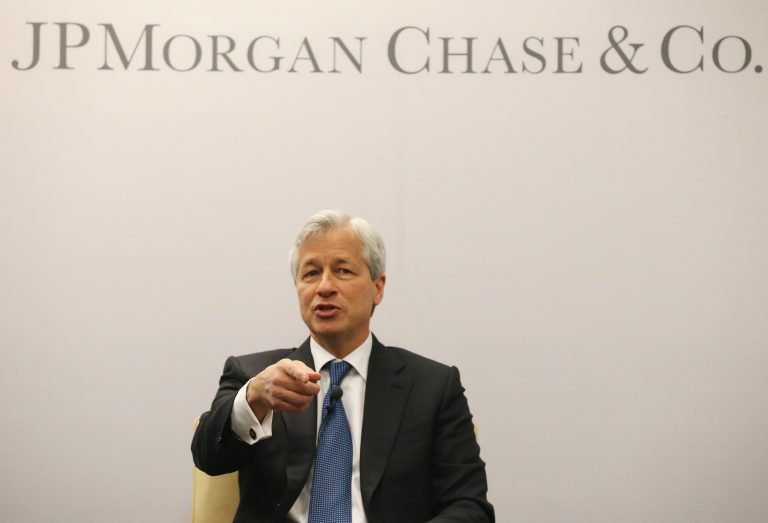
J.P. Morgan is set to reshape the landscape of emerging market local-currency debt investing after announcing that Saudi Arabia and the Philippines will be added to its flagship benchmark, a move likely to drive billions of dollars in portfolio reallocation.
The inclusion will take effect from January 29 next year, with Saudi riyal-denominated sovereign sukuk and Philippine peso-denominated government bonds entering the GBI-EM Index series. The process will be phased, with Saudi Arabia expected to reach a weight of 2.52% and the Philippines 1.78% once fully implemented.
The GBI-EM index is a core reference point for global investors managing local-currency emerging market debt, particularly passive funds and benchmark-aware institutional portfolios. Inclusion typically compels these investors to allocate capital in line with index weights, creating a predictable pipeline of inflows.
Register for the next Tekedia Mini-MBA.
Register for Tekedia AI in Business Masterclass.
Join Tekedia Capital Syndicate and co-invest in great global startups.
Based on current eligibility, around eight Saudi sovereign sukuk with a combined value of roughly $69 billion could be included, marking a notable expansion of Islamic finance instruments within global benchmarks. For the Philippines, nine government bonds worth approximately $49 billion are under consideration, reinforcing its position as a relatively liquid and accessible market in Southeast Asia.
The structural impact of the move extends beyond the two new entrants. J.P. Morgan is simultaneously lowering the “country cap” in the diversified version of the index to 9% from 10%, a technical adjustment with significant portfolio implications. The cap limits how much weight any single country can carry, ensuring diversification but also forcing redistribution when new markets are added.
As a result, large index constituents such as China, India, Mexico, Malaysia, and Indonesia will see their weights reduced to align with the new ceiling. This redistribution underscores a recurring dynamic in emerging market indices: new inclusions tend to dilute the dominance of established markets, even in the absence of fundamental deterioration.

From a flow perspective, the implications are two-sided. Saudi Arabia and the Philippines are likely to benefit from incremental inflows as index-tracking funds build positions, supporting local bond prices and potentially lowering yields. Conversely, countries facing weight reductions could experience modest outflows or slower inflows, particularly from passive strategies that must rebalance mechanically.
The scale of these flows will depend on the size of assets benchmarked to the GBI-EM index, but the direction is typically consistent: inclusion broadens the investor base and enhances market liquidity, while also increasing sensitivity to global risk sentiment.
The inclusion represents another step in Saudi Arabia’s integration into global capital markets, following years of reforms aimed at opening its financial system under its economic diversification agenda. The prominence of sukuk in the inclusion signals growing institutional acceptance of Islamic debt instruments, which differ structurally from conventional bonds but are increasingly viewed as comparable from an investment standpoint.

For the Philippines, the decision reflects improvements in market accessibility, liquidity, and policy credibility. Inclusion could help anchor demand for peso-denominated debt, although the benefits will be shaped by broader macro conditions, including global interest rates and currency volatility.
The development arrives at a time when emerging market debt has faced headwinds from higher global interest rates and a stronger U.S. dollar, which have tightened financial conditions and reduced appetite for risk assets. In that environment, index inclusion can act as a stabilizing force by ensuring a baseline level of demand from institutional investors.
However, the lowering of the country cap introduces a subtle but important shift in index construction philosophy. By reducing concentration, J.P. Morgan is effectively broadening exposure across a wider set of markets, which may appeal to investors seeking diversification but could dilute exposure to the largest and most liquid economies.
This balancing act reflects the evolving nature of emerging market investing. As more countries meet the inclusion criteria, index providers are under pressure to accommodate new entrants without allowing a handful of markets to dominate performance.
The changes will require careful calibration for portfolio managers. Active managers may choose to front-run inflows into Saudi and Philippine debt or reassess positions in markets facing reduced weights. Passive funds, by contrast, will implement the changes in line with the phased schedule, creating a predictable but gradual shift in allocations.
Ultimately, the inclusion highlights the growing influence of index design in shaping global capital flows. Decisions taken by benchmark providers such as J.P. Morgan are no longer just technical adjustments; they are catalysts that can alter funding conditions, liquidity profiles, and investor perception across entire markets.