

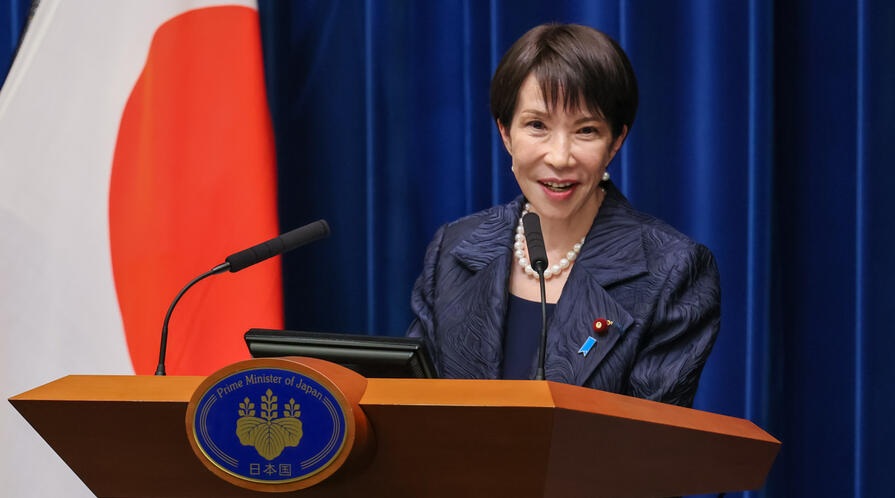
Japanese Prime Minister Sanae Takaichi on Tuesday unveiled her administration’s first comprehensive economic policy blueprint, pledging to mobilize more than 370 trillion yen ($2.28 trillion) in public and private investment through fiscal 2040 to revive long-term growth.
The plan, however, has been overshadowed by investor concerns that the government could pressure the Bank of Japan (BOJ) to keep interest rates low, fueling a selloff in government bonds.
The blueprint seeks to position investment in strategic industries as the centerpiece of Japan’s long-term growth plan, but repeated revisions to its language on monetary policy underscore growing market sensitivity over the relationship between the government and the central bank.
Register for the next Tekedia Mini-MBA.
Register for Tekedia AI in Business Masterclass.
Join Tekedia Capital Syndicate and co-invest in great global startups.
Japan’s government bond yields have climbed to multi-decade highs in recent weeks as investors worry that Takaichi’s emphasis on fiscal stimulus and accommodative monetary policy could delay efforts to contain inflation while worsening the country’s already heavy debt burden. The benchmark 10-year Japanese government bond yield, which reached a three-decade high of 2.9% on July 9, eased modestly to 2.73% on Tuesday but remains near levels not seen in decades.
The economic blueprint underwent several revisions before receiving cabinet approval after earlier drafts unsettled financial markets.
An initial version called for monetary policy that would “bolster private demand,” language that disappeared as bond yields continued rising. A subsequent draft linked monetary policy more directly to the government’s economic growth strategy, prompting another negative market reaction and further revisions.

The final document states that the BOJ should conduct monetary policy appropriately “to achieve stable price rises,” while adding a footnote referencing Japan’s law guaranteeing the central bank’s operational independence.
The blueprint nonetheless retains language calling for the BOJ to coordinate its policy with the government’s economic objectives, reflecting the longstanding framework established under Japanese law, which requires close cooperation while preserving the central bank’s authority over monetary decisions.
“To achieve a strong economy, it is very important for monetary policy to be conducted appropriately to see stable price rises,” the final blueprint said.

Echoes of Abenomics
Takaichi has consistently expressed support for the economic philosophy associated with former Prime Minister Shinzo Abe, whose “Abenomics” strategy relied on aggressive fiscal stimulus, ultra-loose monetary policy and structural reforms to combat decades of deflation.
Her latest blueprint amplifies that approach by emphasizing government-led investment to stimulate private sector spending.
“Under the Takaichi administration, the government will take the initiative and, together with the private sector, invest in strategic areas, thereby ending the trend of under-investment that has mired Japan,” the document said.
The government plans to work alongside private businesses to channel capital into strategic sectors over the next 15 years, with combined public and private investment projected to exceed 370 trillion yen by fiscal 2040.
Unlike previous administrations, however, the blueprint avoids making explicit commitments to restoring fiscal health, instead stating that the government will seek to balance economic growth with “fiscal sustainability.”
Markets Remain Unconvinced
Investors remain concerned that the administration’s policy mix could increase pressure on the BOJ to slow or pause further interest rate increases, allowing the government to finance additional spending at lower borrowing costs.
Those concerns have intensified since Takaichi took office in October, as she has repeatedly pledged to expand fiscal spending while expressing reservations about the BOJ’s recent tightening cycle.
The BOJ ended nearly a decade of ultra-loose monetary policy in 2024 and has since raised its benchmark interest rate several times, including a hike in June. Even after those increases, Japan’s policy rate stands at just 1%, remaining among the lowest in the developed world.
The central bank has signaled that additional rate increases remain possible if inflation and wage growth continue evolving in line with its forecasts.
Any perception that political leaders are attempting to influence those decisions risks undermining confidence in the BOJ’s independence, a cornerstone of modern monetary policy.
Japan already carries the highest public debt burden among advanced economies, with government debt exceeding twice the size of annual economic output. Higher bond yields increase borrowing costs for the government, making investors especially sensitive to policies that could require additional debt issuance.
The combination of increased fiscal spending, persistent inflation and expectations of further BOJ tightening has driven Japanese government bond yields steadily higher in recent months.
Analysts say investors are increasingly demanding higher compensation to hold long-term Japanese debt amid uncertainty over the government’s fiscal trajectory.
“We’ve guided economic and fiscal policy paying due heed to fiscal sustainability and the need to maintain market trust. We will continue to do so based on this blueprint,” Takaichi said during a government panel meeting on Tuesday.
Some economists argue that revisions to the blueprint’s wording do little to address broader concerns about the administration’s policy intentions.
Former BOJ board member Seiji Adachi said markets remain focused on the government’s broader objective of maintaining low borrowing costs.
“The administration wants the BOJ to keep rates low so that it can issue more debt,” Adachi said.
“That’s not a good message to send to markets.”