

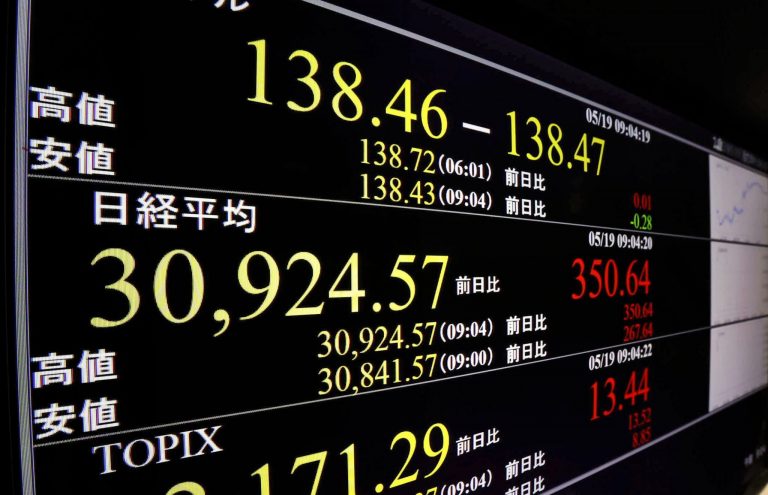
Japan’s benchmark Nikkei 225 stock index has indeed shattered records in late October 2025, marking a dramatic milestone after decades of stagnation.
On October 27, 2025, it closed at 50,512.32, up 2.46% from the previous session, breaking the 50,000-point barrier for the first time ever. This propelled its year-to-date gains to 26.6%, a stark contrast to the index’s long recovery from the 1989 bubble-era peak of around 38,915, which took over 34 years to surpass in February 2024.
By October 28, 2025, the index dipped slightly to 50,315 points, down 0.39%, but it remains well above prior highs and up 29.33% from the same time last year. The broader Topix index also hit a record close of 3,325.05 on October 27, gaining 19.4% YTD.
Register for Tekedia Mini-MBA edition 20 (June 8 – Sept 5, 2026).
Register for Tekedia AI in Business Masterclass.
Join Tekedia Capital Syndicate and co-invest in great global startups.
Register for Tekedia AI Lab.
Key Drivers Behind the Rally
The surge isn’t happening in isolation—it’s fueled by a potent mix of domestic politics, global optimism, and economic tailwinds. Sanae Takaichi’s election as Japan’s first female prime minister on October 21 sparked euphoria.
Her “fiscal dove” stance promises aggressive stimulus potentially over 13.9 trillion yen focused on countering inflation, boosting growth industries, and enhancing national security. This led to an initial 3.4% jump to 49,185.50 on October 20, with the index marching through 49,000 and 50,000 in quick succession.
Sanae Takaichi is a staunch disciple of former Prime Minister Shinzo Abe, Takaichi’s agenda revives and adapts “Abenomics”—the blend of aggressive fiscal stimulus, loose monetary policy, and structural reforms that defined Japan’s post-2012 recovery.

Her approach emphasizes “responsible proactive fiscal policy,” prioritizing growth to combat inflation, boost wages, and generate revenue without immediate tax hikes. This dovish stance has already fueled market optimism, with the Nikkei 225 surging past 50,000 points shortly after her election, driven by expectations of expansive spending.
In her inaugural policy speech to parliament on October 24, 2025, Takaichi declared the fight against rising prices her “top priority,” vowing to “build a strong economy” through strategic investments and household relief. However, operating a minority government in coalition with the Japan Innovation Party (Ishin), she faces challenges in passing bold measures amid opposition scrutiny and a divided Diet.
Analysts note her policies overlap with predecessors like Fumio Kishida and Shigeru Ishiba but lean more heavily on fiscal levers, potentially delaying Bank of Japan (BOJ) rate hikes and weakening the yen further.
Takaichi’s fiscal dovishness has sparked a “run it hot” rally: the Nikkei jumped 4%+ post-election, with foreign inflows averaging 81.5 billion yen weekly. On X, sentiment is bullish, with users hailing her as Japan’s “Iron Lady” or “Margaret Thatcher,” crediting stimulus for Nikkei’s ATH.

Globally, her China-hawk tilt reducing dependence via strategic sectors aligns with U.S. ties, including a planned Trump summit, but risks trade frictions. Critics, including opposition voices on X, decry potential yen freefall and inequality exacerbation, labeling it “phantom prosperity.”
Yet, with 71% approval on inflation handling, her focus resonates amid stagnant wages and geopolitical strains. Takaichi’s minority status demands cross-party compromises, potentially diluting reforms like immigration-linked labor policies she favors strict controls to preserve culture.
Long-term, fiscal expansion risks ballooning debt already >250% GDP, though she insists on “fiscal consolidation ultimately.” Success hinges on Q3 earnings, U.S. election outcomes, and BOJ patience—analysts target Nikkei at 51,000 if stimulus lands.
Forward 12-month EPS growth for Nikkei components hit 9.3% in October, up from 7% in September, signaling analyst optimism. Foreign inflows into Japanese equities have surged, with net purchases on Tokyo and Nagoya exchanges averaging 81.5 billion yen weekly as of mid-October—far above summer lows.
However, not all is rosy. The yen’s freefall USD/JPY pushing higher and shrinking GDP highlight underlying pressures like inflation and a tight domestic labor market. Some observers call it a “fiat illusion” amid stretched short-yen positions and warnings of potential intervention from Japanese officials.
On X, traders are buzzing about the disconnect: booming stocks versus weakening fundamentals, with one post quipping, “Nikkei at ATH. Yen in free fall. GDP shrinking.” The Nikkei has been on a tear since breaking 45,000 in September 2025.
This rally has SoftBank Group 10% index weight as a top influencer, alongside consumer and tech sectors leading gains. Analysts see potential for more upside, targeting 50,860–51,030 if momentum holds, driven by Q3 earnings and stimulus details.
But risks loom: yen volatility, U.S. election uncertainty, and overbought signals could cap gains. On X, sentiment is split—bulls eye a tripling to 120,000 by 2035, while bears warn of a “phantom prosperity” bubble.