

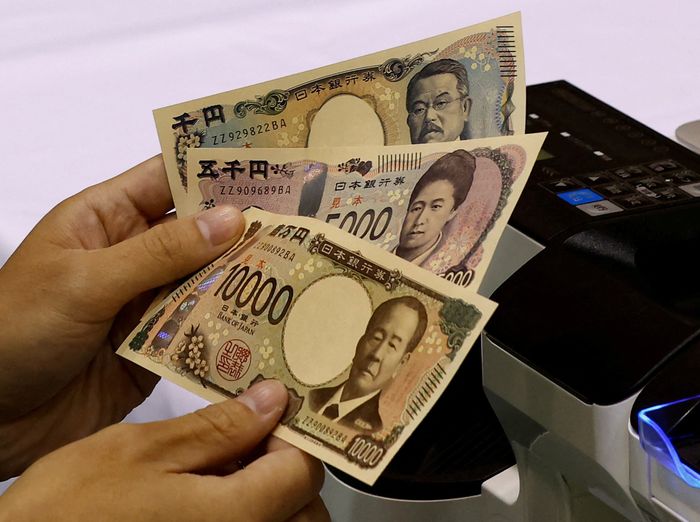
Japanese authorities have thrown everything at the yen’s slide, deploying more than 11.7 trillion yen ($72.8 billion) in foreign reserves between April and May, and the Bank of Japan delivering its sharpest rate hike in decades, yet the currency continues to hover near the psychologically critical 160 level against the dollar, exposing the limits of policy firepower in the face of deep-rooted global and domestic pressures.
Finance Minister Satsuki Katayama now finds herself navigating one of the most challenging currency episodes in recent memory. Repeated warnings of “decisive action” against excessive volatility, intended to deter speculators, have instead diminished the surprise factor of any intervention, reducing its potency. The result is a frustrating cycle where temporary relief quickly gives way to renewed selling pressure.
Masahiko Loo, senior fixed income strategist at State Street Investment Management, captured the sentiment succinctly, describing the recent rate hike as little more than “a Band-Aid on a bullet wound” for the yen, given that markets had largely priced it in.
Register for the next Tekedia Mini-MBA.
Register for Tekedia AI in Business Masterclass.
Join Tekedia Capital Syndicate and co-invest in great global startups.
“Policymakers have telegraphed their warning so clearly that a preemptive strike might only bring fleeting relief,” said Loo.
The yen’s brief rallies, such as the sharp move to 156.6 on April 30 and further gains to around 155 the next day, quickly faded. Suspected intervention during the Golden Week holidays in early May, when the yen traded near 158, provided another short-lived boost before the currency drifted back toward 160. This pattern highlights a core problem: while intervention and tightening, such as the record rate hike, can deliver tactical support, they struggle to overcome the powerful structural forces weighing on Japan’s currency.
Why the Yen Keeps Struggling: The Dominance of Carry Trades and Policy Uncertainty
At the heart of the yen’s persistent weakness lies the enduring appeal of the carry trade. Global investors continue to borrow cheaply in yen and deploy those funds into higher-yielding assets elsewhere, particularly in the United States. The interest rate differential remains compelling: 10-year Japanese government bonds yield 2.64%, while equivalent U.S. Treasuries offer 4.451%. That gap sustains demand for yen-selling, keeping downward pressure alive even as the BOJ tightens, according to a CNBC analysis.

Naka Matsuzawa, chief strategist for market strategy research at Nomura, noted in a recent analysis that high U.S. bond yields continue to make the carry trade attractive, offsetting much of the impact from Japan’s policy moves. Speculative short positions on the yen have climbed further, exceeding levels seen before the Golden Week interventions, signaling that markets are still testing Tokyo’s resolve.
Domestic politics compound the challenge. The administration of Prime Minister Sanae Takaichi maintains a reflationary bias, favoring accommodative monetary conditions to support growth. This stance creates uncertainty about the future pace of tightening.
Takaichi’s nomination of dovish academics Toichiro Asada and Ayano Sato to the BOJ board reinforces this perception. Asada cast the sole dissenting vote against the latest rate hike, while Sato joins the board at the end of June. Their influence clouds the outlook and discourages sustained capital inflows into Japan.

Energy imports add another layer of strain. Japan’s heavy reliance on foreign oil and gas leaves the yen vulnerable to spikes in global prices. The Iran conflict has kept energy costs elevated, forcing continuous dollar purchases and contributing to yen weakness. Hirofumi Suzuki, head of research at Sumitomo Mitsui Banking Corporation, explained the authorities’ current approach.
“FX intervention is conducted to curb a rise in volatility and to deter speculative yen-selling by market participants. For now, the authorities are likely still at the stage of closely monitoring price action,” he said.
Signs of Potential Relief Are Mired in Challenges
A full resolution to the Middle East conflict and the reopening of the Strait of Hormuz could ease some pressure by lowering Japan’s energy import bill. In the longer term, Matsuzawa sees supportive flows emerging from AI-related investment, renewed foreign interest in Japanese equities, and a technology-driven rally in the Nikkei that could attract capital back into the country.
However, the yen’s current trajectory remains dictated more by external differentials and internal policy signals than by intervention efforts alone. The scale of reserves deployed, over $72 billion in just two months, demonstrates Tokyo’s commitment, but it also raises questions about sustainability if the currency remains under pressure.
Now, Katayama and the BOJ face a delicate task: they must defend the yen without exhausting ammunition or undermining the fragile economic recovery. The repeated need for intervention, even after a landmark rate hike, suggests that monetary policy normalization alone may not be enough while global yields stay elevated and geopolitical risks persist.
Economists note that clearer communication on the pace of future tightening, combined with progress on energy security as the Iran situation stabilizes, could help shift sentiment. Yet as long as the carry trade remains profitable and political signals point toward measured rather than aggressive tightening, the yen is likely to face ongoing headwinds.