

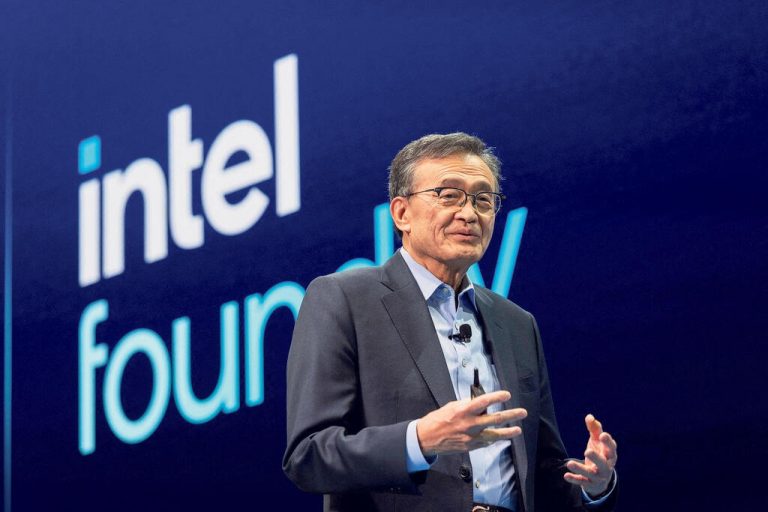
Intel has elevated semiconductor industry veteran Seok-Hee Lee to lead its advanced packaging operations, marking the company’s determination to rebuild its manufacturing business and position itself as a major beneficiary of the artificial intelligence-driven chip boom.
The appointment follows a significant development for the American chipmaker. Just hours earlier, President Donald Trump announced that Apple had agreed to work with Intel on designing and manufacturing chips in the United States, a development that could provide a major boost to Intel’s foundry ambitions and lend fresh credibility to CEO Lip-Bu Tan’s turnaround strategy.
Lee, who will serve as executive vice president overseeing Intel’s contract chip manufacturing division’s advanced packaging activities, arrives with deep industry experience, having previously led both SK Hynix and SK On as chief executive.
Register for the next Tekedia Mini-MBA.
Register for Tekedia AI in Business Masterclass.
Join Tekedia Capital Syndicate and co-invest in great global startups.
His appointment denotes a growing realization across the semiconductor industry that winning the AI race is no longer just about building smaller and faster chips. Increasingly, competitive advantage is shifting toward advanced packaging technologies that enable multiple chips to work together as a unified system.
That trend has become important as traditional gains from transistor scaling become harder and more expensive to achieve.
Advanced packaging has emerged as one of the industry’s most strategic battlegrounds because it allows chipmakers to combine processors, memory, and specialized accelerators into a single package, improving performance, reducing power consumption, and accelerating data transfer speeds. The technology sits at the heart of modern AI systems, where enormous computing workloads require tightly integrated chip architectures.

Industry leaders, including Nvidia, AMD, and TSMC, have invested heavily in advanced packaging as demand for AI computing infrastructure explodes.
Intel’s decision to place an executive dedicated to the segment signals that the company views packaging not as a supporting function but as a core competitive differentiator.
The move also comes as part of a broader restructuring under Tan, who has been aggressively reshaping Intel since taking over leadership. The company has sought to separate and strengthen its front-end manufacturing operations, where silicon wafers are produced, from back-end packaging and integration activities that transform chips into deployable products.

Under the new structure, Lee will oversee advanced packaging, system integration, back-end technology development, and manufacturing. At the same time, Intel Foundry chief Naga Chandrasekaran will concentrate on front-end technology and production, including the company’s crucial 18A and future 14A process nodes.
The reorganization highlights Intel’s effort to accelerate execution after years of manufacturing delays that allowed rivals to seize leadership positions in AI chips and semiconductor fabrication.
The timing wields enormous weight because Intel appears to be assembling the pieces of a broader foundry revival. In April, the company recruited Samsung foundry veteran Shawn Han to strengthen its contract manufacturing operations. It also secured Tesla as the first major customer for its next-generation 14A manufacturing process, which is expected to enter mass production in 2029.
Now, the prospect of Apple becoming a manufacturing partner adds another potentially transformative customer relationship. If the reported Apple collaboration materializes into large-scale production commitments, it could provide Intel with the kind of marquee client it has long sought in its effort to compete with TSMC, the dominant player in global semiconductor manufacturing.
The development is especially important because Intel’s foundry business has historically struggled to attract major external customers despite years of investment.
For investors, the appointment of Lee and the broader reshaping of Intel’s foundry organization reinforce the company’s shift toward becoming a comprehensive semiconductor manufacturing platform rather than simply a chip designer.
The strategy aims to capitalize on a powerful industry trend. As AI systems become more sophisticated, demand is expanding not only for cutting-edge processors but also for the packaging, integration, and manufacturing capabilities required to assemble increasingly complex computing systems.
That trend has transformed advanced packaging into one of the fastest-growing segments of the semiconductor supply chain.
Intel’s challenge now is execution.
While the company has regained investor confidence over the past year through strategic partnerships, government support, and renewed manufacturing momentum, it still trails leading competitors in several critical areas. Analysts say success will depend on whether the company can translate its technology roadmap, new leadership appointments, and high-profile customer wins into sustainable market share gains.
However, Lee’s appointment suggests Intel believes advanced packaging could become one of the key engines driving that turnaround. With AI infrastructure spending continuing to surge globally and major technology companies seeking diversified manufacturing partners outside Asia, Intel is aiming to capture a larger share of one of the most important growth opportunities in the semiconductor industry.