

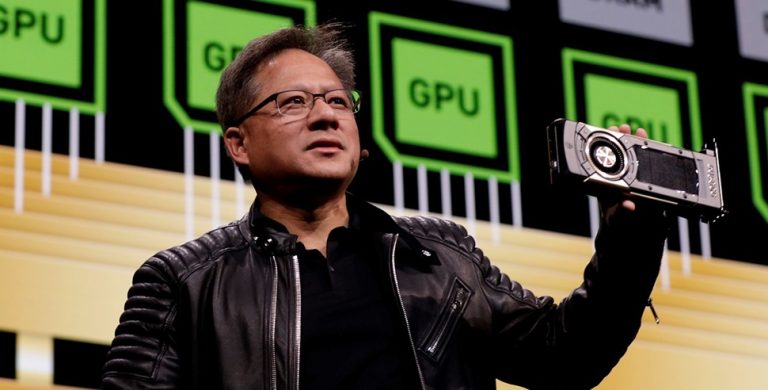
Jensen Huang is considering a return as chief executive of Nvidia just days after resigning from the role he held for 33 years, according to people familiar with the matter.
The former Nvidia leader has discussed the possibility with confidants even as the company’s board conducts an independent investigation into the circumstances surrounding his departure.
A senior Nvidia executive Nader Khalil has warned the company’s board that failure to reinstate co-founder Jensen Huang as CEO could trigger the departure of “irreplaceable talent,” intensifying an already extraordinary campaign to reverse Huang’s abrupt resignation.
Register for the next Tekedia Mini-MBA.
Register for Tekedia AI in Business Masterclass.
Join Tekedia Capital Syndicate and co-invest in great global startups.
In a letter sent to Nvidia’s board of directors and roughly 60 of Huang’s former direct reports, Khalil, director of developer technology, argued that Huang’s leadership remains essential to the company’s success and to maintaining American dominance in artificial intelligence.
He wrote that many employees value working specifically under Huang and that key talent is already contemplating leaving if he is not brought back.
Also, allies of Huang have responded to his departure by organizing efforts to push for his reinstatement. One associate described assembling a “war room” of Silicon Valley executives to lobby Nvidia’s board and attempt to secure support from the White House.

“Everyone that matters in tech outside the frontier labs loves Jensen,” the person told the Financial Times, adding that the campaign had Huang’s backing.
Adding his voice to the matter, OpenAI CEO Sam Altman says the AI revolution is hard to imagine without Nvidia founder Jensen Huang. Notably, a public campaign under the banner “Stand with Jensen” has gained significant momentum.
An open letter demanding that the board “Bring Jensen Back” while the independent investigation proceeds has attracted more than 170,000 signatures.

Among the supporters are Tesla and SpaceX chief Elon Musk, Epic Games CEO Tim Sweeney, Y Combinator’s Garry Tan, and other technology leaders. Thousands of signatories have identified themselves as current or former Nvidia employees, while tens of thousands claim to be shareholders.
Major Nvidia investors, including Altimeter Capital founder Brad Gerstner and Atreides Management’s Gavin Baker, have publicly urged the board to keep all options on the table, including Huang’s potential return.
Huang stepped down on November 12, 2026, after admitting to extramarital affairs, one of which involved a Chinese businesswoman identified as Alice Huang whom some U.S. officials have suspected of acting as a spy for Beijing.
Reports also linked him to a relationship with an Nvidia vice president. The revelations raised national security questions about potential risks to the company’s advanced AI chip technology and exports.
Nvidia’s board appointed longtime chief financial officer Colette Kress as interim CEO and began a search for a permanent successor, including outreach to Arm Holdings CEO Rene Haas. The company has stated it has no reason to believe corporate or national security secrets were compromised.
The leadership crisis has sent shockwaves through the AI industry that Huang helped shape and has weighed on Nvidia’s market value.
Nvidia’s board has so far rejected the campaign. People familiar with the board’s position have indicated it is not considering Huang’s return while the investigation remains ongoing.
Governance experts and some institutional investors have cautioned that reinstating him before the probe concludes could create legal and reputational risks for the company.
The situation highlights Nvidia’s heavy reliance on its founder.
Huang, who led the company for more than three decades and built it into a dominant force in AI chips with a market value once exceeding $4 trillion, maintained an unusually flat organizational structure with dozens of direct reports and limited formal succession planning.
Analysts have noted that the absence of a clear long-term replacement has fueled concerns about continuity in product strategy and key customer relationships.
The company is scheduled to report its latest financial results in the coming days, adding further pressure as the board weighs how to resolve the unprecedented situation at one of the world’s most valuable technology firms.
Whether Huang can stage a comeback remains uncertain amid the ongoing probe and the search for a permanent replacement.
Outlook
Nvidia’s immediate future will largely depend on how its board balances shareholder pressure, employee confidence and corporate governance concerns.
While the growing campaign for Jensen Huang’s reinstatement highlights the depth of support he commands across Silicon Valley, the board faces a difficult decision as it navigates the ongoing investigation and the search for a permanent successor.
A prolonged leadership vacuum could create uncertainty around the company’s strategic direction, particularly as competition in the AI chip market intensifies and rivals seek to challenge Nvidia’s dominance.
The possibility of key executives and technical talent leaving could further complicate its efforts to maintain its competitive advantage.