

Tuesday’s rally on Wall Street may have been more than a fleeting burst of optimism. It may well have offered investors a preview of how markets are likely to reprice once the U.S.-Iran war finally winds down.
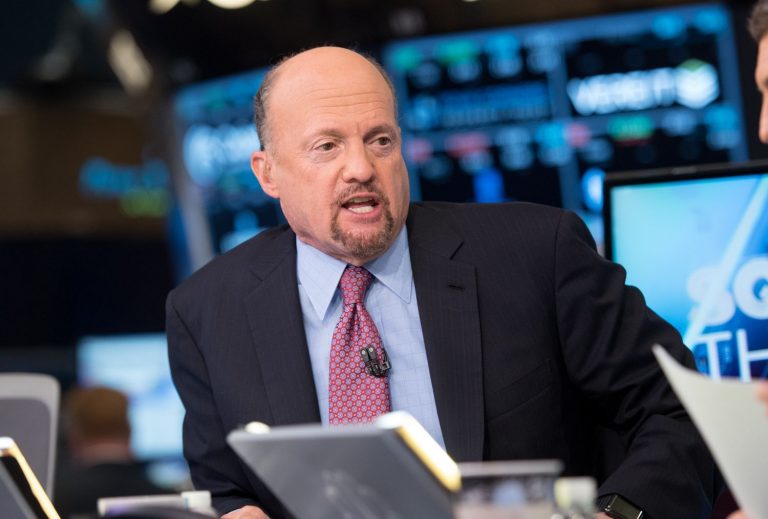
That is the central thesis advanced by CNBC’s Jim Cramer, who argued that the trading session effectively served as a “dry run” for a post-war market environment. The move in equities, bonds, and commodities strongly supports that view.
The S&P 500 climbed 2.91 per cent, while the Nasdaq Composite surged 3.83 per cent, as traders responded to signs that hostilities in the Middle East could ease. The rally followed reports that President Donald Trump had told aides the conflict may end within weeks, fueling hopes that one of the biggest geopolitical risk overhangs on global markets could soon begin to fade.
Register for Tekedia Mini-MBA edition 20 (June 8 – Sept 5, 2026).
Register for Tekedia AI in Business Masterclass.
Join Tekedia Capital Syndicate and co-invest in great global startups.
Register for Tekedia AI Lab.
“Today we saw what would happen when you give peace a chance,” Cramer said. “Maybe this dialogue with Iran is really nothing more than an exchange of messages. Maybe it’s meaningless. So, consider today a dry run of what will ultimately occur when the war winds down.”
More importantly, the market reaction revealed where investors are likely to rotate capital once the war premium starts to unwind.
The first and perhaps most immediate shift would be in the bond market.

Treasury yields, particularly the benchmark 10-year note, have been elevated for much of the conflict as markets priced in inflation risks tied to soaring oil prices, disrupted supply chains, and reduced expectations of Federal Reserve rate cuts. On Tuesday, yields edged lower as optimism over de-escalation prompted traders to pare back those inflation bets.
This is critical because the war’s inflation impact has extended far beyond crude prices.
The disruption of flows through the Gulf has lifted the cost of fertilizers, petrochemicals, aluminum feedstock, and industrial plastics, all of which feed into consumer prices through food, manufacturing, and transport channels. A reopening of the Strait of Hormuz or even a credible path toward de-escalation would likely ease these pressures and bring yields down further.

That, in turn, would materially alter the valuation environment for equities.
“They [will] go down noticeably,” Cramer said of rates. “They go down because we now realize that there’s a huge amount of inflation stemming from the war. Not just from oil going higher – we saw that at the pump – but from the ancillary products that came out of the Gulf: fertilizer, polyethylene and aluminum.”
He continued, “We didn’t know going into the war that our farmers were gonna need to raise prices to us because the price of fertilizer would go much higher. You allow the fertilizer to come back down, you stop the pernicious food inflation.”
The second major shift Cramer points to is a sharp comeback in growth stocks, and Tuesday’s session already provided a glimpse of that rotation.
“Money managers believe that price-to-earnings multiples — how much we’ll pay for a company’s earnings – have been horribly compressed by the war,” Cramer added. “If the war’s over, we’ll start paying more for the stocks of companies that were never gonna skip a beat to begin with.”
Large-cap technology names and AI-linked semiconductor stocks led the advance as investors moved back into duration-sensitive assets. This is a textbook response to falling yields.
When rates move lower, future earnings become more valuable in present-value terms, which typically supports higher price-to-earnings multiples for growth companies. During the war, many of these names have seen valuation compression not necessarily because of deteriorating fundamentals, but because the macro backdrop had turned hostile.
Once geopolitical stress begins to ease, attention returns to earnings momentum, AI demand, and capital expenditure cycles. That is why the market reaction in names tied to artificial intelligence infrastructure has been so pronounced.
What investors are effectively doing is pre-positioning for a return to a lower-rate, higher-multiple environment.
The third leg of the post-war trade is likely to be financials, particularly large investment banks.
Major lenders and dealmakers rallied strongly during the session, reflecting expectations that an end to hostilities would revive corporate activity, mergers and acquisitions, debt issuance, and public listings.
War and geopolitical instability tend to freeze risk appetite at the corporate level.
Boardrooms delay strategic decisions, capital raises are deferred, and deal pipelines slow materially. Once that uncertainty lifts, investment banks are among the first sectors to benefit as advisory mandates, trading revenues, and underwriting activity begin to recover.
This makes financials one of the clearest cyclical beneficiaries of a peace-driven market reset.
What makes this analysis more compelling is that the relief rally was not confined to U.S. equities.
Global stocks also moved higher, while oil prices eased on hopes that supply disruptions may not persist indefinitely. Reuters reported that Wall Street ended higher on speculation that the conflict could wind down, reinforcing the idea that investors are already beginning to price in a peace scenario.
Still, caution remains warranted.
Markets have shown a tendency in recent weeks to rally on unconfirmed headlines around diplomacy, only to reverse when tensions re-escalate. As some analysts have warned, investors may be celebrating signals that have yet to translate into concrete diplomatic progress.
That said, Tuesday’s session was revealing.
It showed that once the war premium starts to fade, the market’s likely path is clearer: lower yields, stronger technology valuations, revived financial stocks, and a broader return of risk appetite.
In effect, Wall Street may already have shown its hand.