

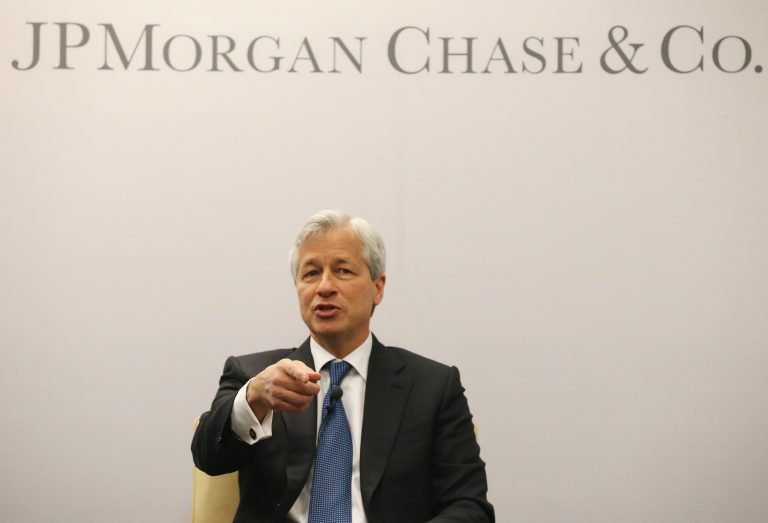
As institutional adoption of Bitcoin continues to accelerate, JPMorgan believes the cryptocurrency’s greatest competitive threat is not from corporate Bitcoin holders like Strategy, but from a different direction entirely.
The Wall Street banking giant argues that traditional financial institutions’ push into private blockchains pose a greater long-term risk to Bitcoin than MicroStrategy’s large Bitcoin holdings and sales strategy.
With global financial assets estimated at around $4.7 trillion across key tokenization initiatives, JPMorgan suggests that the growing adoption of permissioned blockchain infrastructure by banks and financial institutions could reshape the future of digital finance, potentially limiting Bitcoin’s role in mainstream financial markets.
Register for the next Tekedia Mini-MBA.
Register for Tekedia AI in Business Masterclass.
Join Tekedia Capital Syndicate and co-invest in great global startups.
Recall that earlier this month, JPMorgan had stated that Strategy’s new financing plan is adding fresh uncertainty to Bitcoin by creating the chance that one of the market’s biggest buyers could also become a seller.
The bank said Strategy’s decision to allow selective Bitcoin sales to help cover preferred-stock dividends adds a new risk for investors. Meanwhile, Strategy says its cash reserves and authorized Bitcoin sales give it just over two years of dividend coverage.
The Bitcoin-heavy firm led by Michael Saylor and formerly known as MicroStrategy, sold 3,588 BTC worth approximately $216 million between June 29 and July 5, 2026. This marked the company’s largest single divestment of Bitcoin since adopting it as its primary treasury asset.

This move represents an evolution from Strategy’s original “buy and hold at any price” approach. Saylor, long known for his staunch advocacy of Bitcoin with slogans like “never sell your Bitcoin,” has adjusted the company’s playbook to a full capital stack model.
Longtime Bitcoin critic and gold advocate Peter Schiff, highlighted a significant evolution in Strategy’s approach to its massive Bitcoin holdings.
In a recent post, Schiff noted that the company, long associated with aggressive Bitcoin accumulation under Michael Saylor, has moved away from its original playbook.

Instead of primarily selling common and preferred stock or issuing debt to purchase more Bitcoin, he stated that the company now appears to be selling portions of its Bitcoin reserves.
Schiff views this as a reversal that exposes vulnerabilities in the leveraged Bitcoin treasury model. He argues it risks a “death spiral” where forced sales pressure Bitcoin prices, reduce net asset value, and necessitate further dilution or sales to satisfy investors in the yield products.
However, in a recent client note, JPMorgan analysts led by Nikolaos Panigirtzoglou argued that while MicroStrategy’s Bitcoin position creates some market volatility through potential two-way flows, the broader structural threat comes from established financial institutions building permissioned networks.
These private blockchains offer banks control over governance, privacy, compliance, and scalability, potentially drawing tokenization, payments, and settlement activity away from public permissionless chains like Bitcoin.
JPMorgan’s own Kinexys platform illustrates this trend, having processed over $4 trillion in blockchain-based transactions since 2020.
The bank notes that major institutions are increasingly favoring these controlled systems for tokenized assets, including U.S. Treasuries and deposits, which could reduce liquidity and capital flows to open networks.
With over 15 large banks racing toward tokenized finance on private rails, public blockchains risk being sidelined for high-value institutional use cases that prioritize legal certainty over decentralization.
Bitcoin advocates, however, counter that private blockchains fundamentally differ from Bitcoin’s design. They argue these systems resemble traditional databases more than true decentralized ledgers, lacking Bitcoin’s neutrality, immutability, transparency, and resistance to censorship.
Public chains derive their value from open participation, verifiable scarcity, and network effects that no single institution can replicate or control. Supporters view JPMorgan’s stance as banks attempting to protect their role as intermediaries rather than embracing Bitcoin’s core innovation.
Despite the warning, Bitcoin continues to function as a decentralized store of value and digital gold alternative. While private blockchains may streamline internal banking operations and certain regulated activities, they do not challenge Bitcoin’s unique properties as a neutral, borderless monetary asset outside any single entity’s influence.