

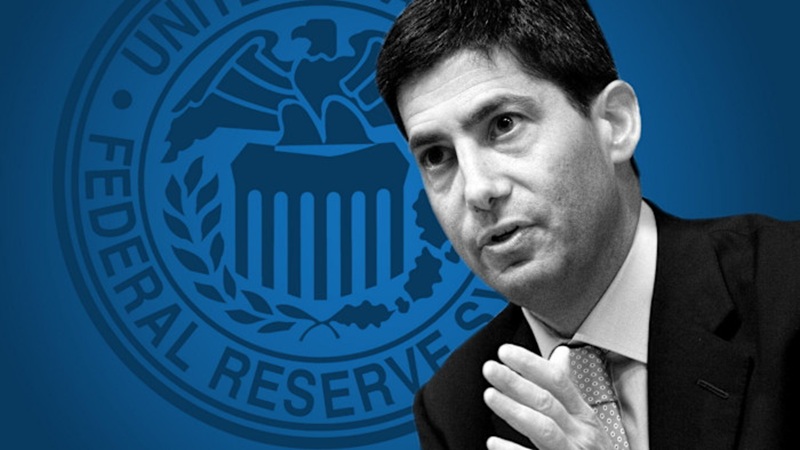
Kevin Warsh has been officially nominated by President Donald Trump to serve as the next Chair of the Federal Reserve, replacing Jerome Powell whose term as chair ends in May 2026. The White House formally transmitted the nomination to the Senate on March 4, 2026. This includes: A four-year term as Chair of the Board of Governors.
A separate 14-year term as a member of the Fed Board from February 1, 2026. Warsh, a former Fed Governor under Presidents George W. Bush and Barack Obama, was initially announced as Trump’s pick on January 30, 2026. The March 4 action marks the official submission, advancing the process to the Senate Banking Committee for hearings and a confirmation vote.
If confirmed by the Republican-controlled Senate, Warsh would assume the role amid ongoing debates over monetary policy, interest rates, and potential reforms. He has a reputation as relatively hawkish on inflation and has expressed views supportive of Bitcoin as a disciplinary force on central bank policies, which some observers see as signaling a potential shift toward more disciplined monetary approaches.
The nomination has drawn attention in financial and crypto circles for its implications on future Fed direction, though confirmation could face hurdles, including any lingering political tensions around the current Fed leadership.
Register for Tekedia Mini-MBA edition 20 (June 8 – Sept 5, 2026).
Register for Tekedia AI in Business Masterclass.
Join Tekedia Capital Syndicate and co-invest in great global startups.
Register for Tekedia AI Lab.
Jerome Powell’s legacy as Chair of the Federal Reserve is complex and highly debated, shaped by navigating extraordinary challenges: the COVID-19 pandemic, the sharpest inflation surge in four decades, banking stresses; SVB collapse, and intense political pressures, including from President Trump.
Powell oversaw aggressive stimulus during the pandemic, including near-zero interest rates and massive asset purchases, which supported a rapid economic recovery and avoided a deeper depression. The U.S. achieved a “soft landing” in many views—bringing inflation down significantly without triggering a major recession—through decisive rate hikes starting in 2022 and later measured cuts.
He emphasized data-dependence, consensus-building on the FOMC, and reinforcing the Fed’s independence amid threats; refusing to bow to calls for premature easing or resigning under pressure. In late-term reflections, Powell stressed leaving the economy in strong shape, with stable growth, low unemployment, and inflation nearing target.

Some analysts credit him with upholding the Fed’s non-partisan credibility and adapting frameworks shifting from flexible average inflation targeting in practice toward a more inflation-focused stance. The most cited black mark is the 2021 “transitory” inflation call, which underestimated persistence, delaying tightening and allowing prices to surge to 9%+ highest since the 1980s.
Critics argue this eroded purchasing power, fueled asset bubbles, and contributed to cost-of-living crises for households. Early pandemic-era policies; prolonged low rates and QE are blamed for inflating stocks/housing while widening inequality. Aggressive 2022 hikes caught markets off-guard, risking financial instability.
Partisan attacks label him as obstructive; resisting Trump-aligned priorities like faster cuts or politically compromised ties to Wall Street. Some conservative voices call his tenure among the “worst” for mismanagement, while others see it as a “wash”—historic stumbles offset by resilience.

Assessments in early 2026 remain mixed: praised for crisis management and independence defense, but faulted for inflation misjudgment and long-term distortions; housing market effects. His advice to successors—stay out of politics, build congressional ties, prioritize evidence—underscores his focus on institutional integrity amid unprecedented scrutiny, including investigations and removal threats.
Powell’s era ends with the economy resilient but scarred by inflation’s aftermath, setting a transitional stage for his nominated successor, Kevin Warsh. History’s full judgment will depend on whether post-Powell stability endures.