

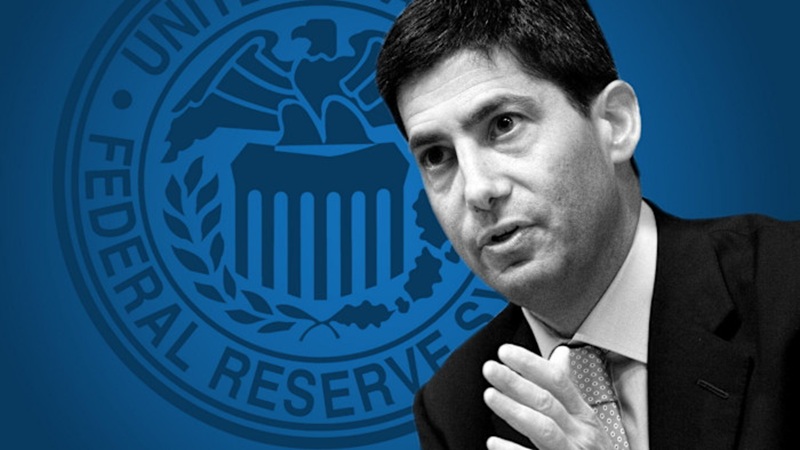
Kevin Warsh, President Donald Trump’s nominee to succeed Jerome Powell as Federal Reserve Chair, is not arriving with modest tweaks in mind. He is openly calling for a fundamental overhaul of the world’s most powerful central bank—lower interest rates, a dramatically smaller balance sheet, a sharper focus on its core mandate, tighter coordination with the Treasury, and an end to the public cacophony that has sometimes made the Fed sound like a committee of 19 competing voices.
Warsh, who served as a Fed governor from 2006 to 2011, has spent the past year laying out his critique in blunt terms across interviews, op-eds, and lectures. His message, compiled by Reuters, is consistent: the post-2008 Fed lost its way, contributed to the worst inflation surge in a generation, and eroded public trust.
He believes only a clean break, “regime change”, can restore it.
Register for the next Tekedia Mini-MBA.
Register for Tekedia AI in Business Masterclass.
Join Tekedia Capital Syndicate and co-invest in great global startups.
Here is what he has said on the major fronts he intends to change:
Regime Change, Not Continuity
Warsh argues the institution he rejoins is fundamentally different from the one he left. In a July 2025 CNBC interview, he declared, “The broad conduct of monetary policy has been broken for quite a long time. … I don’t think we need policy continuity that brought about the greatest mistake in macroeconomic policy in 45 years, that divided the country, that caused a surge in inflation. … We need regime change at the Fed.”
Lower Rates, Smaller Balance Sheet
He sees the Fed’s enormous balance sheet, still swollen years after the pandemic emergency, as a drag that keeps borrowing costs too high for ordinary Americans and smaller businesses. In a November 2025 Wall Street Journal op-ed, he wrote: “The Fed’s bloated balance sheet, designed to support the biggest firms in a bygone crisis era, can be reduced significantly. That largesse can be redeployed in the form of lower interest rates to support households and small and medium-sized businesses.”

He made the point even more directly on Fox Business in July: “Interest rates should be lower.”
A Fresh Take on Inflation
Warsh is scathing about the intellectual framework that he believes led to the inflation spiral. In an April 2025 IMF lecture, he listed the errors: overreliance on complex models, the idea that monetary policy had “nothing to do with money,” and the tendency to blame external shocks rather than fiscal excess. At the same time, he sees powerful disinflationary forces on the horizon.
“AI is going to make almost everything cost less,” he told CNBC in July. “I think we are probably in the early innings of a structural decline in prices.”

Narrower Remit, Fiercer Independence
Warsh wants the Fed to stop wandering into issues outside its dual mandate of stable prices and maximum employment.
“The more the Fed opines on matters outside of its remit, the more it jeopardizes its ability to ensure stable prices and full employment,” he warned in the IMF lecture. “The Fed’s expansionist tendencies portend existential risks.”
He has long argued that the Fed’s greatest asset is its institutional credibility, which depends on “fierce independence from the whims of Washington and the wants of Wall Street,” as he put it in a 2010 speech.
Closer Coordination with Treasury—Without Losing Independence
He has floated the idea of a new “accord” between the Fed and the Treasury to give markets a clearer, longer-term roadmap for the balance sheet and rates. In the July CNBC interview, he described it as a deliberate, transparent framework, saying: “This is our objective for the size of the Fed’s balance sheet … so that markets will know what is coming.”
Importantly, he stressed this would not mean the Fed taking orders from the White House, but rather a joint public commitment to shared goals.
End the Cacophony, Restore Clarity
Warsh has never been a fan of the modern Fed’s habit of 19 policymakers offering running commentary. In a 2016 essay, he criticized “forward guidance” for delivering “ambiguity in the name of clarity” and licensing “a cacophony of communications in the name of transparency.”
In his November 2025 Journal op-ed, he advised Fed leaders to “skip opportunities to share their latest musings. The swivel chair problem, rhetorically waxing and waning with the latest data release, is common and counter-productive.”
San Francisco Fed President Mary Daly offered a grounded reality check on Friday.
“He’ll come in with an idea of what he would like to think about and do. And then the economy will deliver what we actually work on, and that will be the journey of every Fed chair and all the Fed policymakers and all the Fed employees,” she said.
Warsh’s agenda, if he is confirmed, would represent the sharpest philosophical shift at the Fed in decades. It blends old-school monetary conservatism, smaller balance sheet, narrower focus, less chatter, with a recognition that the post-pandemic world has changed.
By shrinking the balance sheet, he hopes to unlock room for lower rates without reigniting inflation. By narrowing the remit, he hopes to protect the Fed’s independence from political pressure. And by demanding clearer, more disciplined communication, he hopes to rebuild the credibility that was badly damaged during the inflation surge.