

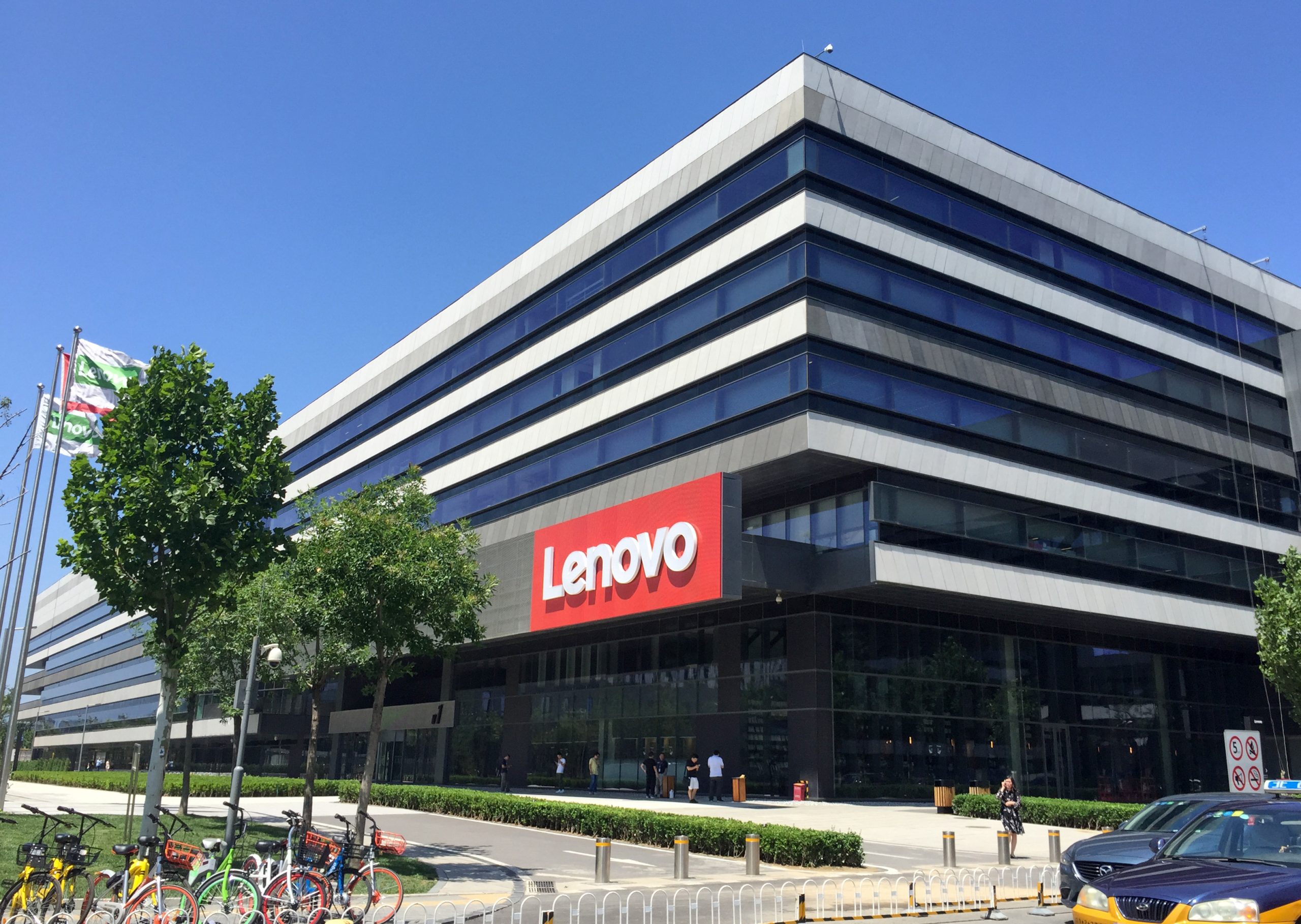
Lenovo Group reported its strongest quarterly revenue growth in five years, sending shares sharply higher on Thursday as the world’s largest PC maker benefited from surging demand for artificial intelligence infrastructure, strong device sales and its ability to manage a global shortage of memory chips.
Revenue rose 43% year over year to $26.94 billion in the three months ended June 30, far exceeding the $22.3 billion expected by analysts, according to LSEG data.
Lenovo shares jumped as much as 22% after the results, extending a remarkable rally that had already pushed the stock to an all-time high before the earnings announcement. The shares were up about 225% so far this year.
Register for the next Tekedia Mini-MBA.
Register for Tekedia AI in Business Masterclass.
Join Tekedia Capital Syndicate and co-invest in great global startups.
The results highlight a significant shift in Lenovo’s business mix, with AI-related products and infrastructure becoming a much larger driver of growth. Revenue from AI-related businesses increased 60% from a year earlier to $9.3 billion, accounting for about 35% of total revenue in the fiscal first quarter.
Chief Executive Yang Yuanqing said Lenovo had anticipated the tightening supply of memory chips and rising component costs and took steps to protect its operations.
“We accurately anticipated supply shortages and cost increases (of memory chips), and addressed it successfully,” Yang told Reuters.

He attributed the company’s ability to manage the supply shock to its scale, resilient global supply chains and diversified sources of memory chips from China, South Korea and the United States.
“I’m very confident in sustaining this growth momentum and driving long term profitability,” Yang said, adding that Lenovo remains on track to generate $100 billion in revenue during the current fiscal year.
The company’s bottom line, however, was significantly weaker because of a large non-cash accounting charge. Lenovo reported a net loss attributable to shareholders of $609 million, compared with a profit of $505 million a year earlier and an analyst expectation for a $589 million profit.

The company said the loss was primarily caused by a $1.7 billion non-cash fair-value loss resulting from the revaluation of warrants issued in 2025.
Excluding one-time items and non-cash charges, adjusted net income more than doubled to $1.075 billion. Research and development spending also increased 30% from a year earlier as Lenovo invests in its AI portfolio.
AI Infrastructure Becomes A Major Growth Engine
Lenovo’s expansion into AI infrastructure is becoming increasingly important to its financial performance. The company said its AI server pipeline reached $54 billion, an increase of 157% from the previous quarter. The pipeline includes demand from hyperscalers, AI cloud providers and enterprise customers deploying AI systems.
The scale of that pipeline suggests Lenovo is increasingly competing beyond the traditional PC market and positioning itself as a supplier of the hardware required to build and operate AI computing infrastructure.
“It’s clear that we are becoming a global AI infrastructure leader as well,” Yang said.
Lenovo’s opportunity comes as companies worldwide continue to increase spending on servers, computing systems and networking equipment to support generative AI and other advanced workloads. That expansion has created a new growth market for hardware manufacturers that previously relied heavily on PCs and other consumer devices.
The company’s ability to participate in both markets also provides diversification. Its traditional devices business continues to generate substantial revenue, while AI servers and related infrastructure are becoming a faster-growing part of the portfolio.
Memory Shortage Reshapes PC Market
Lenovo’s performance also illustrates how the global memory shortage is changing the economics of the PC industry. Revenue from Lenovo’s PC, tablet and smartphone division rose 27% year over year and accounted for about 64% of total group revenue.
Yet global PC shipments declined 2% year over year in the second quarter to 16.6 million units, according to Counterpoint Research. It was the first annual decline in global PC shipments since the first quarter of 2025.
The decline reveals the pressure created by higher prices for NAND and DRAM memory chips, which have increased manufacturers’ costs and pushed up retail prices.
Lenovo has raised PC prices twice this year to offset those higher component costs. U.S. rivals Dell, Hewlett Packard Enterprise and Super Micro have also increased prices, with some increases ranging from 10% to 30% as memory costs surged.
Yang said Lenovo expects the pressure on PC volumes to continue during the second half of the year.
“We believe this will still be the trend in the second half of this year,” he said.
However, declining unit shipments do not necessarily translate into falling revenue. Manufacturers can offset weaker volumes through higher average selling prices and by moving customers toward more expensive products.
“From a unit point of view, (PC) demand will be constrained, but because every average selling price is going higher or we are shifting to a premier price band, that helps us drive revenue growth,” Yang said.
Lenovo is also trying to expand beyond traditional PCs by developing AI-enabled personal computers and edge-computing devices capable of running AI models locally. The shift could open a new product cycle as consumers and businesses increasingly seek devices capable of running AI applications without relying entirely on cloud-based computing.
Overall, Lenovo’s latest results show a company undergoing a broader transformation.
The PC market remains its largest business, but AI infrastructure is rapidly becoming a major source of incremental growth. At the same time, higher component prices are forcing Lenovo and its competitors to raise device prices and push customers toward premium products.
That creates both an opportunity and a risk.
Lenovo’s scale and diversified supply chain appear to have helped it navigate the current memory shortage better than some competitors. But sustained shortages could eventually constrain demand, particularly if higher prices make PCs less affordable for consumers and businesses.
The company’s expanding AI server pipeline offers a potential counterweight. A $54 billion pipeline, if converted into actual orders and revenue at a healthy rate, would give Lenovo a much larger role in the infrastructure spending cycle that has benefited chipmakers, server manufacturers and networking companies.
The sharp rise in research and development spending also shows that Lenovo is investing to capture that opportunity rather than simply benefiting from higher hardware prices.
For now, investors appear to be rewarding the combination of strong revenue growth, accelerating AI demand and resilient PC sales. But the company’s target of reaching $100 billion in annual revenue suggests management expects the AI hardware boom to become a structural growth driver rather than a temporary boost. Thursday’s results provide early evidence that the strategy is gaining traction.