

The decision by Mastercard to secure a New York BitLicense marks a structural inflection point in the convergence between traditional payments networks and regulated digital asset infrastructure.
The approval, issued under the oversight of the New York State Department of Financial Services, positions Mastercard within one of the most tightly supervised crypto jurisdictions in the United States and signals a deeper strategic commitment to stablecoin-enabled settlement systems.
The BitLicense framework represents one of the earliest and most stringent regulatory regimes governing digital asset activity in the United States. It imposes requirements around anti-money laundering controls, capital adequacy, cybersecurity standards, and consumer protection obligations.
For a global payments operator, obtaining such authorization is not merely procedural; it is an alignment with a compliance-first architecture that increasingly defines how institutional crypto services are built and scaled. Mastercard’s move reflects a broader recalibration within legacy payment networks. Over the past several years, stablecoins have transitioned from niche crypto instruments to functional settlement rails capable of supporting cross-border transfers, treasury operations, and merchant payments.
By securing regulatory approval in New York, Mastercard gains the ability to directly participate in this evolving infrastructure layer, rather than interfacing with it indirectly through third-party issuers or offshore entities.
Register for the next Tekedia Mini-MBA.
Register for Tekedia AI in Business Masterclass.
Join Tekedia Capital Syndicate and co-invest in great global startups.
The strategic logic is clear: stablecoins compress settlement times from days to seconds, reduce correspondent banking friction, and enable 24/7 liquidity movement across borders. For Mastercard, whose core business is facilitating global payment authorization and settlement, integrating stablecoin rails offers both defensive and expansionary advantages.
It protects market share against blockchain-native payment networks while also opening new revenue streams in digital asset orchestration, compliance tooling, and settlement routing. This development also reflects a broader institutional normalization of digital assets under regulated frameworks.
Whereas earlier cycles of crypto adoption were characterized by jurisdictional arbitrage and regulatory ambiguity, the current phase is defined by structured compliance integration. New York, in particular, remains a critical gateway jurisdiction for financial innovation in the United States. Approval from its regulator signals to global counterparties that an entity meets one of the highest compliance thresholds in the industry.

From a market structure perspective, Mastercard’s licensing further blurs the boundary between fiat payment rails and blockchain-based settlement systems. The implication is not that stablecoins will replace existing card networks, but rather that they will become embedded within them as a backend liquidity layer. In this model, consumers may continue to transact in familiar fiat currencies, while settlement finality occurs via tokenized dollar instruments operating on distributed ledgers.
The competitive implications are significant. As fintech firms, banks, and crypto-native platforms converge on stablecoin infrastructure, control over regulatory access becomes a key differentiator. Mastercard’s early positioning under a BitLicense regime could allow it to define interoperability standards, onboarding frameworks for issuers, and compliance infrastructure that smaller players must adopt to access similar markets.
This development underscores a broader transition in global payments architecture: from closed-loop, institutionally siloed systems to hybrid networks that combine regulatory oversight with blockchain efficiency. Mastercard’s entry into this regulated digital asset space signals that the next phase of payment innovation will not be defined by disruption alone, but by integration at the institutional level.

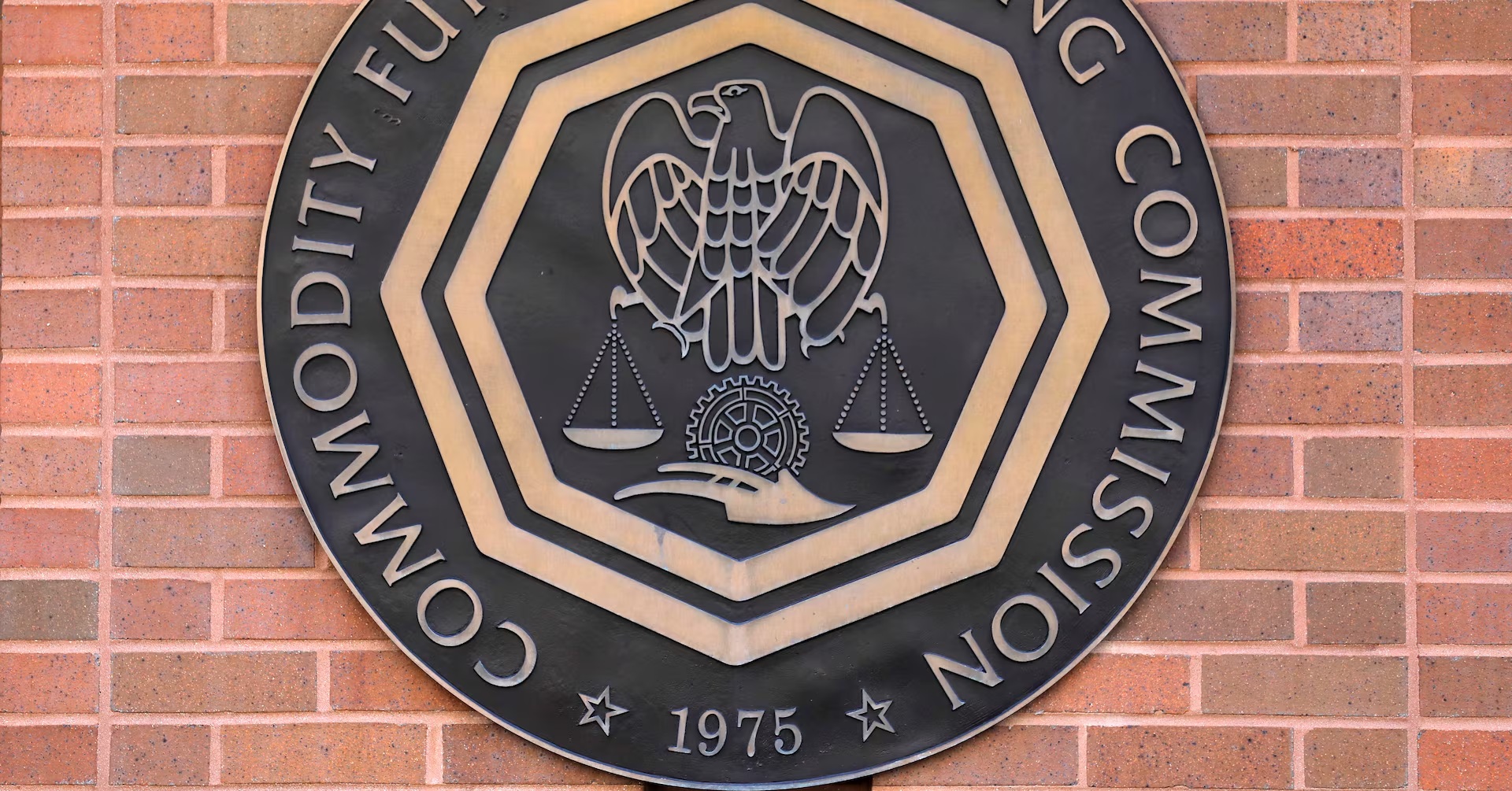
CFTC Backs Gemini in Their Motion for Relief from Judgement
The reported decision of the U.S. Commodity Futures Trading Commission to support Gemini Trust Company in its motion for relief from judgment represents a notable procedural turn in an already closely watched enforcement landscape for digital asset markets.
While the precise contours of the underlying judgment depend on the original litigation record, the CFTC’s posture signals a broader regulatory recalibration toward settlement flexibility, legal clarity, and market stabilization rather than prolonged adversarial escalation. At the core of the matter is the legal mechanism of relief from judgment, which typically allows a party to request that a court modify or vacate a prior ruling under specific circumstances such as new evidence, procedural irregularities, or changes in controlling law.
When a federal regulator such as the CFTC aligns itself—either partially or fully—with a regulated entity’s request for such relief, it introduces an additional interpretive layer: the regulator is effectively signaling that continued enforcement of the original judgment may no longer serve the public interest, regulatory intent, or evolving statutory interpretation of derivatives and digital asset oversight.
For Gemini, the development is strategically significant. The exchange has long positioned itself as a compliance-forward institution within the U.S. crypto sector, emphasizing custody integrity, auditability, and regulatory engagement. A supportive stance from the CFTC can be interpreted as validation of that positioning, particularly in an environment where several crypto firms have faced aggressive enforcement actions from multiple agencies. It also strengthens Gemini’s legal standing as it navigates broader industry uncertainty around the classification and supervision of digital asset products.
From the regulator’s perspective, the CFTC’s involvement suggests an awareness that rigid enforcement outcomes may produce unintended consequences in rapidly evolving financial markets. Digital asset derivatives, in particular, occupy a hybrid regulatory space that intersects commodities law, securities interpretation, and market infrastructure policy. As such, regulators often face the challenge of applying legacy legal frameworks to systems that evolve faster than statutory amendments can be enacted.
Supporting relief from judgment may therefore reflect an adaptive approach—one that prioritizes regulatory coherence over procedural finality.
This development also sits within a wider trend in U.S. crypto regulation: incremental normalization.
Rather than relying exclusively on enforcement-led clarity, agencies are increasingly engaging in post-judgment reconsiderations, settlements with revised terms, and interpretive guidance aimed at reducing systemic ambiguity. This is particularly relevant as institutional participation in digital assets grows, and as market structure debates intensify in Congress and within regulatory agencies.
Market participants are likely to interpret the CFTC’s position as cautiously constructive. While it does not necessarily imply a wholesale easing of regulatory scrutiny, it does indicate that dialogue between major exchanges and regulators remains active and legally consequential. For institutional investors, such signals can reduce perceived regulatory tail risk, especially in custody-heavy and derivatives-linked products where compliance certainty is a prerequisite for capital allocation.
The CFTC’s backing of Gemini’s motion underscores a transitional phase in U.S. crypto regulation. It reflects a system in which enforcement, litigation, and policy evolution are increasingly interlinked rather than sequential. Whether this results in a more stable regulatory equilibrium will depend on how consistently such cooperative postures are applied across cases. For now, it marks a procedural but meaningful inflection point in the ongoing integration of digital asset markets into the formal financial regulatory architecture.