

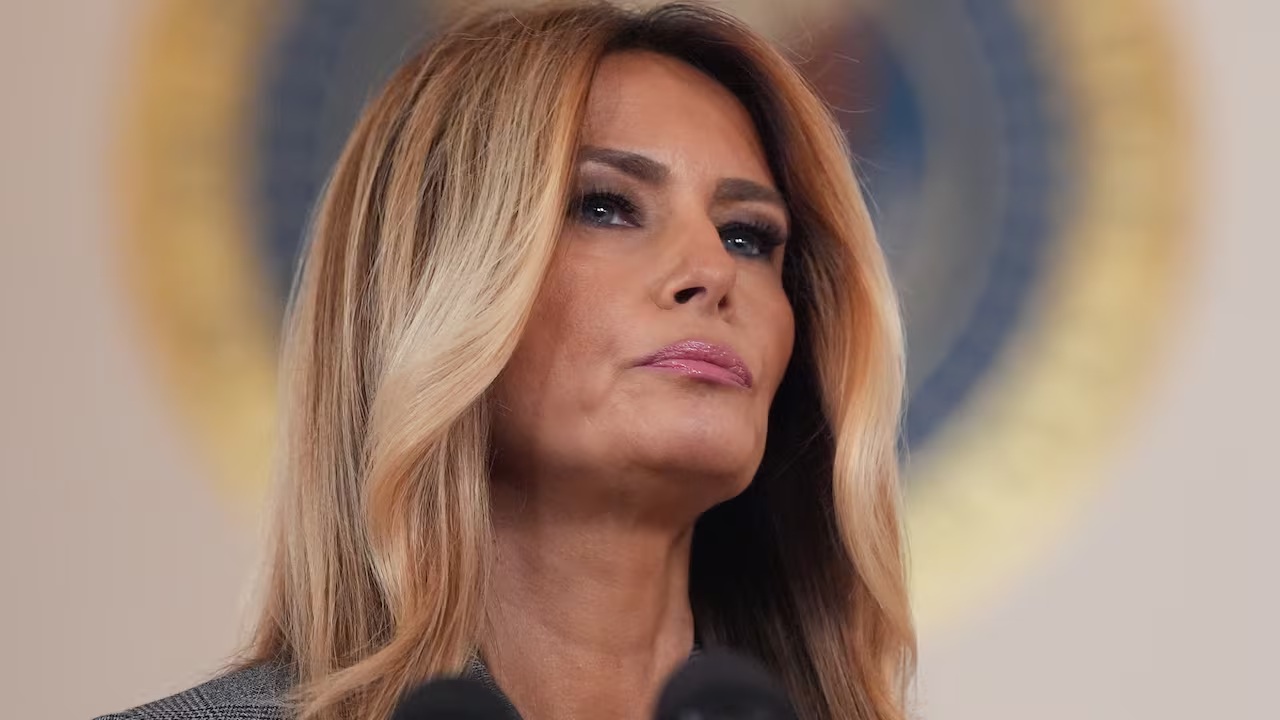
First Lady Melania Trump delivered a rare, prepared public statement from the White House denying any personal or close ties to Jeffrey Epstein or Ghislaine Maxwell. She called accusations linking her to them lies that need to end today, described them as mean-spirited and politically motivated attempts to defame her, and emphasized that she had no knowledge of Epstein’s crimes.
She stated she never had any relationship with Epstein or Maxwell and was never friends with either. She explicitly denied being Epstein’s victim or that he introduced her to Donald Trump, a persistent online rumor. She acknowledged only casual or minimal contact, such as polite email replies in the same New York social scene and one brief crossing of paths at a 2000 event.
She called for Congress to hold public hearings allowing Epstein’s survivors and victims to testify under oath, with their stories entered into the Congressional Record. The statement lasted only a few minutes with no press questions allowed. It surprised many observers because Epstein-related scrutiny had largely receded from the daily headlines, though documents and files from the case continue to circulate and spark discussion.
Register for Tekedia Mini-MBA edition 20 (June 8 – Sept 5, 2026).
Register for Tekedia AI in Business Masterclass.
Join Tekedia Capital Syndicate and co-invest in great global startups.
Register for Tekedia AI Lab.
Advisers to Melania said she had grown frustrated with persistent online rumors and smears and wanted to set the record straight on her own terms. President Trump later said he knew she planned to address it at some point and supported her right to do so, though he claimed he didn’t know the exact content in advance.
The statement has reignited media and political attention on the Epstein case rather than quieting it. Some bipartisan lawmakers welcomed the call for survivor hearings; others questioned the timing or saw it as creating internal tension within the administration. A number of Epstein survivors had mixed reactions—some appreciated the focus on victims, while others accused her of shifting burden or spotlight onto them.
This occurs amid ongoing releases or discussions of Epstein-related documents, old social connections in elite New York circles, and partisan debates. Melania has historically kept a low public profile on such matters.
No new specific allegations against Melania Trump appear to have triggered the statement; coverage frames it primarily as a proactive denial of long-circulating rumors. Claims of mounting political pressure in headlines often reflect the broader Epstein saga’s potential to resurface and affect public perception, rather than any single imminent bombshell detailed in recent reporting.

Partisan spins on all sides—some outlets emphasize the denial and victim support angle, others the surprise factor and questions about internal White House dynamics. Public records, court documents, and flight logs have long been scrutinized for anyone in Epstein’s orbit, but Melania’s direct on-camera rebuttal is unusual for her.
The surprise address described as stunning, out of the blue, or an unforced error by outlets across the spectrum shifted the news cycle back to the Epstein saga, despite White House efforts to move on amid other priorities like foreign policy and midterms. It breathed new life into old rumors, photos, and emails rather than fully quelling them. Aides were reportedly stunned and befuddled, with some bracing for renewed distraction and fallout.
President Trump publicly supported her right to speak, saying he knew she was frustrated by rumors but was unaware of the exact timing or content. Some Epstein victims welcomed the spotlight on hearings and expressed willingness to testify. Others criticized it as shifting the burden onto them, calling it retraumatizing or a deflection of responsibility from powerful figures and institutions.

A group of 15 survivors issued a joint statement pushing back. Some lawmakers including from both parties praised the denial or supported the call for congressional hearings. Critics highlighted the timing and questioned the casual contact framing in light of known social overlaps. Her adviser indicated she may pursue legal action against persistent rumor-spreaders.