

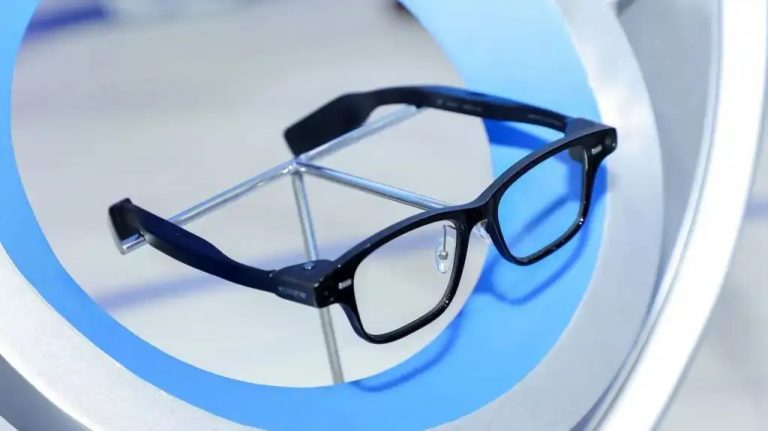
Meta is renewing its push to reinvent the way people interact with technology, this time with smart glasses that its executives say could eclipse the smartphone.
Chief Product Officer Chris Cox told CNBC’s Julia Boorstin on Thursday that glasses — not handheld devices — will define the next era of computing.
“We talk to them, we will see with them, we will use gestures the same way we interact with each other to interact with our computers,” Cox said. “The interfaces will get more natural, and so we certainly believe that the next really important wearable technology is going to be a pair of glasses.”
Register for Tekedia Mini-MBA edition 20 (June 8 – Sept 5, 2026).
Register for Tekedia AI in Business Masterclass.
Join Tekedia Capital Syndicate and co-invest in great global startups.
Register for Tekedia AI Lab.
The Ray-Ban Display Glasses
Meta revealed its latest hardware, the $799 Ray-Ban Display smart glasses, on Wednesday. Unlike its earlier audio-only Ray-Ban models, the new version integrates a tiny in-lens display controlled through hand movements detected by a neural wristband.
The glasses go beyond recording video or playing audio. Users can now see messages, watch videos, record content, send voice messages, or even write replies with subtle gestures on their knee.
“We’ve started with just the basics, which is messaging, which we know is the thing people want to do in a more fluid way,” Cox explained.

Meta CEO Mark Zuckerberg offered a live demo of the glasses, attempting to answer a video call from Meta’s tech chief Andrew Bosworth. But the button to accept the call failed to appear on the display, underscoring the technical challenges still plaguing wearable computing.
For Meta, the Ray-Ban Displays are part of a larger gamble on augmented reality (AR). Zuckerberg has argued for years that immersive technologies like AR glasses and virtual reality headsets will ultimately replace the smartphone as the main gateway to the digital world. The Display glasses are a step toward that vision — more advanced than audio smart glasses, but not as fully immersive as the headsets Meta is also developing.
The Industry’s Bumpy Road
Meta’s push comes in a space littered with setbacks. Google’s much-hyped Google Glass launched in 2013 but quickly collapsed amid privacy concerns and limited functionality. Snap’s Spectacles won attention for their sleek design but failed to resonate with mainstream buyers, relegating the product to niche status.

Apple has taken a different path with the Vision Pro, a $3,499 mixed-reality headset pitched as a “spatial computer.” While technologically sophisticated, its steep price has limited adoption, raising questions about how quickly consumers are willing to embrace new form factors.
Meta itself has faced similar hurdles. Its Quest VR headsets have drawn some traction in gaming and enterprise, but mainstream adoption has been slower than expected. The company’s earlier audio-only Ray-Ban Meta glasses were seen as more stylish than useful, highlighting the gap between novelty and necessity.
Analysts say Meta is trying to thread a difficult needle — making smart glasses that are functional enough to justify their price, while avoiding the pitfalls of being seen as awkward, invasive, or unnecessary.
At $799, the Ray-Ban Displays target early adopters, not mass consumers. The hope is that adoption will scale as Meta refines the technology and integrates more applications. Unlike Apple’s Vision Pro, which courts professionals and creatives, Meta is focusing on everyday tasks like messaging, video calls, and recording — betting that utility plus wearability will give it an edge.
A Defining Bet
Cox’s claim that glasses are the future of computing shows Meta’s determination to set the pace in what comes after the smartphone. While the live demo hiccup underscored how unfinished the technology remains, the Display glasses represent a step toward making computing literally wearable and visible.
The question now is whether Meta can succeed where Google, Snap, and even its own past experiments fell short — transforming smart glasses from futuristic gadgets into everyday essentials.