

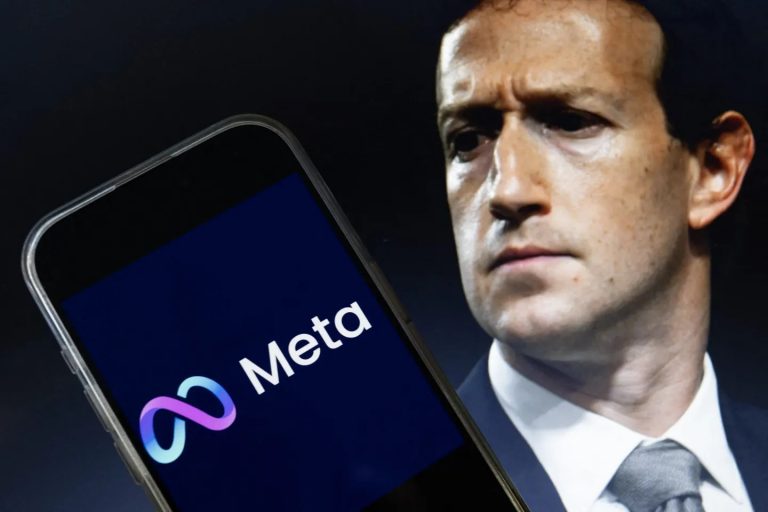
Meta is not slowing in its aggressive talent grab in the artificial intelligence race, as the company has hired two more high-profile researchers from Apple, strengthening its ambition to lead the next wave of AI innovation.
According to Bloomberg, the two Apple engineers—Mark Lee and Tom Gunter—are the latest additions to Meta’s recently launched Superintelligence division, joining their former colleague Ruoming Pang, who left Apple in July.
Lee has already begun work at Meta, while Gunter is expected to start soon. Both had worked closely with Pang in Apple’s secretive Foundation Models team, which focused on developing in-house large language models. Their defection is another blow to Apple’s internal AI ambitions, which are now facing visible cracks as more talent exits despite Apple’s recent push to integrate AI features into iOS and macOS.
Register for Tekedia Mini-MBA edition 20 (June 8 – Sept 5, 2026).
Register for Tekedia AI in Business Masterclass.
Join Tekedia Capital Syndicate and co-invest in great global startups.
Register for Tekedia AI Lab.
Meta, under Mark Zuckerberg’s direction, is pouring enormous resources into what it calls Superintelligence Labs—a new arm of the company focused on building systems that surpass current AI capabilities and mimic human-level reasoning. The initiative, announced in June, is being spearheaded by Scale AI founder Alexandr Wang as Chief AI Officer and GitHub’s former CEO, Nat Friedman. Their goal is to engineer what insiders describe as “agentic AI”—systems that can not only interpret language, but autonomously reason, plan, and use tools in complex environments.
But building such systems doesn’t only require computing power—it demands elite human capital. And Meta is leaving no stone unturned in securing that. The company is now widely viewed as Silicon Valley’s most aggressive recruiter of top AI researchers. In addition to Pang, Lee, and Gunter, Meta has also poached leading scientists from Google DeepMind, OpenAI, and academic labs. The firm is reportedly offering mind-boggling compensation packages, in some cases exceeding $100 million, to convince key figures to jump ship.
Sources familiar with the deals told Reuters that the offers are structured like contracts for star athletes—multi-year agreements that include equity, bonuses, and large upfront signing incentives. Pang’s deal, for instance, was rumored to exceed $200 million, a sum that dwarfs even the most generous compensation offers at Apple, where stock-based rewards are more conservative and tied to long-term retention.

Apple, meanwhile, has scrambled to contain the damage. Following Pang’s exit, the company began issuing raises to select engineers working on its AI systems. But Meta’s compensation packages are in a league of their own, making it difficult for rivals to compete. Apple’s recent partnerships with OpenAI and Anthropic to power Siri and iPhone AI features have also sparked speculation that the company is shifting its strategy away from building its own foundational models toward licensing them, possibly a result of internal attrition.
Meta’s spree doesn’t look like it will stop anytime soon. Zuckerberg has pledged tens of billions of dollars to build up the company’s AI infrastructure, including data centers and proprietary silicon chips, to support training at a scale that could rival or surpass OpenAI and Google. Internally, the company is also working on “Behemoth,” a massive new LLM intended to leapfrog existing models like GPT-4 and Claude.
Industry analysts believe Meta’s intense recruitment drive and commitment to frontier AI positions it as one of the few serious contenders in the race to develop artificial general intelligence (AGI), or at the very least, agentic systems capable of performing autonomous tasks without direct human supervision.

At the core of this transformation is a belief that AI is not merely a feature but the future of computing, and whoever leads in agentic AI could control the operating system of tomorrow’s digital economy. Meta is betting big on that future, one superstar recruit at a time.