

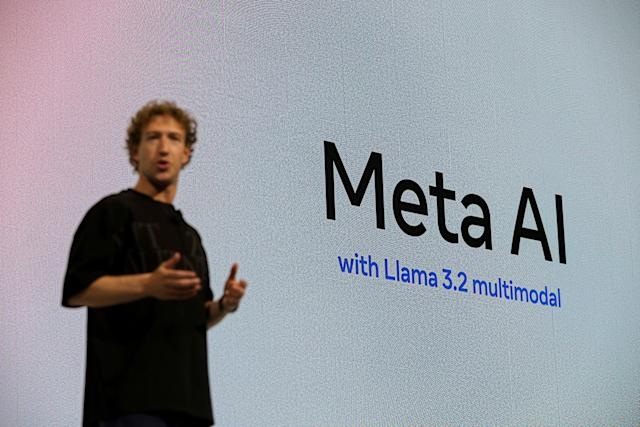
Meta Platforms has delayed the launch of its next major artificial intelligence model, code-named “Avocado,” pushing the release to at least May from an earlier plan to debut the system this month, according to a report by The New York Times.
People familiar with the development told Reuters that internal testing shows the model’s capabilities currently fall between the performance levels of Google’s Gemini 2.5 and Gemini 3 systems, prompting Meta engineers to extend development as the company works to close the gap with the most advanced models in the industry.
The delay was announced as the race among major technology firms to build increasingly powerful AI systems has become defined by rapid iteration cycles, massive computing requirements and extremely tight performance benchmarks.
Register for Tekedia Mini-MBA edition 20 (June 8 – Sept 5, 2026).
Register for Tekedia AI in Business Masterclass.
Join Tekedia Capital Syndicate and co-invest in great global startups.
Register for Tekedia AI Lab.
Avocado has been under development for months as Meta seeks to strengthen its position in the fast-evolving generative AI market, where companies are racing to build systems capable of advanced reasoning, coding assistance and multimodal tasks such as processing images, text and audio simultaneously.
However, the model has so far fallen short of the most recent offerings from rivals, according to the report. Rather than release a system perceived as trailing competitors, Meta has opted to delay the launch until May or June, allowing engineers more time to refine performance and training data.
A spokesperson for Meta reiterated remarks previously made by chief executive Mark Zuckerberg during the company’s January earnings call.

“As we’ve said publicly, our next model will be good, but more importantly, show the rapid trajectory we’re on, and then we’ll steadily push the frontier over the course of the year as we continue to release new models,” the spokesperson said.
“We’re excited for people to see what we’ve been cooking very soon,” the spokesperson added.
The delay comes as Meta dramatically increases spending on artificial intelligence infrastructure, part of what has become one of the largest capital-investment programs in the technology sector.

In January, Zuckerberg outlined plans to spend between $115 billion and $135 billion this year, with much of the money directed toward AI development.
The spending spree includes building new data centers, acquiring large quantities of advanced chips used for AI training and inference, and developing proprietary semiconductor technology designed specifically for machine learning workloads. The company’s long-term objective is to build systems capable of achieving “superintelligence,” a theoretical stage where artificial intelligence could outperform humans across many intellectual tasks.
That ambition places Meta among a small group of technology companies investing enormous sums in frontier AI research.
Building Chips and Infrastructure
One of the key pillars of Meta’s AI strategy is reducing reliance on external hardware suppliers by designing its own chips optimized for AI workloads. Custom silicon could allow the company to run massive training clusters more efficiently while lowering long-term costs associated with using third-party processors.
Such moves mirror broader industry trends as technology firms attempt to control more of the AI technology stack — from chips and infrastructure to the models themselves. Training cutting-edge models, which requires thousands of high-performance processors running in massive data centers, has become strategically important in the AI race.
Considering A Rival’s Technology
The New York Times report also said leaders within Meta’s AI division have discussed the possibility of temporarily licensing Google’s Gemini models to power some of the company’s AI products.
While no decision has been reached, such a step would illustrate how rapidly evolving the competitive landscape has become. Even companies building their own models are sometimes willing to rely on external systems to maintain momentum in consumer products while internal development continues.
For Meta, however, adopting a rival’s technology would represent a delicate strategic balancing act, given its substantial investment in developing proprietary AI models.
A Crowded And Expensive Battlefield
Meta’s efforts unfold in a technology sector where companies are spending billions to secure leadership in artificial intelligence. Major firms, including Microsoft and Amazon, are also investing heavily in infrastructure and AI development as generative systems become central to cloud computing, enterprise software, and digital services.
The scale of investment indicates expectations that AI will reshape industries ranging from advertising and media to software engineering and scientific research.
But the technology carries particular importance for Meta.
The company plans to deploy AI systems across its platforms — including Facebook, Instagram, and WhatsApp — to improve content recommendations, automate moderation, enhance messaging tools, and refine advertising targeting. AI-driven features are also expected to play a role in future products linked to virtual and augmented reality ecosystems.
However, Meta’s postponement of Avocado is seen as a further indication of the growing challenges of competing in an industry where technological advances arrive at an extraordinary speed. Each new model must demonstrate clear improvements in accuracy, reasoning ability, and efficiency while remaining economically viable to operate at a large scale. Releasing a weaker model risks damaging credibility among developers and enterprise users who increasingly depend on AI systems for critical applications.
Analysts say the delay, therefore, underpins an ideal calculation: launching a stronger model later may be preferable to introducing one that fails to match competitors’ capabilities.