

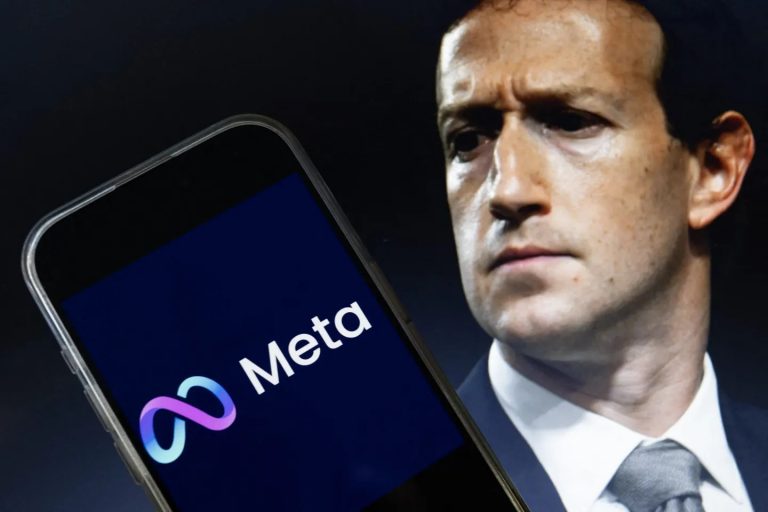
Meta and gaming platform Roblox have agreed to strengthen protections for children and teenagers in the Philippines, including age verification, parental controls and faster removal of harmful content, as pressure mounts on technology companies to take greater responsibility for online safety.
Philippine Information and Communications Technology Secretary Henry Aguda said on Thursday that the companies agreed to a set of safety measures following talks with government officials.
“Both agreed to the safety protocols that we requested,” Aguda said, citing commitments on age verification, cooperation with law enforcement, faster takedowns of harmful content and greater local engagement.
Register for the next Tekedia Mini-MBA.
Register for Tekedia AI in Business Masterclass.
Join Tekedia Capital Syndicate and co-invest in great global startups.
The companies also agreed to strengthen their presence in the Philippines. Roblox is targeting the establishment of a local office as early as October, while Meta plans to send a team to Manila to discuss a timetable for expanding its operations in the country, Aguda said.
The agreement comes a day after Meta agreed to pay up to $18 billion over the next decade and introduce additional safeguards for teenage users in the United States to settle claims by U.S. states that its platforms contributed to harm among children.
The U.S. settlement includes measures such as usage limits, parental controls and stronger age-assurance systems. Aguda said the agreement helped create momentum for discussions with Meta in the Philippines on child safety and platform accountability.

The Philippine government is seeking commitments that go beyond content moderation by requiring platforms to verify users’ ages, respond more quickly to harmful material and work more closely with authorities investigating online-related offences.
The companies also agreed to engage with Philippine lawmakers as Congress considers new legislation governing minors’ access to online platforms, Aguda said.
The talks come as Philippine lawmakers consider tighter restrictions on children’s use of social media, including proposals that could limit or ban minors from accessing certain platforms.

The debate has intensified amid concerns over the role of digital platforms in youth safety and the spread of harmful material online. Officials have also pointed to recent incidents involving violence and livestreamed content as part of the broader discussion over how online services should be regulated.
Aguda said Meta and Roblox had indicated they would cooperate with whatever measures Congress ultimately adopts. Asked whether the companies would accept a potential social media ban for minors, Aguda said they had indicated they would comply with policies enacted by Philippine lawmakers.
The developments put Meta and Roblox at the center of a rapidly changing regulatory environment in the Philippines, where authorities are weighing whether voluntary safeguards by technology companies are sufficient or whether stricter legal requirements are needed.
The Philippine talks also come as the company faces growing scrutiny internationally over how its platforms affect young users. Its U.S. settlement is expected to increase attention on whether similar protections can be implemented consistently across markets.
The company operates several widely used services in the Philippines, including Facebook, Instagram and Messenger. Those platforms are used by millions of Filipinos for communication, entertainment, commerce and news, making any changes to age verification or access rules potentially significant for users, families and businesses.
Meta has previously introduced tools intended to give parents greater oversight of teenagers’ accounts, including limits on messaging, notifications and nighttime use. However, regulators and child-safety advocates have questioned how effectively such tools work when platforms cannot reliably determine a user’s age.
Age verification is likely to be one of the most difficult parts of the agreement. Platforms must balance the need to identify underage users with concerns about privacy, data security and the risk of collecting sensitive personal information. Any system that requires government identification, facial recognition or other forms of biometric verification could face resistance from parents, civil-liberties groups and privacy regulators.
Roblox faces a different but related challenge because of the large number of young users on its gaming platform. Its planned local presence in the Philippines could give regulators a more direct channel for addressing complaints, enforcement requests and child-safety concerns.
The platform allows users to create and play games, communicate with other players, and purchase virtual items. Its social features have made it popular with children, but they have also raised questions about how effectively the company can prevent inappropriate contact, bullying, scams and exposure to violent or sexually explicit material.
Roblox has introduced parental controls, age-based content ratings and restrictions on communication between users. The company has also said it is investing in automated detection and human moderation. Philippine officials, however, are seeking assurances that those systems will be responsive to local complaints and capable of supporting investigations by domestic authorities.
A local office could make it easier for the government to communicate with Roblox during emergencies or investigations. It could also allow the company to work more closely with schools, parents, child-protection groups and law-enforcement agencies. At the same time, the presence of a local office could expose the company to greater scrutiny and potentially more direct enforcement under Philippine law.
Implementation Will Be Key
The Philippine government is now looking to turn the companies’ commitments into concrete safeguards, particularly around age assurance, parental oversight and the speed with which harmful content is removed.
Against that backdrop, officials will likely need to establish how compliance will be measured. A commitment to remove harmful content quickly, for example, could require clear definitions of what qualifies as harmful material, how complaints are submitted and how platforms report their response times.
The government may also seek regular transparency reports showing the number of complaints received, the time taken to review them, the number of accounts suspended and the volume of content removed. Such reports could help determine whether the companies’ promises are producing meaningful improvements rather than serving only as broad statements of intent.
The issue is complicated by the scale of online activity. Platforms receive large volumes of posts, messages, videos, and game-related interactions every day. Automated systems can identify some forms of abuse, but they can also make mistakes, miss context, or fail to detect coded language. Human reviewers can provide more nuanced decisions but may not be able to examine every report quickly.
Language and cultural context also matter. Content that appears harmless to an automated system trained primarily on English-language data may carry a different meaning in Filipino or other local languages. Regulators may therefore press companies to expand local-language moderation and ensure that complaints from Philippine users are handled by teams familiar with the country’s laws and social conditions.
The companies’ cooperation with law enforcement is another area likely to receive close attention. Authorities want platforms to preserve relevant evidence, respond to lawful requests and help identify users suspected of committing serious offences. Technology companies, meanwhile, must ensure that cooperation does not undermine privacy rights or result in the disclosure of information without proper legal authority.
Child-safety advocates have generally welcomed stronger protections but have warned that enforcement must be transparent and proportionate. A blanket ban on minors’ access to social media could prevent children from using online services for education, communication and support. It could also encourage young users to lie about their age or move to less regulated platforms.
Some lawmakers have noted that age restrictions are necessary because children may not be able to assess the risks associated with social media and online gaming. Others have called for greater responsibility from parents, schools and technology companies rather than relying solely on government bans.
The debate also raises questions about digital access and inequality. Many Filipino children use online platforms for schoolwork, creative activities and contact with relatives working abroad. Restrictions that are difficult to navigate or that require expensive verification tools could disproportionately affect families with limited resources.
Aguda said Meta and Roblox had indicated they would cooperate with whatever measures Congress ultimately adopts. Asked whether the companies would accept a potential social media ban for minors, Aguda said they had indicated they would comply with policies enacted by Philippine lawmakers.