

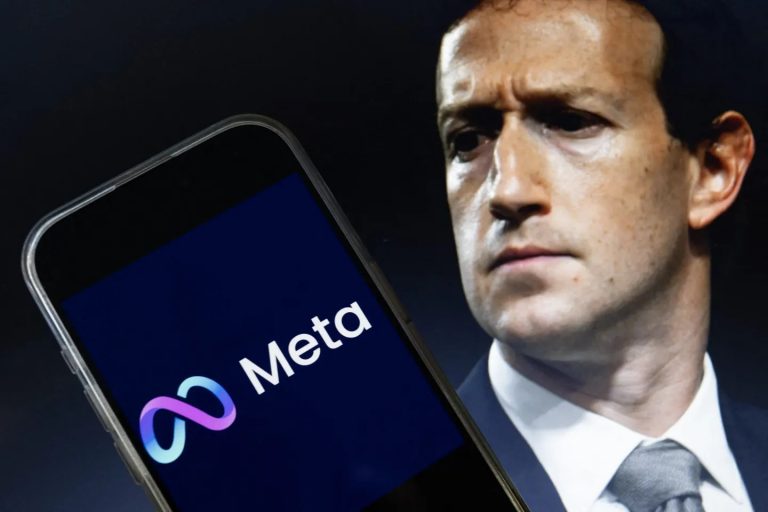
Meta has carried out its most sweeping reorganization of artificial intelligence operations to date, signaling a deeper commitment to its race toward building “personal superintelligence.”
According to the full email that 28-year-old Alexandr Wang, the leader of Meta Superintelligence Labs (MSL), sent to all Meta employees working on AI, which was obtained by Business Insider, Wang said “superintelligence is coming,” and insisted that for Meta to take the challenge seriously, “major changes” were needed.
The restructuring creates four distinct teams focused on research, training, products, and infrastructure. The move represents Meta’s most aggressive attempt yet to centralize its fragmented AI projects and speed up progress.
Register for Tekedia Mini-MBA edition 20 (June 8 – Sept 5, 2026).
Register for Tekedia AI in Business Masterclass.
Join Tekedia Capital Syndicate and co-invest in great global startups.
Register for Tekedia AI Lab.
A Star-Studded Team, But Rising Tensions
Meta has been aggressively recruiting top AI researchers with lucrative offers in recent months, hoping to rival OpenAI, Google DeepMind, and Anthropic. But the lavish pay packages for new recruits have fueled tensions within MSL, with some existing researchers threatening to quit.
Wang’s email confirmed that most of MSL’s division heads now report directly to him — including investor and former GitHub CEO Nat Friedman, who leads MSL’s product team. Friedman was announced as co-leader of MSL in June, but, according to Wang’s email, reports to him.
The company has dissolved two major AI groups in less than six months. The latest casualty is the AGI Foundations team, created in May and now being broken apart. Its staff will be redistributed across product, infrastructure, and FAIR, but not to TBD Lab, raising questions about the future of Meta’s long-term research bets.

Centralizing Research: TBD and FAIR
MSL is consolidating its research into two hubs: TBD Lab, a small elite unit tasked with training large AI models, and FAIR, Meta’s long-standing AI research group.
TBD will explore “new directions,” including a mysterious “omni” model. Wang’s email provided no details about what “omni” entails, but sources told Business Insider that Meta had previously run “Project Omni,” which aimed to train chatbots to be more engaging by proactively messaging users and remembering past conversations.
Shengjia Zhao, co-creator of ChatGPT, was named MSL’s new chief scientist, leading research but notably not reporting directly to Wang. Meanwhile, FAIR — which historically operated with academic independence and little overlap with product divisions — will now play a more active role, feeding its work directly into TBD’s model training. FAIR will remain led by Rob Fergus, with Yann LeCun continuing as chief scientist. Both now report to Wang, confirming earlier Bloomberg reporting that LeCun had been moved under MSL’s command.

Products and Infrastructure Get Priority
Meta is also sharpening its focus on bringing AI to products. Nat Friedman’s product team will oversee efforts to integrate superintelligence into Meta’s consumer platforms, including long-running projects like AI glasses and the Quest headset. Despite strong reviews, those products have yet to contribute significantly to revenue.
Infrastructure — the backbone of advanced AI — is another pillar of the new structure. MSL’s infra division will be led by Aparna Ramani, a longtime Meta engineering VP. She will oversee the massive data centers and fleets of Nvidia chips required to train large-scale models. The unit also includes Joel Pobar, a former Anthropic infrastructure lead.
The Growing Criticism
The changes come as scrutiny grows over Meta’s frequent restructuring. In response to a New York Times article about the shake-up, Meta communications director Andy Stone dismissed the coverage as “navel-gazing.”
“Meta: We’re bringing in talent to focus on building superintelligence. Media: BUT HOW WILL THESE TEAMS BE STRUCTURED?! … Media: LOOK, LOOK, ANOTHER SHAKEUP AT META!” Stone wrote on X on August 19, 2025.
Raising Questions About Meta’s Direction
While Wang acknowledged in his email that organizational changes can be “disruptive,” he said they are essential to speed up progress toward superintelligence — defined as AI surpassing humans in nearly every intellectual task.
But analysts note that Meta’s constant reshuffling contrasts sharply with rivals like OpenAI, Google, and Anthropic, which have managed to maintain more stable structures as they scale up.
With two major teams dissolved in half a year and overlapping leadership roles between Zhao and LeCun, it remains unclear whether Meta’s latest reorganization will streamline its AI ambitions or deepen internal uncertainty.
What is clear is that Meta is betting heavily on its new structure to close the gap with competitors and re-establish itself as a serious contender in the global AI race.
Read Alexandr Wang’s full memo below:
Superintelligence is coming, and in order to take it seriously, we need to organize around the key areas that will be critical to reach it — research, product and infra. We are building a world-class organization around these areas, and have brought in some incredible leaders to drive the work forward. As we previously announced, Shengjia Zhao will direct our research efforts as Chief Scientist for MSL, Nat Friedman will lead our product effort and Rob Fergus will continue to lead FAIR. Today, I’m pleased to announce that Aparna Ramani will be moving over to MSL to lead the infrastructure necessary to support our ambitious research and product bets.As part of this, we are dissolving the AGI Foundations organization and moving the talent from that team into the right areas.
Teams whose work naturally aligns with and serves our products will move to Nat’s team. Some of the researchers will move to FAIR to double down on our long term research while teams working on infra will transition into Aparna’s org. Anyone who is changing teams will get an update from their manager or HRBP today, if you haven’t already. We’re making three key changes to our organizational design that will help us to accelerate our efforts. Centralizing core, fundamental research efforts in TBD Lab and FAIR.
Bolstering our product efforts with applied research that will work on product-focused models. Establishing a unified, core infrastructure team to support our research bets.The work will map to four teams:TBD Lab will be a small team focused on training and scaling large models to achieve superintelligence across pre-training, reasoning, and post-training, and explore new directions such as an omni model.FAIR will be an innovation engine for MSL and we will aim to integrate and scale many of the research ideas and projects from FAIR into the larger model runs conducted by TBD Lab. Rob will continue to lead FAIR and Yann will continue to serve as Chief Scientist for FAIR, with both reporting to me.
Products & Applied Research will bring our product-focused research efforts closer to product development. This will include teams previously working on Assistant, Voice, Media, Trust, Embodiment and Developer pillars in AI Tech. Nat will continue to lead this work reporting to me.MSL Infra team will unify elements of Infra and MSL’s infrastructure teams into one. This team will focus on accelerating AI research and production by building advanced infrastructure, optimized GPU clusters, comprehensive environments, data infrastructure, and developer tools to support state-of-the-art research, products and AI development across Meta. Aparna will lead this team reporting to me.
Ahmad and Amir will continue reporting to me focusing on strategic MSL initiatives they will share more about later.I recognize that org changes can be disruptive, but I truly believe that taking the time to get this structure right now will allow us to reach superintelligence with more velocity over the long term. We’re still working through updated rhythms and our collaboration model across teams, including when we’ll come together as a full MSL org. Thank you all for your flexibility as we adapt to this new structure. Every team in MSL plays a critical role and I’m excited to get to work with all of you.”