

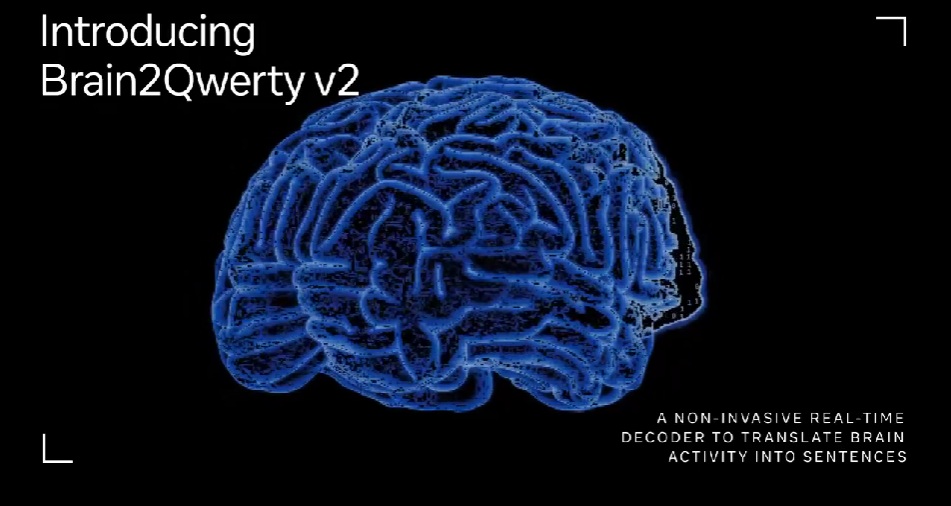
Artificial intelligence continues to redefine the boundaries of what technology can achieve, and Meta has unveiled one of its most ambitious breakthroughs yet: an AI-powered brain-to-text translation system.
This innovation aims to convert human brain activity directly into written text without requiring speech or physical movement. Although the technology is still in the research stage, it represents a major step toward creating more natural and accessible ways for humans to communicate with machines.
The brain-to-text system works by analyzing neural signals generated when a person thinks about words or sentences. Using advanced AI models, researchers train the system to recognize patterns in these signals and translate them into readable text.
Unlike invasive brain-computer interfaces that require surgical implants, Meta’s research focuses on non-invasive methods, making the technology safer and more practical for future use.
Register for the next Tekedia Mini-MBA.
Register for Tekedia AI in Business Masterclass.
Join Tekedia Capital Syndicate and co-invest in great global startups.
While the current system is not yet ready for everyday consumers, its early results have demonstrated impressive progress in decoding complex neural activity. One of the most promising applications of this technology is in healthcare. Millions of people worldwide suffer from conditions such as paralysis, stroke, or neurodegenerative diseases that prevent them from speaking or typing.
A reliable brain-to-text interface could restore communication for these individuals, allowing them to express thoughts, needs, and emotions simply by thinking. Such a breakthrough would dramatically improve quality of life, independence, and social interaction for patients with severe communication impairments.
Beyond healthcare, brain-to-text AI could transform how humans interact with computers and digital devices. Instead of relying on keyboards, touchscreens, or voice commands, users could potentially control applications, compose messages, or perform digital tasks using only their thoughts.

This could create faster and more intuitive user experiences across industries, including education, gaming, virtual reality, and workplace productivity. As computing becomes increasingly immersive, brain-computer interfaces may become a key component of future digital ecosystems.
However, the technology also raises significant ethical and privacy concerns. Brain activity contains highly sensitive personal information, making data security a top priority. If neural data were accessed without permission or improperly stored, it could expose thoughts or mental patterns that individuals consider deeply private.
As a result, governments, technology companies, and researchers will need to establish strict regulations governing data collection, storage, consent, and usage before such systems become commercially available. Technical challenges also remain.

Human brains are extraordinarily complex, and neural signals vary between individuals. Environmental noise, movement, and differences in brain structure make accurate decoding difficult. Researchers must continue improving AI algorithms while developing more precise sensors capable of capturing brain activity with greater reliability.
Achieving real-time translation with consistently high accuracy remains one of the biggest hurdles before widespread adoption can occur.
Meta’s announcement highlights the growing convergence of neuroscience and artificial intelligence. Rather than simply teaching machines to understand language, researchers are now exploring how machines can interpret the brain’s internal language itself.
This interdisciplinary approach combines advances in machine learning, neuroscience, hardware engineering, and cognitive science to unlock entirely new possibilities for human-computer interaction.
Meta’s AI-powered brain-to-text translation research represents a remarkable milestone in technological innovation. While significant scientific, ethical, and regulatory challenges remain, the technology holds enormous potential to revolutionize communication, particularly for individuals with speech impairments.
If developed responsibly, brain-to-text interfaces could reshape how humans interact with technology, opening a future where thoughts themselves become a powerful and seamless form of digital communication.