

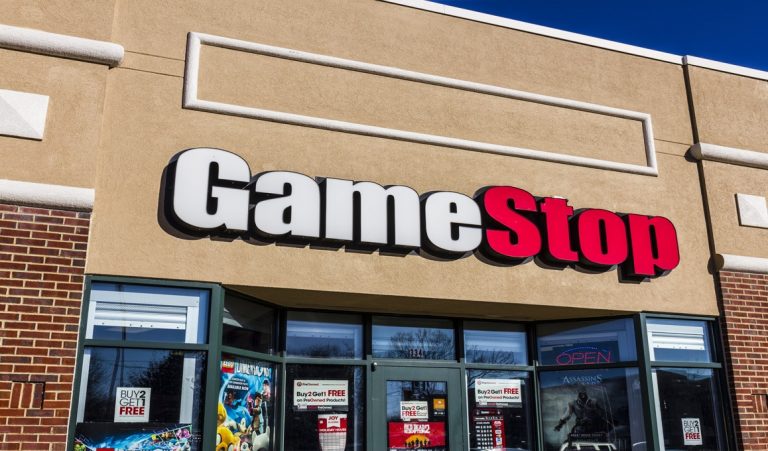
Michael Burry, the investor immortalized in The Big Short for anticipating the 2008 financial crisis, has once again trained his sights on GameStop, the video game retailer that became the defining symbol of the meme-stock era.
This time, however, Burry is at pains to distance his move from the speculative frenzy that propelled the stock into global headlines four years ago. His return to GameStop marks one of the more striking reversals in recent U.S. market narratives, not because the stock itself is unfamiliar, but because of the framework he is using to justify the investment.
Burry is now positioning GameStop as a rare balance-sheet-driven opportunity in a market he views as stretched and increasingly indifferent to tangible value.
Register for Tekedia Mini-MBA edition 20 (June 8 – Sept 5, 2026).
Register for Tekedia AI in Business Masterclass.
Join Tekedia Capital Syndicate and co-invest in great global startups.
Register for Tekedia AI Lab.
The investor disclosed his renewed stake in a post on his Substack, Cassandra Unchained, prompting GameStop shares to rise as much as 6% on Monday. The immediate market reaction underscored how closely investors still track Burry’s moves, even years after his most famous call. It also highlighted GameStop’s enduring sensitivity to shifts in narrative, where changes in perception can still outweigh incremental developments in the company’s underlying business.
At the core of Burry’s thesis is valuation discipline. He argued that GameStop is trading close to one times tangible book value and net asset value, a metric he described as increasingly rare in U.S. equities. In an environment where many listed companies command significant premiums based on growth expectations, intangible assets, or future optionality, Burry is anchoring his case to what the company owns today rather than what it might become tomorrow.
“This is not a common occurrence in the U.S. stock market today,” Burry wrote, pointing to what he sees as asymmetric risk.

In his view, the company’s tangible assets and cash position provide a form of downside protection, limiting the scope for permanent capital loss while preserving upside if management executes effectively. This framing places GameStop closer to a traditional value investment than the speculative instrument it has been treated as since 2021.
The emphasis on management is equally central to Burry’s thinking. Ryan Cohen, GameStop’s chief executive and the founder of online pet retailer Chewy, features prominently in his analysis. Cohen has become a cult figure among retail investors, both for his activist posture and for his role in reshaping GameStop’s board and strategic direction. For Burry, Cohen represents a long-duration capital allocator rather than a short-term catalyst.
Burry’s language suggests an unusually extended time horizon. He spoke of backing Cohen’s deployment of capital “perhaps for the next 50 years,” an assertion that stands out in a market often dominated by quarterly earnings and near-term guidance. By emphasizing governance, balance-sheet stewardship, and patience, Burry is effectively arguing that GameStop should be judged less as a retailer in decline and more as a capital vehicle with optionality under disciplined leadership.

This long-term framing also serves to distance Burry from the stock’s meme-era legacy. GameStop’s 2021 short squeeze, driven by retail traders coordinating on online forums, transformed the company into a symbol of rebellion against Wall Street short sellers. Burry was involved in the stock before that episode, but has acknowledged that he exited his position weeks before the squeeze, missing the explosive upside that followed. That experience appears to inform his current insistence that he is not relying on a repeat of that phenomenon.
“I am not counting on a short squeeze to realize long-term value,” he wrote, stressing that the investment case does not depend on forced buying or market dislocations.
Instead, he cited governance, strategy, and capital allocation as the pillars of his conviction. He characterized the setup as unusual but justified, particularly in a market he believes offers few genuinely asymmetric opportunities.
GameStop’s corporate evolution under Cohen provides some context for this reassessment. The company has trimmed costs, reduced operational complexity, and accumulated a substantial cash balance relative to its market capitalization. While its core retail business continues to face pressure from digital distribution and shifting consumer habits, the balance sheet has become a focal point for investors searching for optionality rather than growth alone. For proponents of the stock, that optionality lies in what Cohen chooses to do with the company’s capital, whether through acquisitions, investments, or strategic pivots.
The market response to Burry’s disclosure was telling in another respect. Data from retail trading analytics platform ApeWisdom indicated a sharp increase in attention on GameStop following the announcement, while other former meme-stock favorites such as AMC Entertainment and Koss failed to attract comparable interest. This suggests that Burry’s move has been interpreted as a company-specific signal rather than a broader endorsement of the meme-stock complex.
That distinction matters as the earlier meme-stock surge was characterized by contagion, with flows spilling across loosely related names based on sentiment rather than fundamentals. The current episode appears more contained, reflecting a market environment that is more selective and arguably more cautious. Even among retail traders, interest has coalesced around GameStop itself rather than reigniting a sector-wide phenomenon.
Burry’s renewed involvement also speaks to a broader debate about value investing in the current cycle. With U.S. equity indices trading near record highs and concentration in a handful of large technology companies dominating performance, investors like Burry have been vocal about the scarcity of assets that offer a clear margin of safety. By highlighting GameStop’s tangible asset base and governance structure, he is implicitly critiquing a market he views as complacent about risk.
Still, significant uncertainties remain. GameStop operates in a structurally challenged segment of the retail landscape, and the path from balance-sheet strength to sustainable earnings growth is far from guaranteed. Cohen’s strategy has yet to fully articulate how the company will generate durable cash flows beyond cost control and financial optionality. For sceptics, the stock remains a story in search of a business model that can thrive in a digital-first gaming ecosystem.
Burry appears comfortable with that ambiguity, framing it as the price of asymmetry rather than a flaw in the thesis. By leaning on tangible value and long-term stewardship, he is betting that patience itself will become an asset. In doing so, he is attempting to recast one of the market’s most polarizing stocks as something more conventional, even conservative, than its reputation suggests.
It is not clear for now if the reclassification will hold. But some analysts believe that it will depend less on market sentiment and more on execution over time. However, Burry’s re-entry has reignited debate around GameStop, not as a vehicle for speculative fervor, but as a test case for whether value investing can still find footholds in unexpected places.