

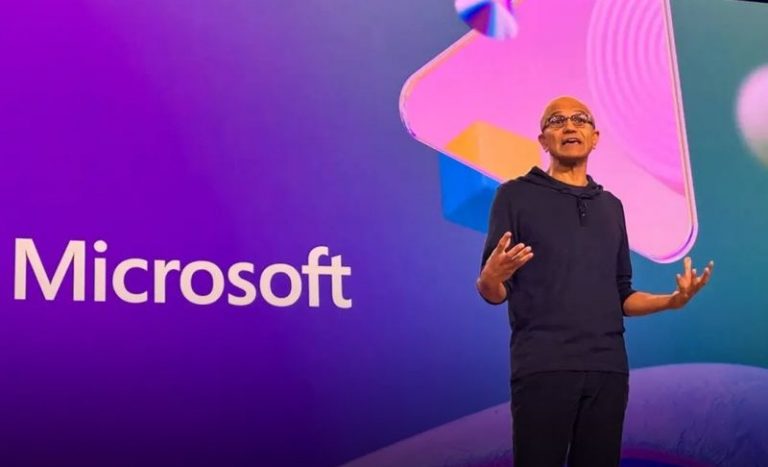
Microsoft has committed A$25 billion ($18 billion) to Australia’s digital economy in what is shaping up as one of its most ambitious regional infrastructure expansions, tightening its grip on the Asia-Pacific cloud market while aligning closely with Canberra’s accelerating push to become a global artificial intelligence hub.
The investment, announced in Sydney alongside Australian Prime Minister Anthony Albanese and Microsoft chief executive Satya Nadella, is anchored on a sharp expansion of Azure cloud capacity, cybersecurity cooperation with government agencies, and large-scale AI workforce development.
Albanese framed the partnership as both an economic strategy and a governance challenge. He said, “We want to make sure all Australians benefit from AI. Our National AI Plan is all about capturing the economic opportunities of this transformative technology while protecting Australians from the risks.”
Register for the next Tekedia Mini-MBA.
Register for Tekedia AI in Business Masterclass.
Join Tekedia Capital Syndicate and co-invest in great global startups.
Microsoft described the package as its “largest ever” investment in Australia, building on an earlier A$5 billion commitment announced in 2023. The company said it will expand Azure infrastructure capacity in the country by more than 140% by the end of 2029, a move that significantly increases Australia’s role in its global cloud footprint.
The scale of the expansion is part of a broader structural shift in the AI economy. Hyperscalers are no longer concentrating compute capacity in a handful of traditional hubs but are instead distributing infrastructure across politically stable jurisdictions with clear regulatory frameworks and strong sovereign partnerships. Australia has emerged as one of the most competitive of those destinations, ranking second globally in data center investment in 2024 according to Knight Frank.
Microsoft’s strategy in Australia extends well beyond physical infrastructure. The company has pledged to train three million Australians in AI skills by 2028, embedding itself in the country’s workforce development agenda. That initiative reflects a growing recognition among technology firms that the limiting factor in AI adoption is increasingly human capital rather than compute capacity alone.

Security is another central pillar of the agreement. Microsoft will deepen cooperation with the Australian Signals Directorate and the Department of Home Affairs, expanding efforts to secure critical infrastructure and enhance cyber resilience. These partnerships illustrate how cloud providers are becoming integrated into national security ecosystems, particularly as governments grapple with rising cyber threats targeting energy, finance, and communications networks.
The deal also formalizes Microsoft’s alignment with Australia’s regulatory expectations for AI infrastructure. In a memorandum of understanding signed during the announcement, the company committed to government guidelines emphasizing national interest protections and sustainable resource usage, including water efficiency standards for data center operations. The agreement signals a more structured relationship between hyperscalers and governments, where infrastructure expansion is increasingly conditional on environmental and strategic compliance.
Microsoft’s growing footprint in Australia comes as competition among global AI infrastructure providers intensifies. Amazon Web Services has pledged A$20 billion in local investment, while OpenAI has outlined a A$7 billion commitment. The clustering of capital highlights Australia’s emergence as a secondary but strategically significant node in the global AI supply chain, alongside the United States and select parts of Europe and Asia.

The momentum is also being reinforced by research and policy engagement from frontier AI firms. Anthropic chief executive Dario Amodei recently signed a cooperation agreement with Canberra on AI safety research, describing the country as “a natural partner for responsible AI development.”
Microsoft’s expansion strategy is underpinned by its existing infrastructure base in Australia. As of October 2025, the company operates three data centers in the country, with three additional facilities under construction in Sydney and Melbourne. The latest investment effectively accelerates this buildout into a long-term scaling program rather than a phased expansion.
Financially, the announcement comes at a sensitive moment for Microsoft. The company’s stock has traded roughly 20% below its October 2025 highs, and it recently posted its weakest quarterly performance since 2008. Analysts have linked the pressure to broader market reassessments of AI-driven growth expectations in software and cloud services, where high capital expenditure cycles are increasingly scrutinized for near-term returns.
The Australian investment, therefore, serves multiple strategic functions. It strengthens Microsoft’s sovereign cloud positioning in a key Asia-Pacific market, secures long-term government-aligned demand, and reinforces its narrative that AI infrastructure remains a core growth engine despite market volatility.
At the same time, it highlights the evolving nature of cloud competition. The industry is moving from a purely commercial contest for enterprise workloads toward a hybrid model where governments are co-investors, regulators, and strategic partners. In that environment, scale is no longer measured only in server capacity or revenue, but also in geopolitical alignment and policy integration.
The agreement also reinforces Australia’s ambition to position itself as a trusted regional AI hub with robust infrastructure and exportable digital capabilities. For Microsoft, it is also a long-duration bet that proximity to governments and early infrastructure dominance will translate into a durable advantage in the next phase of the AI economy.